
How to Avoid Domain Blacklisting for Better Deliverability
Learn how to avoid domain blacklisting. Improve your email deliverability and protect your sender reputation.

Understanding Domain Blacklisting
Have you ever found your emails not reaching the inbox, no matter how well-crafted they are? It could be due to domain blacklisting, a hidden barrier many aren't aware of until it's too late. Once your domain lands on a blacklist, email deliverability plummets, harming both communication and sender reputation.
Domain blacklisting acts as a gatekeeper to email inboxes, signifying that your domain is marked as a potential spam source. This label warns email servers to be cautious, often resulting in legitimate messages being blocked outright.
Common causes for domain blacklisting include high volumes of bounced emails, spam complaint spikes, or sending unsolicited bulk messages. Navigating away from these pitfalls is essential to maintain sender reputation and ensure your emails reach their intended recipients.
Key takeaways
- Domain blacklisting prevents emails from reaching your audience.
- Blacklisting damages sender reputation and reduces deliverability.
- Avoid blacklisting by monitoring bounce rates and spam complaints.
Why Domain Blacklisting Happens
Bounce Rates and Spam Complaints
Your domain might find itself blacklisted if you're dealing with high bounce rates. A bounce occurs when an email can't be delivered, often because the address is invalid. High bounce rates signal to email providers that you're not quite managing your list properly, hinting at potential spam-like behavior.
Similarly, spam complaints are another red flag. When recipients mark your email as spam, it's a direct message to email providers that something's amiss with your emails. Too many of these complaints, and your domain's reputation takes a hit, increasing the chance of blacklisting. A study by Return Path notes that domains with a complaint rate above 0.1% are often flagged as risky.
Sending to Role and Disposable Addresses
Sending emails to role-based addresses like info@ or sales@ poses a risk. These addresses typically serve groups rather than individuals, increasing the chance of emails being ignored or marked as spam. They're also more frequently associated with bouncebacks, since they're not always monitored for marketing emails.
Disposable email addresses, such as those from domains like mailinator.com, are another source of potential trouble. These temporary addresses are often used to sign up for services without commitment, resulting in low engagement. In either case, routine list hygiene is essential. Tools like bulk verification can help identify and remove these addresses from your lists.
Greylisting and Engagement
Greylisting is a frequent practice among email servers that temporarily rejects first-time emails. While it's designed to combat spam, it can cause issues if you're repeatedly sending to non-responsive or greylisted addresses. If these emails don’t resend during the allowed window, your domain might be mistaken for a source of spam.
Proper engagement with your audience is vital. Low engagement metrics—such as open rates and click-through rates—imply that recipients are not interested in your emails. This sends a negative signal to email providers which can impact your sender reputation.
Email deliverability is an art, balancing list hygiene with compelling content to ensure both reach and engagement.
Maintaining a healthy sender reputation is a continuous effort. Keeping bounce rates low, avoiding role and disposable addresses, and maintaining strong engagement metrics are essential steps to reducing the risk of your domain landing on a blacklist. To explore more about managing your email campaigns effectively, check out our inbox placement resources.
Preventive Measures to Keep Your Domain Healthy
Keeping your domain's reputation intact in the eyes of ISPs (Internet Service Providers) means implementing smart strategies consistently. Here’s a checklist to ensure you're staying on the right path.
Establish Robust Email Authentication
- Activate SPF, DKIM, and DMARC: These protocols help legitimise your emails. SPF verifies sending servers, DKIM adds a signature for authenticity, and DMARC ties it all together. Check out the DMARC overview for more details.
- Regular Protocol Checks: Monitor the effectiveness of SPF, DKIM, and DMARC records using online tools to ensure they're operational and up-to-date.
- Training for Your Team: Educate your team about these protocols. Ensuring they know their importance can help avoid misconfigurations that might harm your sender reputation.
Maintain and Clean Your Email List
- Regular List Hygiene: Routinely verify your email contacts to remove invalid or inactive addresses. This not only reduces bounce rates but also improves deliverability. Use bulk verification services to streamline this task.
- Segmentation Practices: Frequently segment your lists to tailor emails appropriately, which can prevent disengagement and spam reports.
- Opt-In Confirmation: Implement a double opt-in process to ensure every subscriber is genuinely interested, minimizing fake addresses and increasing engagement.
Keep an Eye on Engagement
- Track Engagement Metrics: Regularly analyze open rates, click-through rates, and unsubscribes. Consistently low engagement hints that something needs tweaking.
- Re-engagement Campaigns: Attempt to win back inactive subscribers occasionally, but don’t hesitate to remove unresponsive ones if necessary to protect your sender reputation.
- Monitor Spam Complaint Rates: Consistently check for and act on notifications of spam complaints and adjust your strategy accordingly.
Trust plays a critical role in email marketing. Ensuring you adhere to these measures can help you stay off domain blacklists and maintain healthy deliverability. For a deeper dive into how to improve your inbox placement, check out our inbox placement resource.
Role of Email Verification in Avoiding Blacklisting
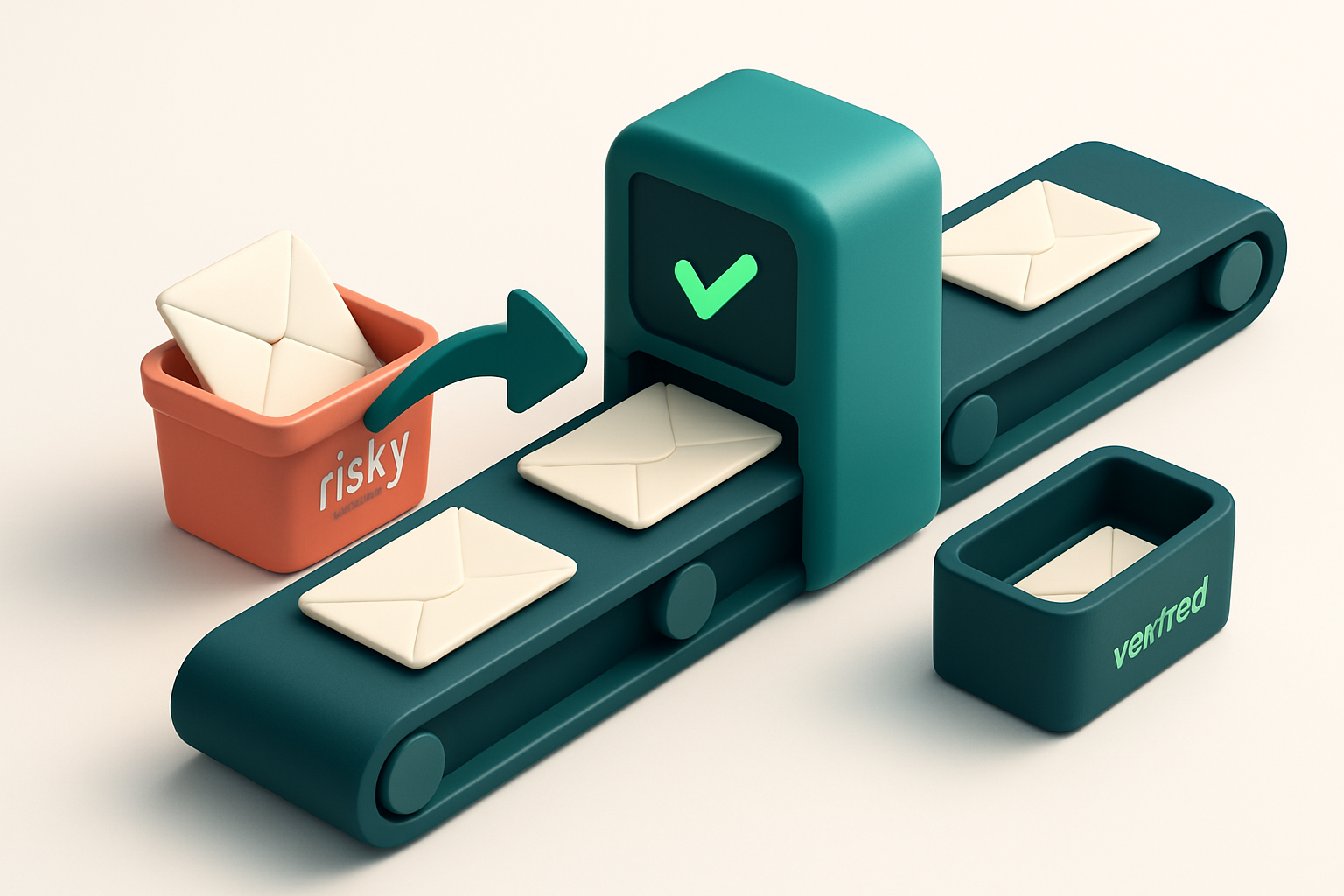
Email blacklisting can significantly impact your business’s ability to communicate effectively. To keep your emails reliably reaching the inbox, it's essential to manage bounce rates carefully. High bounce rates are a common cause of being flagged by spam filters, often leading to blacklisting.
Reducing Bounce Rates
One of the most straightforward strategies to avoid blacklisting is to ensure you're only sending emails to valid and active addresses. By using email verification services, like EmailListChecker.io, you can significantly reduce your bounce rates. With a verification accuracy of 98.9%, you ensure that your emails are going to people, not outdated or incorrect addresses.
Bounce rates reflect how many of your emails are returned by servers because the address doesn’t exist. Servers may start to see you as unreliable if too many emails bounce back. Reducing these bounces is vital for maintaining a good sender reputation.
Identifying Risky Domains
Email verification isn't just about checking if an address is valid. It's also about identifying risky domains. Catch-all domains, for example, are those that accept emails at any address, making it hard to guess whether a specific mailbox is valid. Knowing when you're dealing with such domains allows you to make informed decisions about sending to them.
Disposable email providers are another risk factor. These are temporary addresses that users create to avoid giving out their real emails. They’re typically short-lived and contribute nothing long term, which can skew engagement metrics unfavorably if they are common in your list.
Understanding which emails to send to is key in maintaining a good sender reputation and avoiding the much-dreaded domain blacklisting.
By leveraging tools like the bulk verification service, you can identify and segment these risky domains before hitting send. Smart segmentation can significantly improve your deliverability rates.
Using the Right Tools
The suite of services provided by EmailListChecker.io offers multiple ways to maintain your domain’s health. Their verification API enables real-time checks, ensuring new email addresses are verified the moment they enter your system. This proactive approach limits bounce rates and reduces the chances of landing on a blacklist.
Moreover, their integrations with platforms like Mailchimp, HubSpot, and SendGrid allow seamless incorporation into your existing email infrastructure. This means less hassle and more focus on creating engaging content for your subscribers.
By addressing these issues proactively, email verification becomes a tool not just for protecting your sender reputation, but for ensuring your business communications are as effective as they can be. For more information on how verification can help, consider visiting our main site.
Understanding Deliverability and Sender Reputation
Your email deliverability is the rate at which your emails reach the intended recipient's inbox, rather than their spam folder or bouncing back. A key factor influencing this is your sender reputation, which works much like a credit score. High-quality engagement, low bounce rates, and minimal spam complaints help keep this score high, improving your chances of reaching the inbox.
The Impact of Sender Reputation
Maintaining a good sender reputation is crucial for effective email campaigns. Internet Service Providers (ISPs) continuously assess how often your emails are opened, how many recipients mark them as spam, and the number of hard bounces you generate. A positive reputation means your emails are more likely to land in the intended inbox.
Blacklists are a significant threat to sender reputation. They compile lists of domains and IPs involved in spammy activity. If your domain ends up on one, your sender score drops and your emails struggle to bypass filtering systems. According to Spamhaus, one of the most respected blacklist providers, even a single appearance can disrupt your entire campaign.
Tools and strategies to maintain a robust reputation are vital. Using our inbox placement tool, for example, can help you test and understand how your emails are treated by different ISPs before they even go live. This proactive step can warn you of potential issues ahead of time.
Utilizing Deliverability Testing Tools
Deliverability testing tools are designed to spot potential issues that could affect your email campaign performance. They evaluate various elements, including your sender reputation, blacklist status, and email content, to predict how likely your emails are to reach the inbox.
These tools also help in identifying deliverability issues at multiple levels. For example, an analysis might reveal that a particular ISP frequently sends your emails to spam. With these insights, you can make necessary adjustments to your strategy.
To get started, consider leveraging an API for real-time verification, which you can find more about at Emaillistchecker.io. This function checks each email address for validity before it's added to your list, reducing the chances of sending to inactive or fake addresses, which in turn helps maintain the health of your sender reputation.
Improving sender reputation isn't an overnight task, but a gradual process that involves consistent monitoring and adjustment.
For those just getting started, taking advantage of free verification services or setting up integration with platforms like Mailchimp or SendGrid might be the easiest and most efficient way to dive into deliverability testing. Our integrations can help streamline this process, ensuring you maintain clarity and control over how your email campaigns perform.
These steps help ensure that all of your marketing efforts translate into actual communication with your audience, rather than ending up lost in cyberspace. By staying informed and proactive, you can avoid the pitfalls of blacklisting and keep your sender reputation strong.
Leveraging Integrations for Improved Practices
Keeping your email deliverability strong involves more than just good intentions. It requires leveraging smart tools and trusted integrations like Mailchimp and HubSpot. These platforms help streamline your email marketing efforts by ensuring your contact lists are constantly updated and accurate. An integration automatically syncs your validated lists, reducing the hassle of manual updates and minimizing the risk of bounces and blocklisting.
Streamline with Automation
Automating your email list verification with an API can significantly enhance your email marketing efficiency. It takes care of the heavy lifting by checking each email address against known databases and verification algorithms. Using our verification API, you can automate this process seamlessly, ensuring your email list is clean and current without lifting a finger. This approach reduces the risk of sending to invalid addresses, which is a key factor in avoiding domain blacklisting.
Think of the API as your diligent assistant, tirelessly working to keep your sender reputation untarnished. According to a study by the Data & Marketing Association, consistently cleaning your email list can improve your deliverability by up to 20%. With such potential gains, the investment in automation clearly pays off.
Gain Insights with AI Assistance
Let's talk about insights. While automation is powerful, having actionable insights can empower you to make informed decisions. This is where the AI assistant comes into play. It analyzes patterns and advises on optimizing email sends to prevent issues like spam traps and low engagement rates. It's like having a strategist whisper in your ear, offering recommendations tailored to your specific needs.
Using AI for email marketing insights is akin to navigating with a GPS instead of a paper map; you're aware of obstacles ahead and can choose the best path.
Integrating our features with platforms like Mailchimp and HubSpot is not just about convenience—it's a strategic move. By choosing platforms that offer seamless integrations, you ensure that your data flows without barriers, and your campaigns remain robust. This interconnectedness means you're always ready to tackle deliverability challenges head-on.
For anyone serious about maintaining solid email practices, these integrations and automations offer a tangible path forward. With consistent list validation, informed by AI, and leveraged through powerful integrations, you can avoid the pitfalls of domain blacklisting and keep your email marketing productive and effective.
Looking for more ways to enhance your email strategy? You might want to explore our bulk verification services to ensure your list hygiene is always at its best.
How to Respond When Blacklisted
1. Stop Email Sends Immediately
- Halt all outbound email campaigns the moment you realize your domain is blacklisted. Continuing to send emails can worsen your sender reputation and make recovery more complex. It's like applying brakes when you're skidding—it's crucial to stop before more damage is done.
- Inform your team promptly to ensure that no automated processes continue sending out emails inadvertently. This immediate action prevents further deterioration of your sender reputation, a key factor in email deliverability.
2. Identify the Cause of Blacklisting
- Investigate the root cause of the blacklisting. Common issues include spamming practices, compromised email lists, or poor reputation management. Tools like Spamhaus and MxToolbox offer insights into why a domain or IP might be blacklisted.
- Use email-verification software to clean your mailing list. By verifying your email lists, you can eliminate invalid or risky emails, reducing bounce rates and improving list quality.
- Evaluate your email content for spam-like attributes and check your SPF, DKIM, and DMARC records to ensure they're correctly configured. Misconfigured authentication protocols can be a hidden cause of deliverability problems, as noted by Dmarc.org.
3. Request Delisting
- Once you've resolved the issues, contact the blacklisting agencies to request removal. Each organization has its own procedures for delisting, so be prepared for documentation and potentially a waiting period. This step is crucial because your emails will remain blocked until formal clearance is obtained.
- Ensure all improvements are documented and clearly communicated in your request. Transparency and evidence of rectified issues enhance your chances of successful delisting.
Being proactive in monitoring and maintaining your sender reputation is essential to avoiding the pitfall of blacklists.
For ongoing protection, consider implementing a routine checkup with a real-time verification API and regular inbox-placement tests. These tools assist in maintaining a pristine sending reputation by ensuring every email you send meets stringent deliverability standards.
Checking Domain Health Regularly
Monitor with the Right Tools
To avoid domain blacklisting, you need to keep a vigilant eye on your domain's health. Using domain monitoring tools is your first line of defense. These tools track changes and can alert you to issues needing immediate attention. Services like MXToolbox offer a good starting point by watching for blacklists and resolving DNS issues. Having real-time insight into your domain's status helps nip problems in the bud before they affect your email deliverability.
It's important to choose tools that fit well with your existing systems. Integrate these solutions seamlessly with your platforms to ensure you catch crucial updates without overloading your team. Automatic alerts are essential because, let's face it, manually checking domain status isn’t feasible for most of us. Set up these alerts to notify you instantly if your domain finds its way onto any blacklist.
Audit Your Practices and Lists
Alongside monitoring, you should regularly audit your sending practices and email lists. Analyze how you source your contacts. Are they opting in knowingly, or are you scraping emails from outdated databases? Regular audits help you identify potentially harmful practices that might lead to blacklisting.
Routine cleansing of your email list is crucial. Removing outdated or invalid email addresses decreases your bounce rates. It's like decluttering your space; it just makes everything run smoother. Tools like the bulk verification service offered by Emaillistchecker.io can assist in this effort, ensuring your list only contains valid addresses.
Also, consider reviewing your sending frequency and the quality of your content. Poor content or overly aggressive sending can trigger spam filters and result in blacklisting. Remember, it’s the reputation of your sending practices that matters as much as the health of your domain.
Set Up Alerts for Blacklisting
No one wants to find out too late that their domain is blacklisted. Setting up alerts for any occurrences of blacklisting is not just smart—it's necessary. Regular checks and automated alerts mean you won't miss the signs that your domain is in trouble. These alerts should be part of your broader email strategy and tied into your overall domain health checks.
Blacklist monitoring services can notify you immediately if your domain lands on any list, giving you a head start on remediation efforts. Consider these tools as part of your crisis management plan, ensuring rapid response when needed. For guidelines on best practices, you might want to consult the standards defined by the IETF concerning domain reputation and email sender verification. Understanding these guidelines helps in fine-tuning your preventative strategies.
In sum, keeping your domain healthy isn’t a set-and-forget task. It's active, ongoing, and essential. With the right tools, consistent audits, and proactive alerts, you can minimize the risk of domain blacklisting and ensure your emails land in inboxes as intended.
Conclusion: Sustaining a Healthy Sending Domain
Maintaining the health of your sending domain is crucial to avoid domain blacklisting and ensure your emails reach their intended recipients. By consistently monitoring your SMTP configuration, managing your sender reputation, and verifying emails with tools like EmaillistChecker.io, you can significantly reduce bounces and improve deliverability.
Proactive email management strategies offer long-term benefits, including enhanced inbox placement and higher engagement rates. These practices help safeguard your domain against punitive measures and ensure ongoing communication with your audience.
The email landscape is ever-evolving, with changing protocols and security measures. Continuously updating your practices and employing reliable verification tools are essential steps in adapting to these shifts and sustaining your domain's health.
Keep reading
- Deliverability, blocklists and sender reputation (complete guide)
- Email Deliverability Solution for OEM Manufacturers
- How to Properly Warm Up IP Address for Email Deliverability
- Email Deliverability Solution for Media Content Creators
- Email Deliverability Improvement Tools for Agencies
Keep reading
- Consulting Firm Email List Maintenance Strategies to Avoid Blacklisting
- How to Use Email Validation to Prevent Domain Blacklisting for Fintech Companies
- How to Prevent Domain Blacklisting During College Admissions Email Blasts
- Prevent Domain Blacklisting for Subscription Box Email Sends
Ready to put this into practice? Emaillistchecker.io verifies emails with 98.9% accuracy — start with 100 free verifications.
Frequently asked questions
What causes domain blacklisting?
Domain blacklisting typically results from high bounce rates, frequent spam complaints, and sending to unverified lists.
How can email verification help prevent blacklisting?
Email verification helps by identifying invalid or risky addresses, reducing bounce rates and improving delivery success.
What are SPF, DKIM, and DMARC?
SPF, DKIM, and DMARC are protocols designed to authenticate emails, reducing the risk of being marked as spam.
How often should I verify my email list?
Regular verification is recommended, especially before major campaigns, to maintain a clean and up-to-date contact list.
What should I do if my domain is blacklisted?
Stop all email sends, diagnose the issue, rectify any faults, and request delisting from the necessary blacklists.
Can integrations help with domain health?
Yes, integrations with platforms like Mailchimp allow for seamless list updates and help maintain proper email practices.
How does sender reputation affect deliverability?
A good sender reputation increases the likelihood of emails reaching inboxes instead of being filtered into spam folders.
What is a catch-all domain?
A catch-all domain is one that accepts email for any address at that domain, often making verification more challenging.
Why are role accounts risky?
Role accounts like admin@ or support@ often have higher spam complaints or are unattended, affecting engagement metrics.
Is it possible to avoid blacklisting entirely?
While there is no guarantee, consistent good practices greatly reduce the risk of blacklisting.