What Is Email Sending Rate Limit and How to Stay Within It
Learn what email sending rate limits are, why they matter, and how to stay within them using real-time verification and list hygiene. Reduce bounces and improve
Why Your Email Campaigns Stall Before They Start
You’ve crafted the perfect email. The copy is sharp, the timing is right, and your list is clean. Yet it never reaches inbox zero. Why?
The answer isn’t your subject line. It’s your sending rate. Even the most polished message hits a wall when it’s sent too fast — and email providers enforce that wall with precision.
What is email sending rate limit and how to stay within it matters more than you think. Exceeding thresholds triggers throttling, blocks, or worse: long-term damage to your sender reputation. You’re not just delaying delivery. You’re undermining trust with every send.
Key takeaways
- Exceeding email sending rate limits triggers throttling or blocking by providers like Gmail and Outlook.
- High send volumes without proper pacing harm sender reputation and reduce inbox placement.
- Monitoring and pacing your sends based on real-time rate limits prevents bounces and maintain deliverability.
What Is Email Sending Rate Limit and Why It Exists
You’ve hit a wall—your email campaign stalls mid-send. Your inbox is full of bounce messages, or worse, your messages don’t land anywhere. This isn’t a bug. It’s a rate limit in action.
Rate Limits Are Built to Protect Users and Infrastructure
Every major email provider—Gmail, Outlook, Yahoo—sets sending rate limits. These aren’t arbitrary. They’re enforced to stop spammers from overwhelming inboxes and flooding servers. Think of it like traffic control: without rules, everyone crashes.
Rate limits are usually measured in emails per minute or hour. If you send more than the threshold, the provider temporarily throttles your outbound flow. It’s not a permanent ban—just a pause while the system recalibrates. But repeated violations can lead to blocks or long-term reputation damage.
Why Providers Enforce These Limits
These caps exist to maintain service stability and user trust. When an inbox overloads with low-quality messages, users leave. Providers lose credibility. To prevent that, they prioritize reliability and user experience over volume.
Spammy behavior—like sending to invalid addresses, or mass blasts from a single IP—triggers defensive measures. Even if your intent is good, exceeding limits without proper sender reputation management raises red flags. ISPs and email apps use algorithms to assess behavior, and sending too fast too often is an early trigger.
Real-world systems like the ones at [Spamhaus](https://www.spamhaus.org) or [MxToolbox](https://mxtoolbox.com) help track abuse patterns. A consistent burst above your limit can signal automated or malicious behavior, even if it's not intentional.
Let’s be clear: rate limits aren’t a punishment. They’re a necessity. You can’t scale effectively if the system collapses under the weight of your own sends.
Proactive steps help you stay within bounds—both technically and reputationally. That’s where tools like bulk email verification come in. By cleansing your list before sending, you reduce the number of wasted or invalid attempts. Fewer bounces mean smoother, more predictable sends.
Still, even verified lists need pacing. Using a real-time verification API helps you spot risky or catch-all addresses before they get sent. That’s not just about deliverability—it’s about sending responsibly within the rules.
Understanding the limit isn’t about fear. It’s about planning. You’re not fighting a system—you’re working alongside it.
How Rate Limits Vary Across Providers and Services
Let’s talk about why your email delivery can stall mid-send — even if your list looks clean. The culprit? Rate limits. These aren’t abstract rules. They’re built into how big platforms like Gmail, Yahoo, and Outlook handle incoming mail.
Gmail and Yahoo: Per-Hour Limits with Reputation Tolerance
Gmail and Yahoo generally allow between 500 and 3,000 emails per hour from a single IP address. That range depends on sender reputation, domain history, and how many hard bounces or spam complaints you’ve triggered. If you’re sending from a fresh IP or domain with no track record, expect the lower end — or even stricter throttling. The key takeaway? You're not just sending emails. You’re building a reputation. Each send counts. If your volume spikes too fast or your list has a high bounce rate, even legitimate senders get throttled.
Outlook and Third-Party Platforms: Reputation and Account Caps
Outlook is stricter, especially for new domains. It may limit sends to just a few hundred per hour initially. The higher your sender reputation — proven by low spam complaints, consistent engagement, and deliverability — the more you can send. When you use tools like SendGrid or Mailchimp, you’re adding another layer of limits. These platforms set per-user or per-account caps, often based on your plan (e.g., Mailchimp’s free tier allows 1,000 emails/month). They also manage rate limits on their backend IPs, so even if you have 10k contacts, the platform decides how fast you can send. A well-known industry standard for managing volume is outlined in the SMTP specification, which governs email transport. While it doesn’t define exact caps, it sets the framework for how servers expect messages to be queued and delivered. These thresholds change without notice — especially for new senders with poor reputation signals. One day you’re under the limit; the next, you’re blocked. That’s why real-time list hygiene matters. Let’s say you’re sending to 10,000 contacts. You can’t just fire them off in one batch. Instead, stagger your sends across time, monitor your bounce rate, and always verify your list first. You can test your deliverability risk with a service like inbox placement testing before full launch. A strong foundation means verifying your list early. Tools like bulk verification or the real-time API catch invalid emails and catch-alls before you send — reducing the risk of hitting rate limits due to failures. That’s not just cleaner data; it’s smarter delivery. And while you’re at it, use the email finder to get accurate addresses in the first place. Garbage in means garbage out — and a bad list means you’re already behind the rate limit curve.
Your List’s Hidden Problem: Invalid Addresses That Break Rate Limits
You think you’re staying within your sending rate limit. But if your list has invalid emails, you’re not.
Every time you send to an invalid address, it counts as a failed attempt — and that still eats into your rate window. Even if the message never lands, your email service provider (ESP) tracks it. That’s how rate limits work: they count total attempts, not just delivered ones.
Invalid Emails Waste Your Send Slots
Send to 100 invalid addresses in a single batch? You’ve used up 100 of your allowed send slots — no matter how fast or slow you go. That means less room for real customers, especially if you’re on a capped plan.
Let’s say your provider allows 500 sends per hour. If 20% of your list is invalid, you’re already using 100 slots just to fail. That cuts your effective sending capacity in half.
And the timing matters. Sending 1,000 emails with even 100 invalid ones in under a minute? That’s a red flag. Many ESPs throttle or pause delivery when they detect high failure rates, even if only a small fraction are invalid.
Moving Forward: Clean, Not Just Fast
The real issue isn’t volume — it’s quality. You can stay under your limit, but if you’re sending to a list full of errors, you’re still pushing against the system.
It’s like trying to drive a car with flat tires. You’re not going fast, but you’re burning fuel and wearing out parts. Validating your list beforehand stops that waste before it starts.
Our bulk verification tool checks each address for syntax, domain, and deliverability in real time. It flags invalid, risky, and catch-all emails before you ever send. That’s how you keep your rate window open for actual recipients.
Clean your list regularly with our bulk verification — it’s the only way to stay within your limit and protect your sender reputation.
According to the [Internet Standards body](https://tools.ietf.org/html/rfc5321), SMTP sessions treat invalid addresses as distinct delivery attempts. This means the mechanism itself counts failures, not just successes. You can’t ignore them — they affect your sending performance and can trigger anti-abuse filters.
How to Stay Within Sending Rate Limits: A Real-World Process
Rate limits aren’t just theoretical. They’re enforced by email providers, and ignoring them means higher bounces, blocked sends, and a ruined sender reputation. Let’s walk through a real-world workflow that keeps you compliant, even at scale.
Step 1: Clean Your List Before Every Major Send
Before you hit send, assume your list is outdated. Invalid, mistyped, or dormant addresses hurt deliverability. Use a bulk verification tool like EmailListChecker’s bulk verification to remove non-existent addresses before the first email goes out.
Even lists updated monthly can drop 15–20% in validity over time. Cleaning upfront means you’re not accidentally tripping rate limits with dead or role-based addresses.
Step 2: Filter Out Risky and Disposable Addresses
Not all bad emails are invalid. Some are disposable (like those from tempmail services), others are role accounts (e.g., sales@ or info@). These carry higher spam risk and are more likely to result in spam traps or high bounce rates.
Let’s use a trusted tool like EmailListChecker to flag these. It identifies catch-all domains, disposable email providers, and high-risk patterns so you can filter them out before sending. This step reduces strain on your sending reputation.
Step 3: Break Your List Into Smaller Batches
Even a clean list can trigger rate limits if sent in one go. Break it into chunks—say, 500 recipients per batch. This avoids overwhelming the receiving server and keeps you below threshold limits enforced by providers like Gmail or Outlook.
Many ESPs (email service providers) set daily or hourly send limits based on your sending history. Smaller batches help stay under those thresholds without manual tracking.
Step 4: Schedule with Delays Between Batches
After you’ve verified and segmented, schedule your sends with a delay—2 to 5 minutes between batches. This mimics natural sending patterns and reduces the risk of being flagged as spam.
As RFC 5321 notes, SMTP connections and message flow are designed with pacing in mind. Ignoring this can result in temporary blocks or throttling by the receiving server.
Step 5: Monitor Your Sender Reputation
Use deliverability monitoring tools to track bounce rates, spam complaints, and inbox placement. The industry standard is keeping bounce rates below 2%, and spam complaint rates under 0.1%.
Tools like EmailListChecker’s inbox placement testing simulate real-world delivery and help you spot issues before they damage your reputation.
Step 6: Warm Up Your Domain and IP Before Sending at Scale
If you’re sending from a new domain or IP, start slowly. Send to small, highly engaged segments over several days. Gradually increase volume as the provider sees consistent engagement.
This warming process tells email providers your sending isn’t malicious. Without it, new IPs are often flagged—even with clean lists.
Rate limits exist for a reason: they protect users from spam. Respect them by planning ahead, verifying early, and sending with intention.
When you treat sending as a system—not just a single click—it stays sustainable. Let your tooling handle the heavy lifting while you focus on outreach that lands in the inbox.
The Real-Time Verification API: Automate Your Send Safety
Let’s be honest—manually checking every email before sending isn’t scalable. But letting bad addresses slip through? That erodes your sender reputation faster than spam filters can block them. The fix isn’t more effort. It’s smarter automation.
Verify Before You Store or Send
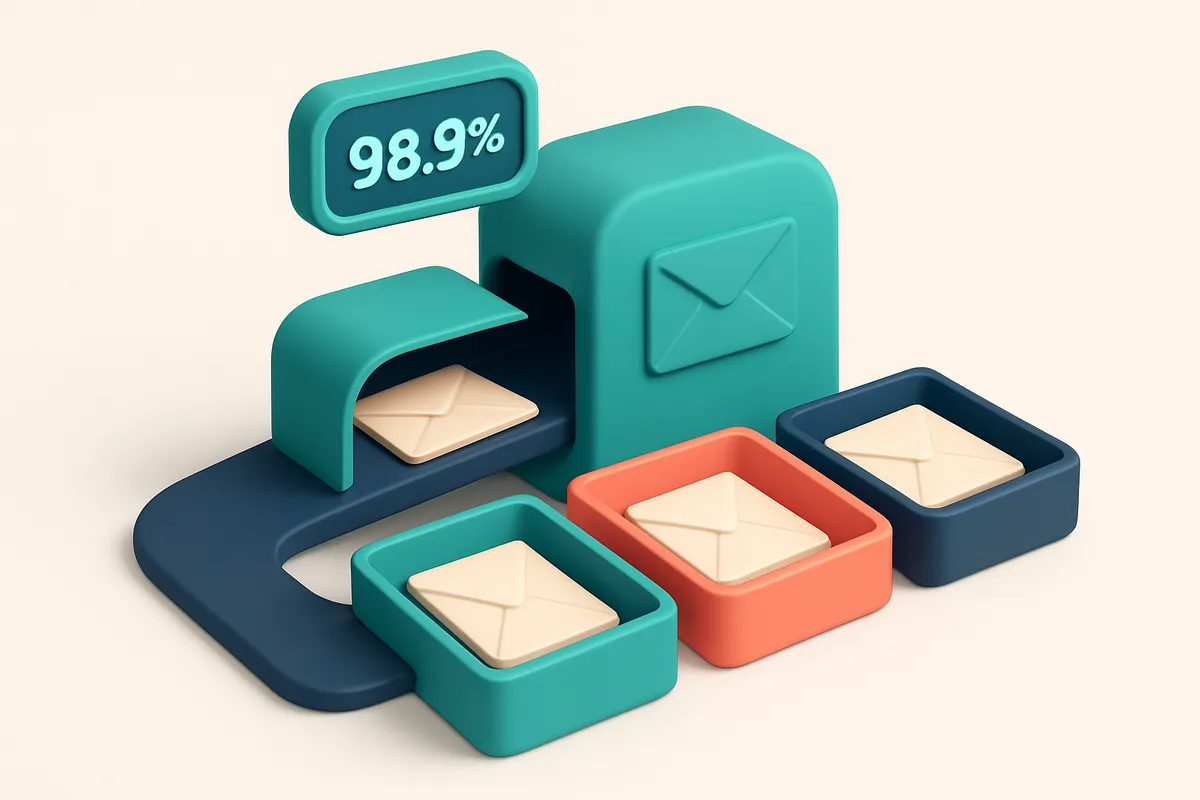
Integrate EmailListChecker’s real-time API directly into your onboarding form, signup process, or campaign workflow. Every time a new email enters your system, verify it instantly—before it hits your database or send queue. You’re not waiting for a bounce later. You’re stopping the problem at the source. This isn’t a batch process. It’s live. You get results in under a second per email, with 98.9% accuracy. That’s fast enough to keep up with real-time user behavior, whether someone signs up on your landing page or fills out a contact form.
Stop Bounces Before They Happen
A single invalid email might not break your campaign, but thousands do. They increase your bounce rate, trigger throttling, and tank your deliverability. Using the API lets you filter out risky or invalid addresses before they ever enter your send queue. This is how you stay within email sending rate limits. Not by guessing, not by relying on outdated lists, but by ensuring only valid, deliverable emails are sent. That means fewer bounces, lower risk of being flagged, and better engagement rates. SMTP policies don't care about your intentions—they care about your sending behavior. If your bounce rate spikes, ISPs will throttle or block your messages. Real-time verification helps keep that rate low, which is why it's an industry-standard practice to verify at point of entry. You don’t need to run your own DNS checks or manage SMTP handshakes. The API does it for you—validating syntax, checking domain existence, testing mailbox responsiveness, and detecting role accounts or disposable domains—all in real time. This isn’t just about avoiding bounces. It’s about building trust with inbox providers. When you consistently send only to valid addresses, you signal reliability. That translates to higher inbox placement, better engagement, and fewer deliverability warnings. The process is simple: integrate the API, verify every email instantly, and move on. You can connect it to Mailchimp, HubSpot, Klaviyo, or SendGrid through our dedicated integrations. If you’re serious about send safety, start with the fundamentals: know your list, clean it early, and verify at scale. With Emaillistchecker.io’s API, you get real-time accuracy without compromising speed. Learn more about the real-time verification API.
Why You Can't Rely on Spammers' Tricks to Bypass Limits
Let’s be clear: rotating IPs, spoofing sender identities, or using multiple domains to send emails isn’t a long-term strategy. It’s a delay tactic that buys you days, maybe weeks — not months or years. Email providers aren’t fooled by these tricks. They track patterns, not just individual IP addresses.
Abnormal patterns get flagged — even across multiple IPs
Most major email platforms (like Gmail, Outlook, Yahoo) use behavioral analysis to detect abuse. If you send 100,000 emails in a single hour from 10 different IPs, that’s not normal. They see it. They know it’s not organic growth. They’ve documented this behavior extensively in their abuse detection systems. For example, the Authentication, Authorization, and Accounting (AAA) principles in email security (defined in RFC 6350) emphasize consistent, verifiable sending behavior — the opposite of what spammers do.
Eventually, the whole IP range gets blocked
It’s not just one IP that gets blacklisted. Once a range is associated with abuse, it’s blocked across all providers — not just one. That’s how systems like Spamhaus or Cloudflare’s DNSBL work. Once an IP range is flagged, even legitimate senders using that same range are affected. You can’t recover from that. It’s like setting a building on fire just to escape a single room. The only real solution isn’t evasion — it’s preparation. You need to send only to contacts who actually want your messages. That means a clean list, verified in real time and maintained over time. No exceptions. No shortcuts. This is where tools like **[Email List Checker](https://emaillistchecker.io/bulk-verification)** come in. You’re not just reducing bounces — you’re removing invalid, risk-prone, or disposable addresses before they hurt your sender reputation. High bounce rates, spam complaints, or blacklisting don’t come from clean data. They come from list fatigue. Spammy tactics might seem tempting when your list is large and growing fast. But they only delay the inevitable: delivery failure, reputation damage, and lost opportunity. The most sustainable approach isn’t to trick the system — it’s to respect it. Clean your list. Verify every address. Use a reliable **[email verification API](https://emaillistchecker.io/api)** to check real-time, and integrate it directly into your workflow. That’s how you stay within limits — not by breaking them, but by sending responsibly.
The Hidden Cost of Ignoring List Hygiene
You might think your send volume is fine, but every invalid email on your list is quietly eating into your deliverability budget. Real-time email verification doesn’t just catch typos — it stops you from sending to addresses that don’t exist, or worse, are set up to reject you. Let’s be clear: your sending rate limit isn’t just about volume. It’s about quality.
Bounces Are Not Just a Numbers Game
Every bounce — even a soft one — counts. You’re not just losing one send. You’re triggering sender reputation systems that track patterns. High bounce rates signal poor list hygiene. According to Return Path (now Validity), senders with bounce rates above 2% are significantly more likely to be flagged by inbox providers. That threshold isn’t arbitrary. It’s a benchmark used across the email ecosystem to detect risky behavior. Even legitimate messages consume your daily rate limit. So when you’re sending to disposable domains, role accounts, or outdated addresses, you’re burning through bandwidth without any real return. That’s inefficient. Worse, each bounce eats into your sender reputation. Repairing it takes months — if it’s possible at all.
The Point of No Return: Blacklists
Let’s talk about the cost of going too far. A single spike in bounces, especially from a high-volume campaign with uncleaned data, can trigger automated responses. Your IP or domain can end up on a blocklist like Spamhaus or Barracuda. Once listed, your deliverability suffers across multiple providers — not just Gmail or Yahoo, but Outlook and other enterprise systems too. Reputation damage isn’t just visible in bounce rates. It shows up in inbox placement. Even if your email technically reaches the inbox, it might land in the Promotions tab, or worse — the spam folder. And unlike a cold email list, reputation recovery isn’t fast. It requires consistent volume, low bounce rates, and a proven track record of engagement — all of which are impossible while you’re still sending to invalid addresses. Let’s say you’re sending 10,000 emails a day. If 1,000 of them are dead or catch-all addresses, you're not just wasting send credits — you’re accelerating your risk profile. That’s why cleaning your list before every campaign isn’t a luxury. It’s a necessity. You can check your list’s health before you send. Real-time verification tools can flag invalid, disposable, and risky addresses in minutes. With bulk verification, you’ll cut your bounce rate before it starts. Use the [bulk verification](https://emaillistchecker.io/bulk-verification) tool to test your list instantly, or integrate the [API](https://emaillistchecker.io/api) to verify on contact capture. Even better: find missing emails with the [email finder](https://emaillistchecker.io/email-finder) and keep your list fresh. Keep your list clean. It’s the quiet foundation of every successful email campaign.
How EmailListChecker Helps You Stay Within Limits
Bulk Verification: Clean Your List Before You Send
Let’s be honest—you don’t want to hit a sending rate limit because your list is full of dead ends. Our bulk verification process weeds out invalid, catch-all, and disposable emails before they ever reach your ESP.
These addresses aren’t just dead—they’re harmful. They can trigger spam traps, hurt sender reputation, and get your IP blocked. Using bulk verification, you reduce noise, cut bounce rates, and stay within platform-imposed sending caps.
Accuracy, Real-Time Checks, and Proactive Deliverability
You’re not trusting luck. Our verification engine runs at 98.9% accuracy—meaning 99 out of 100 active emails we flag as valid truly are. Less guesswork, fewer surprises.
- Remove catch-all addresses: They accept all emails, so they can’t be verified, and they often mean your list is outdated or misused.
- Flag disposable domains: Services like Mailinator or TempMail generate throwaway inboxes. These can look like valid users but are never real.
- Use the real-time API: Integrate verification into your signup flow to stop bad addresses at the source. No more list bloat.
- Test deliverability upfront: Before launching a campaign, run inbox placement tests. This shows you how your message lands in real inboxes, not just spam folders.
- Sync with your tools: Connect directly to Mailchimp, SendGrid, HubSpot, or Klaviyo. Clean data flows in—no manual scrubbing.
Here’s the reality: platforms limit sends to protect users from spam. If your list is full of invalid or risky addresses, you’ll hit those limits faster—regardless of your intent.
Studies show that lists with high bounce rates (over 2%) are more likely to be flagged by providers like Gmail or Outlook (Spamhaus research). Keep your bounce rate low by verifying first.
Think of verification as your rate limit shield. You send fewer, higher-quality messages—not more, lower-quality ones. That’s how you stay within limits without sacrificing reach.
“A clean list isn’t just a technical win—it’s a deliverability requirement.”
With direct integrations and a deliverability test suite, you’re not just staying within limits—you’re optimizing for real inbox placement.
Try 100 free verifications today: start here. Your deliverability team will thank you.
The Bottom Line: Clean Lists = Sustainable Sending
Rate limits are a technical necessity, not a flaw. They exist to protect inbox providers and ensure message quality. You can’t avoid them, but you can reduce their impact.
The most effective way to stay within limits is to eliminate invalid and unengaged addresses before sending. Valid, interested recipients mean fewer bounces, lower spam complaints, and better deliverability—keeping you safely under threshold.
Regular list hygiene isn’t operational overhead. It’s the foundation of long-term sender health. Sending only to verified, active addresses reduces strain on infrastructure and preserves your sender reputation.
Keep reading
- Email bounces: codes, causes and prevention (complete guide)
- How to Interpret SMTP Bounce Codes for Email Deliverability
- Rate Limiting Explained: How It Affects Email Deliverability
- Understanding Bounce Rates in Email Marketing
- Preventing Bounce Emails: A Technical Guide
Ready to put this into practice? Emaillistchecker.io verifies emails with 98.9% accuracy — start with 100 free verifications.
Frequently asked questions
What happens if I exceed my email sending rate limit?
You’ll likely receive throttling or temporary blocking. The provider may limit or quarantine future sends until the rate resets.
Can I increase my sending rate limit?
Yes, but only through reputation building, domain warming, or using dedicated IPs with verified senders. It’s not a quick fix.
How often should I verify my email list?
Before every major campaign. Use bulk verification for full lists and real-time API for new additions.
Do disposable email addresses harm deliverability?
Yes. Disposable domains are often flagged by providers as high-risk. Sending to them wastes sends and harms reputation.
What’s the benefit of a 98.9% accuracy rate?
It means nearly every invalid address is caught, reducing bounce rates and avoiding reputational damage.
Can tools like EmailListChecker prevent my domain from being blacklisted?
Indirectly. By removing invalid addresses, you lower bounce rates and avoid spam traps—key factors in blacklist prevention.
Does sending to role accounts hurt deliverability?
It can. Role addresses like admin@ or sales@ are often ignored or marked as low engagement. They inflate bounce risks and harm sender reputation.
Why does a catch-all email cause problems?
Catch-all domains accept all emails, including spam. Providers treat them as suspicious. Sending to them can trigger anti-abuse systems.
How does email verification help reduce bounce rates?
It removes invalid, non-existent, and disposable addresses before sending. This reduces hard bounces and maintains sender health.
Is there a free way to start verifying my list?
Yes. EmailListChecker offers 100 free verifications to test the tool. Credits never expire, so you can use them when needed.
Can I integrate email verification with my ESP?
Yes. EmailListChecker integrates with Mailchimp, SendGrid, Klaviyo, and HubSpot, letting you verify before sending.
How quickly does real-time API verification work?
Typically under 1 second per email, with results returned in a structured format for immediate use.