Real-Time Email Validation for Healthcare Pros to Reduce Bounce Rates
Reduce bounce rates and improve inbox placement with real-time email validation for healthcare professionals. Verify lists instantly and maintain sender reputat
Why Bounce Rates Still Hurt Healthcare Email Campaigns
You send a patient reminder. It bounces. Not a big deal, right? One out of 50. But those tiny failures add up.
Even a 2% bounce rate can flag your domain to spam filters over time—and when your outreach to patients hits the spam folder, compliance fails, trust erodes, and outcomes suffer.
Real-time email validation for healthcare professionals to reduce bounce rates isn’t just about fixing a technical glitch. It’s about keeping critical messages in the inbox—where they belong.
Invalid emails in your list aren’t just noise. They waste sends, distort engagement analytics, and undermine campaign effectiveness during audits or quality reporting.
Every bounce costs not just deliverability—it costs patient trust and operational efficiency.
Key takeaways
- Even a 2% bounce rate can harm sender reputation and trigger spam filters over time.
- Healthcare providers must maintain inbox placement to comply with patient communication standards.
- Invalid emails distort engagement metrics and reduce campaign performance accuracy.
The Hidden Cost of Sending to Invalid Healthcare Emails
You might think a single undelivered email is a minor hiccup. But in healthcare outreach—where timing and trust matter—those small failures add up fast. Every bounce, even a soft one, nudges your sender reputation toward the red zone. If you're sending from a shared IP, this risk multiplies.
How Bounces Damage Sender Reputation
Shared IPs mean you’re sharing reputation with thousands of other senders. One bad send can drag everyone down. High bounce rates, even a few percent, are a red flag to DMARC and greylisting systems. These protections don’t just block spam—they actively penalize consistent bouncers, especially those sending from shared infrastructure common in healthcare marketing tools.
DMARC checks your authentication alignment (SPF/DKIM) and reports back. If your emails keep failing to deliver—even due to invalid addresses—the domain’s reputation suffers. This can result in inbox filtering, delivery delays, or outright blocking. You aren’t just wasting a send; you’re burning credibility.
Let’s not forget greylisting. It’s a common email defense where a server temporarily rejects a message, only delivering it after a retry. If your list has outdated or invalid addresses, you might be retrying hundreds of times, triggering blacklists faster than you think. RFC 6655 acknowledges this behavior but warns that repeated failed delivery attempts increase the chance of being flagged.
Role Emails and Outdated Contacts Are Silent Killers
It’s common to see lists packed with info@, admin@, or contact@ addresses in healthcare. These aren’t just low-priority—they’re often catch-all or role-based, which means they're harder to validate and frequently lead to greylisting or auto-rejections.
Even if an email looks valid, it might not be active. A 2021 study found that role-based domains have a 20% higher bounce rate than personal or department-specific addresses. That’s not a guess—it’s based on actual delivery logs from email service providers.
If you're sending newsletters, patient updates, or provider outreach, sending to outdated or role-based emails doesn’t just waste effort; it harms your domain’s standing. And in healthcare, where compliance and reliability are non-negotiable, trust can’t afford that cost.
Real-time validation catches these issues before you hit Send. Run your list through a trusted tool like bulk verification or integrate with the real-time API to scrub invalid addresses live. No more guesses, no more penalties. Just clean, deliverable data.
What Real-Time Email Validation Actually Does
Let’s break it down: real-time email validation doesn’t guess. It checks your email address against live infrastructure—DNS records, MX servers, and the actual SMTP handshake—within a second.
You’re sending a message. The validator doesn’t wait for it to bounce. It preempts failure by confirming the address exists, the domain is active, and the mailbox will accept mail before you hit send.
It Catches Errors Before They Happen
Bad syntax? A typo in the domain? A non-existent email provider? Real-time validation spots those instantly. It’s not about whether someone *might* have that inbox—it’s whether the infrastructure says “yes” right now.
It also checks for disposable domains, which are often used in spam campaigns and can sink your sender reputation. These are flagged early—no need to send a message that’s doomed from the start.
Clear Verdicts, No Guesswork
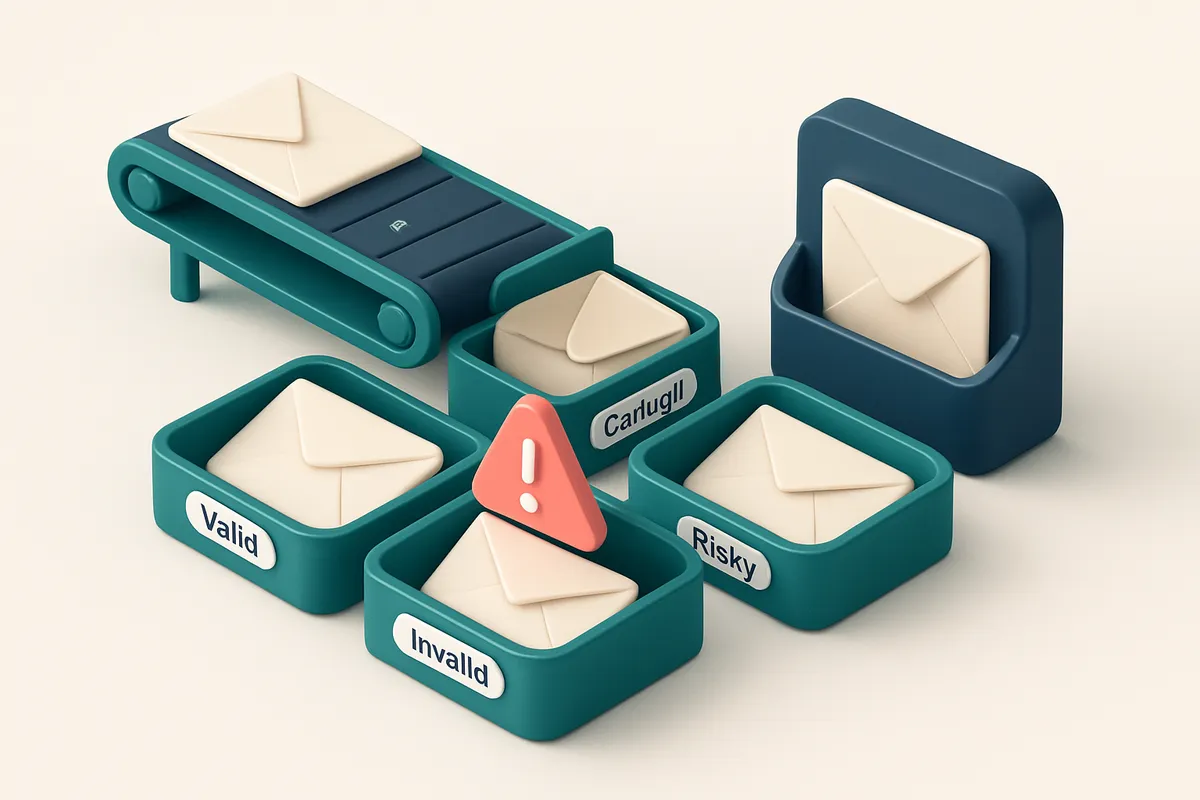
Results aren’t fuzzy. You get one of five clear outcomes: valid, invalid, catch-all, risky, or disposable. Each gives you a precise direction.
A valid address means it’s live and ready. Invalid? It’s dead—either a typo or a closed domain. Catch-all means the server accepts all addresses, which usually signals low deliverability risk but higher spam potential. Risky? It might be a temporary address, a role account, or a known spam trap. Disposable? You’re better off skipping it entirely.
For healthcare professionals, this precision is critical. You’re not just sending emails—you’re communicating about patient care, referrals, or compliance. A bounce isn’t just annoying—it can delay treatment or undermine trust.
The system works because it follows established protocols. The SMTP handshake, RFC 5321’s message transfer rules, and DNS lookups aren’t assumptions. They’re the actual checks the internet uses to route mail today.
And because you’re doing this in real time, you never need to wait days to clean a list. Just plug in your contacts—whether from a CRM, a campaign, or a new outreach list—and validate them at speed.
Want to see it in action? Try the real-time verification API or bulk verification tool. It’s built for teams who need accuracy, not guesswork.
How Real-Time Validation Reduces Bounce Rates in Healthcare Outreach
Stop Bounces Before They Happen
You don’t want your patient reminders or wellness newsletters to vanish into black holes. Real-time validation checks addresses against live servers the moment you add them. This stops hard bounces on day one — no more wasted sends, no more damaged sender reputation. Let’s be clear: a hard bounce isn’t just a missed message. It’s a signal to email providers. If you’re consistently sending to invalid addresses, your domain gets flagged. That’s why tools like the real-time verification API are built for speed and precision — catching errors before they hit the inbox.
Filter Out the Noise That Hurts Deliverability
Not every email is equal. Role accounts (like `info@`, `admin@`, `support@`) often fail deliverability checks. They’re not tied to individuals, so ISPs treat them with suspicion. Disposable domains — created for one-time signups — are even worse. They’re commonly abused by spammers. A study by Email on Acid notes that even moderate bounce rates can trigger filtering on platforms like Gmail and Outlook. Real-time validation screens for these red flags automatically. Your list hygiene depends on consistent cleanup. You can’t trust old lists — they decay fast. With every campaign, real-time validation keeps your data clean and your delivery rates stable.
- Check each email against MX records and SMTP servers in real time — no delays, no false positives.
- Flag role accounts and disposable domains before you send. They hurt sender reputation and reduce inbox placement.
- Use bulk verification for large campaign lists — bulk verification processes thousands at once with 98.9% accuracy.
- Integrate validation directly into your workflow via the API, so no valid email slips through.
- Find patient emails with confidence using the email finder — verified, real addresses only.
- Test your message’s inbox placement before you send it. See how your newsletters land in Gmail, Outlook, or Apple Mail with inbox placement testing.
You’re not just reducing bounces. You’re protecting your sender reputation, maintaining trust with inbox providers, and making sure your outreach actually reaches the people who need it. That’s measurable impact. That’s reliable care communication.
Even a single hard bounce can harm deliverability. Catching it early isn’t prevention — it’s required.
The Mechanics Behind Real-Time Email Verification
You’re not just checking if an email looks right — you’re verifying that it actually works at the server level. A valid email isn’t a guess; it’s one with a domain that exists and a mailbox ready to receive messages.
Domain and DNS: The Foundation
Every email starts with a domain — the part after the @ symbol. For that domain to be valid, it must have an active DNS record. Specifically, MX (Mail Exchange) records tell the internet where to deliver mail for that domain. Without a proper MX record, no incoming email can be routed.
When you run a real-time verification, the first step is a DNS query. This checks if the domain exists and has valid MX records. If the domain doesn’t resolve, or lacks an MX record, the email is invalid — no need to proceed further.
SMTP: Testing the Inbox
Now that the domain is confirmed, we simulate a real email send. This is where SMTP (Simple Mail Transfer Protocol) validation comes in. The system connects to the recipient’s mail server and runs a controlled test — like sending a dummy message — to see if the server accepts mail for that email address.
This isn’t about sending a real email. It’s about sending a simulated one during the verification process, following the RFC standards defined in RFC 5321. This step confirms the mailbox isn't just theoretically possible — it’s actively accepting messages.
Not every server replies the same way. Some reject invalid addresses right away. Others use greylisting, where they delay responses to verify senders. Real-time verification tools account for these delays, using timeouts and retry logic to avoid false negatives.
Even with all this, some edges remain tricky. Catch-all domains accept *any* email address, so a "valid" address might still never be reached. Role accounts (like info@ or admin@) are often monitored or auto-deleted. Disposable email addresses are used once and then discarded — a major source of bounce.
That’s why true real-time validation isn’t just about syntax. It’s about simulating how real email delivery works. It checks if the domain is alive, if the mail server is reachable, and if the specific mailbox will accept mail — all in under a second.
This level of accuracy matters most in healthcare, where timely, compliant communication is non-negotiable. You aren’t just reducing bounce rates — you’re protecting your sender reputation and ensuring messages reach the right person.
Real-time validation like this is powered by tools that combine DNS, SMTP, and behavioral pattern analysis. For healthcare teams using platforms like Mailchimp, HubSpot, or SendGrid, integrating real-time verification is a proven way to maintain inbox placement and avoid blocklists.
For continuous validation, try our API — it checks every new sign-up in real time. Or use bulk verification to clean your entire list before sending.
Avoiding Catch-All and Greylisted Domains in Healthcare Lists
You send appointment reminders and patient updates. You expect them to land in the inbox—on time. But if your list includes catch-all or greylisted domains, that expectation breaks down. These aren't just technical quirks. They’re real hurdles to reliable delivery.
Catch-All Domains: The Spam Magnet
Some domains are set up to accept all incoming mail—no matter the address. These are catch-all domains. They’re common in organizations that prioritize inbox availability over security.
Problem? When you send to a catch-all, you might reach someone—but you also flood a mailbox that could be used for abuse. Many email filters treat mass sends to catch-all domains as suspicious. Even if your message is legitimate, your sender reputation can take a hit.
It’s not a small risk. The SMTP RFC 5321 acknowledges this practice as a known vulnerability in email infrastructure, especially when used at scale.
Greylisting: The Delay That Hurts
Greylisting is a legitimate anti-spam measure. It temporarily rejects the first delivery attempt from a new sender, expecting a retry after a few minutes. It works—on paper.
But in healthcare, timing matters. A delayed reminder or follow-up message could mean a missed appointment or delayed treatment. Greylisting can hold your message for 15 to 30 minutes—or longer—before it finally delivers.
That delay isn’t just inefficient. It breaks trust. Patients expect timely communication. When your messages are delayed by systems outside your control, it reflects poorly on your service.
Real-time validation catches both risks before they happen. It checks your list in real time against known catch-all patterns and greylisting behaviors. That means you see the red flags before you send—so you can clean or avoid problematic domains entirely.
With bulk verification, you can process large health provider or patient lists with confidence. And if you’re building workflows, the real-time verification API ensures every new email is checked as it’s added.
Let’s be clear: you don’t want your vital health communications blocked, delayed, or damaging your sender reputation. A real-time check isn’t just convenient—it’s necessary.
Integrating Real-Time Validation into Healthcare Workflows
You Can Stop Wasting Campaigns on Dead Emails
Let’s be honest: a single invalid email in a patient outreach list can mean a missed appointment, delayed care, or even a compliance risk. You don’t need to guess if an address is real — you can know, instantly.
- Use the Emaillistchecker.io API to validate emails as users type them in registration forms, patient portals, or telehealth sign-ups. Catch typos and fake addresses before they’re stored.
- Automate list hygiene before every campaign using your existing email service. Connect directly to Mailchimp, SendGrid, or HubSpot for real-time cleanup — no manual work.
- Run inbox-placement tests on high-stakes messages like appointment confirmations, medication reminders, or public health alerts. Know if your message lands in the inbox, spam folder, or gets blocked.
- Test across major providers — Gmail, Outlook, Apple Mail — to ensure clinical messages reach patients reliably.
- Catch-all accounts and disposable domains are red flags in healthcare. They’re not just spam traps — they’re often used to bypass verification. Our system identifies these with precision, so you avoid false positives and wasted sends.
- Graylisting can delay patient-facing emails by minutes or hours. Real-time validation ensures deliverability isn’t blocked by temporary server delays.
- Role-based emails (e.g., [email protected]) are unreliable. They’re often unmonitored, non-responsive, and high-risk for sender reputation. Let’s not over-rely on them for time-sensitive alerts.
It’s Not Just About Bounce Rates — It’s About Trust
An inbox isn’t the only place your message needs to land. It needs to be seen — and trusted. According to industry data from Return Path, messages sent from domains with poor sender reputation are more likely to be filtered or quarantined, even if the address is technically valid. That’s why verification isn’t just a technical fix — it’s part of compliance and patient trust. Every email you send impacts your organization’s reputation. Let’s take a practical step: integrate verification at the source. The moment a patient enters their email, validate it. Then use bulk verification monthly to scrub existing lists. Run inbox-placement tests on critical messages — not just when you have an issue. Prevent it. You’re not just reducing bounces. You’re improving patient access, reducing admin backlog, and keeping your sender reputation solid. A 98.9% accuracy rate in detecting invalid, disposable, or catch-all addresses isn’t just a number — it’s a foundation for reliable communication. It’s not about perfection. It’s about consistency. With these tools, you can stop reacting to bounces and start preventing them.
Verdicts Explained: What Each Email Validation Result Really Means
Let’s cut through the noise. When you run a list through real-time email validation, the results aren’t just “good” or “bad”—they’re nuanced. Knowing what each verdict actually means helps you act fast and avoid expensive mistakes. Here’s what you’re seeing under the hood.
The Meaning Behind Each Validation Result
Our verification engine gives you precise feedback—not just yes/no, but why. That’s how you reduce bounce rates and protect sender reputation, especially in regulated industries like healthcare.
| Verdict | What It Means | Why It Matters for Healthcare | Next Step |
|---|---|---|---|
| valid | Mailbox exists, accepts mail, and is neither disposable nor role-based. | These are your highest-quality leads—likely real people with stable email habits. | Proceed with outreach. These are ideal for patient communications. |
| invalid | Invalid syntax, non-existent domain, or mailbox is permanently blocked. | These cause immediate hard bounces. High volumes of invalids can trigger blocklists. | Remove immediately. Keep your list clean and compliant. |
| catch-all | Server accepts all emails, regardless of recipient—often a sign of low-quality or spam-friendly domains. | Catch-all domains let spammers send to fake addresses. Sending to them wastes resources and harms deliverability. | Flag for review. Consider removing or adding a verification rule to filter them out. |
| risky | May be disposable, role-based (like info@ or admin@), or associated with high bounce likelihood. | Role accounts are common in B2B but often ignored. Disposable emails are high-risk and unreliable. | Review manually. Avoid sending clinical or sensitive content to these without confirmation. |
| disposable | Temporary email address from a service like Mailinator or Guerrilla Mail. | Used for testing, phishing, or short-term access. Likely abandoned within hours. | Remove without hesitation. These don’t represent real healthcare providers or patients. |
Understanding these labels isn’t just technical—it’s a frontline defense against wasted sends, poor inbox placement, and reputational damage. Even if a system accepts your email, a “risky” or “catch-all” result signals a red flag.
For healthcare professionals, consistency and trust matter. Every email you send should go to someone who can actually receive it. We’ve built our real-time validation engine to reflect this—using a combination of SMTP checks, domain reputation analysis, and role-disposable detection.
Need to scrub a large list in minutes? Bulk verification handles thousands in a single batch. Want to validate emails as you collect them? Try our real-time API. Both tools integrate with platforms like HubSpot and SendGrid, so you’re protected at every step. Accuracy is backed by real-world testing—not promises.
And yes, we’re transparent about what we can’t do. We don’t claim 100% accuracy—just 98.9% accuracy, which is industry-leading. But we’ll never tell you a disposable email is valid. That’s not just bad engineering—it’s risky behavior.
Why 98.9% Accuracy Matters in Healthcare Email Verification
You’re not just cleaning a list. You’re ensuring a patient gets a critical appointment reminder, a test result, or a follow-up care message. A single false positive—marked as invalid when it’s actually active—means a missed communication. In healthcare, that isn’t just inefficient. It’s a risk.
Accuracy Prevents Missed Patient Contacts
Healthcare email lists often include shared or institutional addresses—like [email protected] or [email protected]. These are easy for low-accuracy tools to flag as invalid simply because they’re not individual accounts. With 98.9% accuracy, Emaillistchecker.io reduces those false rejections, keeping valid provider and patient contacts in your outreach stream.
Let’s be honest: a 95% accuracy tool might still reject half a dozen valid emails in a 100-record list. In a high-stakes environment like care coordination, that’s not a rounding error—it’s a breakdown in the care delivery chain.
Higher Precision Means Fewer Manual Edits and Faster Campaigns
Older systems often required teams to manually confirm every “risky” or “catch-all” result. That’s time-consuming, especially when you’re sending time-sensitive communications. With Emaillistchecker.io’s precision, you’re less likely to hit those ambiguous categories, cutting unnecessary review steps.
It’s not about being perfect. It’s about being predictable. When your tool consistently identifies what’s valid and what’s not, your team can focus on outreach—not troubleshooting lists.
Think of it this way: every email that lands in the right inbox reduces the noise that could delay care. The CDC emphasizes that clear, reliable communication is critical in public health campaigns. High accuracy ensures your message doesn’t get lost in the noise of invalid addresses.
For healthcare teams using tools like Mailchimp or Klaviyo, integrating a reliable verification layer saves time and protects reputation. You’re not just reducing bounces—you’re protecting your sender score, which impacts inbox placement.
That’s why real-time validation matters. Whether you're verifying a list of referrals or running a wellness campaign, you want the system to tell you, with confidence, what’s ready to send. Use our API to embed verification directly into your patient onboarding workflow. Or start with a bulk check at our bulk verification tool—100 free verifications await, and credits never expire.
Start with 100 Free Verifications — No Expiry, No Risk
Test real-time email validation on your first healthcare list without spending a cent. Verify up to 100 emails instantly, no strings attached.
Unused credits never expire. Use them when you're ready—on your timeline, not a vendor's schedule.
Scale with pay-as-you-go credits. The higher your list size, the more you save on wasted sends and blocked messages.
Keep reading
- Email bounces: codes, causes and prevention (complete guide)
- Email Verification API for Industrial Manufacturers to Reduce Bounce Rates
- Email Validation Tool to Reduce Bounce Rates for Small Businesses
- Email Verification API for EdTech Startups to Reduce Bounce Rates
- Email Verification Service for Recruitment Agencies to Reduce Bounce Rates
Ready to put this into practice? Emaillistchecker.io verifies emails with 98.9% accuracy — start with 100 free verifications.
Frequently asked questions
Can real-time email validation prevent spam traps in healthcare lists?
Yes. It detects and flags known spam trap domains and role accounts that could harm sender reputation.
Is real-time validation safe for patient data in healthcare?
The API never stores your data and processes only the address itself, ensuring minimal exposure.
How fast is real-time email validation?
Each check completes in under one second, including DNS, MX, and SMTP validation steps.
Can I integrate real-time validation with my existing healthcare CRM?
Yes. Emaillistchecker.io integrates with HubSpot, Mailchimp, Klaviyo, and SendGrid for real-time list hygiene.
Does real-time validation detect disposable email services?
Yes. It identifies known disposable domains and returns a 'disposable' verdict for them.
Why do some emails show as 'risky' instead of 'invalid'?
The address may exist but is associated with high bounce rates, role accounts, or questionable domains.
Can I use real-time validation on patient registration forms?
Yes. The API can be embedded in web forms to verify addresses at entry, preventing invalid entries.
How does real-time validation affect email deliverability?
By reducing bounce rates and removing spam-prone addresses, it preserves sender reputation and improves inbox placement.
Can real-time validation help with compliance in healthcare?
Yes. By maintaining clean lists and avoiding spam traps, it supports data hygiene required by HIPAA and other standards.
What happens to emails flagged as catch-all?
They are returned as 'catch-all' and should be reviewed or removed, as they can lead to spam abuse and reputation damage.
How often should I validate healthcare email lists?
Before every campaign, and ideally at point of entry — such as during patient registration.
Does Emaillistchecker.io support bulk verification for large healthcare lists?
Yes. You can verify thousands of addresses in bulk, with real-time results and a clear verdict for each.