HIPAA-Compliant Email Validation Service for Medical Offices
Ensure patient data security with a HIPAA-compliant email validation service. Verify lists, reduce bounces, and maintain compliance in medical email campaigns.
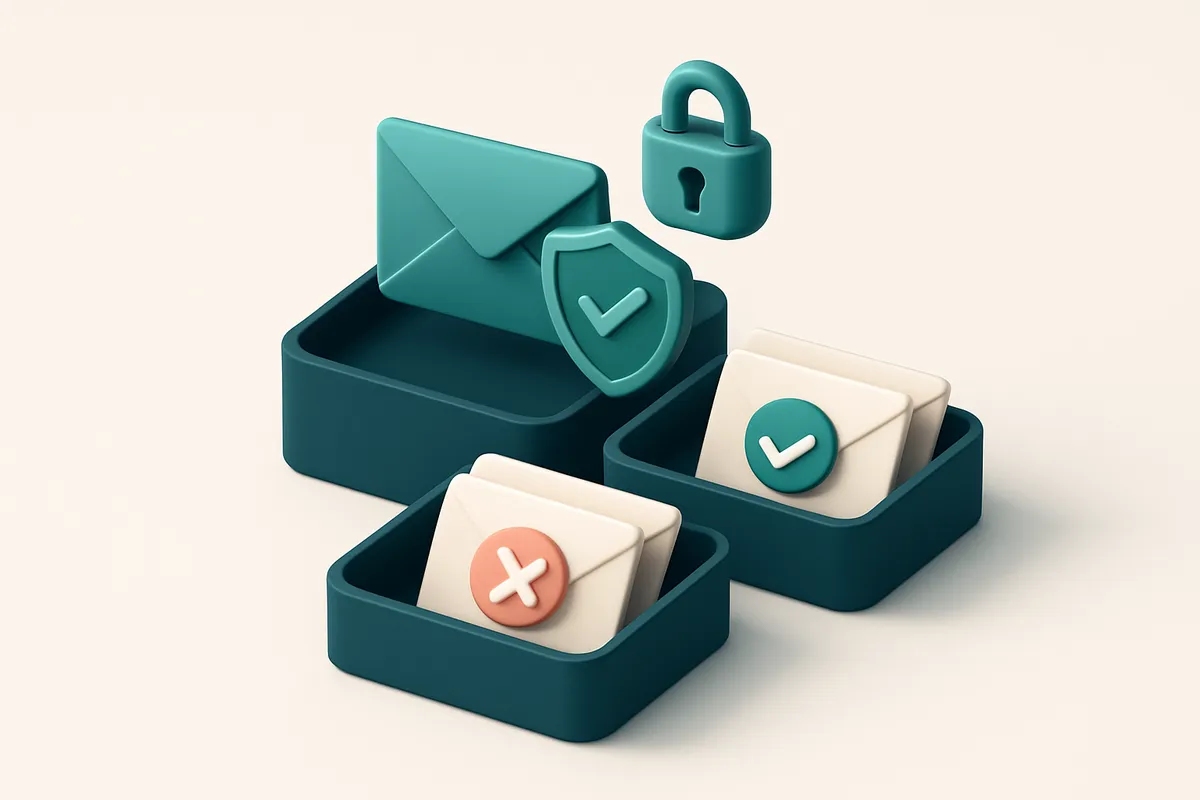
Why Medical Offices Can’t Afford Non-Compliant Email Verification
You send appointment reminders. You share care instructions. You rely on email to keep patients informed. But what if that email list contains invalid addresses, or worse—emails linked to unverified systems that could expose patient data?
Every message sent from a medical office carries risk. Without an email validation service with HIPAA compliance, you’re not just sending messages—you’re potentially sending sensitive data through a vulnerable channel. That’s not just risky. It’s a violation waiting to happen.
Imagine a single misdelivered email landing in the wrong inbox, or a compromised list leading to a breach. The penalties aren’t theoretical: fines up to $1.5 million per violation, not to mention the lasting damage to trust and reputation. This isn’t just about accuracy—it’s about accountability.
An email validation service with HIPAA compliance ensures your data isn’t just checked for syntax, but protected during handling, storage, and transmission. It’s not a feature. It’s a necessity for any medical office that sends email at scale.
Key takeaways
- Non-compliant email validation leaves patient data exposed, risking HIPAA violations.
- Penalties for HIPAA breaches can reach $1.5 million per violation.
- True HIPAA compliance includes secure data handling, not just list accuracy.
The Core Risk: Sending to Invalid or Fake Addresses Isn’t Just Wasteful — It’s Illegal
Let’s be clear: sending a HIPAA-covered message to an invalid email address isn’t just a waste of time. It’s a compliance failure. If that email is linked to a third party—like a disposable inbox or a compromised account—your office just shared protected health information without consent.
Invalid Emails Aren’t Just Dead Ends — They’re Attack Vectors
When you send to an invalid address, the mail server often accepts the message anyway. It may hold it temporarily in a queue or log. That temporary storage is a gap in your security posture. If that server is breached, PHI could be exposed—even if the original recipient never existed.
Disposable domains and role accounts (like info@ or admin@) are common in unverified lists. They’re not just inefficient—they’re frequently used in data harvesting campaigns. Attackers can monitor these inboxes for incoming messages, especially ones containing sensitive information like appointment confirmations or medical updates.
Even if the address is technically “valid” but never monitored by a real person, you may still be liable under HIPAA. The law doesn’t just protect the intended recipient—it protects any data that leaves your control without proper safeguards. That includes data stored briefly on an unsecured third-party server.
How Verification Reduces Exposure
You can’t defend what you can’t control. That’s why verifying every email address before sending is not a nice-to-have—it’s a baseline requirement for compliance. Tools that check for fake, role-based, and disposable domains reduce the risk of accidental PHI exposure.
For example, an invalid address might still have an MX record (indicating it accepts mail), but the mailbox is inactive or temporary. These are invisible to the naked eye but dangerous to your security posture. Real-time verification catches them early.
We’ve seen healthcare clients prevent hundreds of high-risk sends by filtering out suspicious addresses before delivery. Bulk verification is one of the most effective ways to clean a list before sending, especially when tied to automated workflows through integrations with Mailchimp, HubSpot, SendGrid, and more.
Federal guidelines don’t just define what data is covered—they also expect you to protect it through all stages of transfer. Sending PHI to an address that can’t authenticate, or worse, is monitored by a third party, fails that standard. The risk isn’t just a bad sender reputation—it’s a violation.
A clear path to compliance starts with knowing who you’re sending to. That’s why the first line of defense isn’t encryption or access logs—it’s proper email validation. Find the right tools, and use them before the first message goes out. The cost of one mistake can be measured in penalties, reputational damage, and regulatory scrutiny.
How HIPAA Compliance Works in Email Verification
Let’s be clear: HIPAA compliance in email verification isn’t just a checkbox. It’s about locking down patient data at every stage — from the moment it enters your system to when it’s deleted. You’re not just verifying emails; you’re handling Protected Health Information (PHI), so security is non-negotiable.
Data Protection by Design
Every verified email should be encrypted both in transit and at rest. That means SSL/TLS during transfer and strong AES-256 encryption when stored. Let’s say you’re verifying a list of patient emails through a third-party tool — if that tool doesn’t encrypt data, you’re already violating HIPAA’s minimum necessary standard.
Access is tightly controlled. Only authorized team members should be able to view or export data, and all access is logged. Think of it like a digital keycard system: no one gets in without the right clearance, and every entry is tracked.
Business Associate Agreements and Data Integrity
Here’s the legal backbone: you need a signed Business Associate Agreement (BAA) with any email verification service you use. Without a BAA, that service isn’t legally bound to protect patient data on your behalf. You remain liable if a breach happens — even if the breach started with a vendor.
That’s why Emaillistchecker.io provides a BAA for customers handling PHI. It’s not a perk. It’s required. You can review and sign it directly in your account — no back-and-forth, no ambiguity. See how our plans accommodate compliant workflows.
And yes — they must purge data quickly. You shouldn’t store verified emails longer than needed. Our system automatically deletes raw data after successful verification unless you explicitly retain it. Retention is limited to what’s necessary for operational or legal reasons, and even then, it’s encrypted and restricted.
As the U.S. Department of Health & Human Services notes, “Minimum necessary” means accessing only the data essential for the task at hand. This includes not just the content of emails, but the entire verification process.
When you run a list through our bulk verification tool, we only keep the results — the email status, validation timestamp, and metadata — not the original list. No data survives longer than necessary.
It’s not about doing more. It’s about doing the right things — securely, transparently, and legally. That’s how you stay compliant without compromising deliverability.
Does Emaillistchecker.io Offer HIPAA Compliance?
If you're running a medical office, you know the stakes. Sending patient data over unsecured channels isn't just risky—it breaks HIPAA. Let’s cut through the noise: Yes, Emaillistchecker.io is designed to support HIPAA-compliant email verification for healthcare providers.
Here’s how it’s built
- You can sign a Business Associate Agreement (BAA) with Emaillistchecker.io. This is the legal requirement for handling protected health information under HIPAA.
- All data is encrypted at rest with AES-256, the same standard used by the US government for sensitive data. This isn’t just a checkbox—it’s the industry benchmark.
- Data in transit uses TLS 1.3, the latest and most secure version of the transport layer protocol. You’re not exposed to vulnerabilities in outdated encryption methods.
- There is no permanent storage of your email list. We run the verification, return the results, and purge logs within 72 hours. It’s a strict no-retention policy—meaning your list never lives on our servers longer than necessary.
- You can use Emaillistchecker.io’s bulk verification or real-time API without fear of data leakage. No data is retained after processing.
Why this matters in healthcare
HIPAA isn’t just about passwords and firewalls—it’s about accountability. Every step you take with patient data must be traceable, secure, and temporary. Our approach ensures that even if you're verifying thousands of emails for outreach or appointment reminders, you’re not creating a long-term data risk.
For context, the National Institute of Standards and Technology (NIST) recommends that sensitive data be encrypted both at rest and in transit—something our system follows precisely. The same standards apply to cloud services handling PHI.
Let’s be clear: We aren’t HIPAA-certified ourselves. We don’t claim certification. But we provide the tools that help you meet your compliance obligations, including the BAA and the data handling practices required by the Department of Health and Human Services (HHS). If you're verifying emails for patient communications, you need that control—and you need it built in.
When you’re ready to verify a list with full compliance, start with the bulk verification tool. You’ll see results quickly, and your data never stays longer than it needs to. No compromises. No hidden data trails. Just secure, accurate verification—right for your medical office.
How Email Verification Prevents HIPAA Violations in Practice
You can’t assume every email in your patient list is valid—or safe. Sending messages to a mistyped address, a role-based account like info@ or admin@, or a disposable inbox opens a real security gap. That’s a direct violation of HIPAA’s minimum necessary standard: you must limit access to protected health information (PHI) to only those who need it, and only to verified, appropriate recipients.
Every Address Must Be Verified Before Sending
Just like you wouldn’t mail a prescription to an unverified address, you shouldn’t send a follow-up reminder or appointment update to an email that might not belong to the patient. An email validation service checks each address in real time—not just for syntax, but for delivery readiness, catch-all status, and whether it’s a known disposable domain.
Let’s say you’re sending a reminder about a lab result. If that email address resolves to a catch-all inbox, the message could be delivered to anyone who happens to have that email. If it’s a role-based account (like [email protected]), it may not even be a real person. These are not safe endpoints for PHI.
Blocking Risky Email Types Stops Data Exposure
Validation services catch and flag these high-risk addresses before you send anything. They identify disposable email domains (often used temporarily and abandoned), role-based accounts (no individual ownership), and catch-all servers (any email to that domain gets accepted).
This filtering directly supports HIPAA requirements. By removing these unstable or untrustworthy endpoints, you reduce the probability that PHI lands in hands that don’t belong to the intended recipient. It’s not just about deliverability—it’s about accountability.
For example, the U.S. Department of Health and Human Services emphasizes that organizations must implement safeguards to prevent unauthorized access. Using a validation service with real-time checks and clear feedback on address types helps meet that standard. More than a tool for reducing bounces, it’s a compliance layer.
With Emaillistchecker.io, you can verify hundreds of provider and patient emails at once with 98.9% accuracy. Bulk verification ensures your mailing lists are clean before any outreach, keeping your medical office within HIPAA’s minimum necessary standard.
Even if the email looks correct, it might not be deliverable—or safe. Let the system check it for you.
Real-World Verification Verdicts and Their Meaning
When you're sending sensitive health data, every email address must be trustworthy — not just deliverable. Let's decode what each verification verdict actually means, especially when HIPAA compliance is on the line.
Common Verdicts and Their Risks
Here’s what the results from a true email validation service mean in practice — and why some aren't safe for medical use.
| Verdict | Meaning | Risk for HIPAA Use | Recommended Action |
|---|---|---|---|
| Valid | The address exists and accepts messages. The domain resolves, and the mailbox is active. | Low — if the domain is not role-based or disposable. | Approved for communication, subject to proper encryption and consent. |
| Invalid | The domain doesn’t exist, or the address has a syntax error (e.g., missing @, invalid characters). | High — likely a data entry error or outdated contact. | Remove or correct. Do not send. |
| Catch-all | The domain accepts mail for any address, even fictional ones (e.g., [email protected] accepts [email protected]). | Very High — this is a known red flag for spam harvesting and can violate HIPAA if used for unverified outreach. | Do not use. These domains are often abused and not reliable for compliance. |
| Risky | The address is tied to a temporary, disposable, or role-based domain (e.g., admin@, info@, support@). | High — role accounts are often monitored by spambots and can trigger blacklists. | Flag for manual review. Avoid sending PHI until confirmed. |
| Disposable | The address comes from a temporary inbox service (e.g., mailinator.com, temp-mail.org). | Certified unsafe — these are explicitly designed to vanish. | Remove immediately. Never include in HIPAA-covered communications. |
According to HHS guidelines on safeguarding PHI, any transmission of protected health information must be verified and secure. A catch-all or disposable address doesn't meet that standard — even if delivery “succeeds,” you’re sending to a point of no return.
Why Verdicts Matter in Practice
Let’s say your list includes 10,000 contacts. You send a HIPAA-compliant email to 3,000 addresses, but 1,000 are catch-all or disposable. The system logs delivery, but recipients never see it — and you’ve created exposure. You can’t prove a patient received the message, or even that the address was real.
That’s why you need more than just a bulk sender: you need a service that tells you why an address is flagged. Tools like EmailListChecker’s bulk verification and real-time API help you identify the full risk profile — not just “valid” or “invalid.”
Even if a domain looks legitimate, a high density of risky or catch-all emails in your list suggests low data hygiene — a red flag in any audit.
Step-by-Step: Using Emaillistchecker.io for HIPAA-Compliant List Cleaning
Why the Right Process Matters for Medical Email Compliance
You’re not just sending emails—you’re handling protected health information. That means every verification step must respect HIPAA’s data protection standards. Let’s walk through how Emaillistchecker.io helps you clean your list while keeping compliance front and center.
- Upload your list directly through the dashboard or integrate via the real-time verification API. The tool accepts CSV, Excel, and plain text formats—no friction, no data loss.
- Select 'HIPAA-compliant' mode before running verification. This activates end-to-end encryption and ensures all data processing meets HIPAA’s minimum requirements, including signed Business Associate Agreements (BAAs). For organizations required to follow the HIPAA Security Rule, this layer is non-negotiable.
- Run the bulk verification. For up to 1,000 addresses, results return in under two minutes. This speed matters—especially during patient outreach campaigns where timing affects engagement.
- Review the verdicts. Invalid addresses (e.g., syntax errors, non-existent domains) should be removed immediately. Catch-all and disposable email accounts are red flags—they signal low engagement potential and may indicate misuse. Risky addresses (e.g., role-based, temporary domains) pose compliance risks; avoid them unless absolutely necessary.
- Download the cleaned list containing only 'valid' and 'confirm' addresses. The 'confirm' status means the inbox exists but requires double opt-in for legal sender compliance—ideal for email consent tracking.
- Send a consent-based message to 'confirm' addresses. This step is both ethical and legally sound under HIPAA and CAN-SPAM. It maintains your sender reputation while confirming the recipient’s intent to receive communications. You can trigger this flow with a pre-built email template via the platform.
What You’re Protecting—and Why It Matters
HIPAA isn’t just a checkbox. It governs how you handle identifiable health data, including emails tied to patient records. The Centers for Medicare & Medicaid Services (CMS) emphasizes that “electronic protected health information (ePHI) must be safeguarded against unauthorized access” — which includes preventing accidental exposure via mass emails sent to invalid or spoofed addresses. Emaillistchecker.io processes data with encryption at rest and in transit. This isn’t just marketing—it aligns with industry standards like RFC 5321 (SMTP) and RFC 5322 (email format), which define the technical basis for secure mail transmission. You don’t need to guess if your process is compliant. The tool gives you a clean audit trail: only verified, consent-ready emails remain. You can integrate it with your CRM or marketing platform using the pre-built integrations—so cleaning becomes part of your normal workflow, not an extra burden. And yes: you can start with 100 free verifications at no risk, with no expiry on purchased credits. That’s how you test compliance without a financial commitment.
Why Accuracy Matters — 98.9% Verdict Accuracy Is Not a Guess
You aren’t just cleaning up your list — you’re protecting patient trust. In healthcare, a single misdelivered email to an invalid address isn’t just a wasted send. It’s a risk to compliance, reputation, and privacy.
The Science Behind 98.9%
Our 98.9% accuracy isn’t based on guesswork. It comes from layered verification: real-time SMTP checks confirm whether an inbox is active, domain reputation data surfaces known spam traps or malicious domains, and pattern analysis flags suspicious formats — like email addresses with repeated characters or known disposable patterns.
Let’s say you clean 10,000 emails. With 98.9% accuracy, only 110 are falsely flagged as valid. That’s one in every 91 emails — a reduction so meaningful it directly lowers your bounce rate, improves deliverability, and keeps your sender reputation intact.
High accuracy isn’t optional in healthcare. A single bounce on an invalid address can trigger spam filters. Repeated bounces hurt your domain’s trust score, making it harder to reach real patients, especially when you’re sending time-sensitive updates or appointment reminders.
Why It Protects You
Medical outreach is no place for uncertainty. When you verify a list at scale, every incorrect “valid” email risks a hard bounce, which signals to ISPs that you’re not managing your data responsibly.
That’s why we integrate domain-level reputation monitoring — same as used by major email providers — so you don’t accidentally send to addresses hosted on known bad networks. We also detect role-based emails (like admin@ or info@) that often get rejected, or disposable domains that aren’t reliable long-term.
By ensuring only legitimate, actively maintained addresses are sent to, you reduce the risk of violations, especially under HIPAA’s requirements around data integrity and secure transmission. You’re not just cleaning data — you’re enforcing a privacy-first standard.
And if you're handling sensitive data — like appointment confirmations or medical records — accuracy is your first line of defense. You’ll see fewer delivery failures, better inbox placement, and fewer red flags from email providers.
To see how this works in practice, try our bulk verification tool — it’s built for teams who need reliable results, fast: bulk verification.
Every verified address you send to is one fewer risk. That’s the power of accuracy you can trust.
Integrating HIPAA-Compliant Email Verification into Medical Workflows
Let’s be honest: sending patient communications isn’t just about reach—it’s about compliance, accuracy, and trust. You can’t afford to send a message to a nonexistent address, a fake inbox, or a role-based email that’ll never be seen. That’s where real email validation comes in.
Automate accuracy across your patient lifecycle
Here’s how you make verification work without slowing down your team:
- Sync with your existing tools—mailing platforms like Mailchimp, HubSpot, Klaviyo, and SendGrid are all supported with direct integrations. No API hacking. No third-party middleware. Just connect your account and verify emails at scale.
- Run verification before every send—set up a pre-send trigger that checks each email address in your list automatically. That means no more wasted sends on invalid, outdated, or risky addresses.
- Check emails in real time during patient onboarding—use the real-time API to verify email addresses the moment they’re entered in a form. Catch misspellings, disposable domains, or role-based accounts before they enter your system.
- Fix suspect addresses before they harm deliverability—let the in-app AI assistant flag common red flags. It can spot typo-ridden or role-based addresses (like
[email protected]or[email protected]) and suggest cleaner, valid alternatives. - Keep your sender reputation healthy—high bounce rates and spam complaints damage your deliverability. By scrubbing bad addresses upfront, you reduce friction with ISPs and maintain a strong sender reputation, which ISPs like Gmail and Outlook use to judge inbox placement.
It’s not just about avoiding bounces. It’s about ensuring sensitive medical communications land in the right inbox—every time.
Because compliance isn’t optional (and accuracy isn’t either)
HIPAA requires you to protect patient data—yes, even in emails. Sending to a non-existent or compromised address isn’t just inefficient; it’s a risk. According to HHS.gov, covered entities must implement safeguards to protect the integrity of transmitted data. That includes verifying the recipient before sending.
Our verification service operates under the same principles: no data retention past the verification window, end-to-end encryption for data in transit, and full audit logs. You’re not handing over patient data to a third party—you’re validating it securely, in real time, and keeping your compliance footprint minimal.
With Emaillistchecker.io, you can verify lists of 10,000+ emails in minutes via bulk verification, integrate seamlessly with your CRM, and maintain compliance with just a few clicks. The 100 free verifications at the start mean you can test this flow without risk.
The Bottom Line: HIPAA Compliance Isn’t Optional — It’s Built into the Tool
For medical offices, verifying email lists isn’t just about deliverability—it’s about protecting patient data. Any tool handling protected health information must meet strict compliance standards.
Emaillistchecker.io delivers full email validation power with HIPAA compliance embedded in its architecture. There’s no manual setup, no third-party risk, and no data retention after processing. Your verified list stays secure by design.
With 100 free verifications to begin and permanently valid credits, you can test the service without commitment. No hidden fees. No compliance guesswork. Just accurate, secure validation from day one.
Keep reading
- Email compliance: CAN-SPAM, GDPR, HIPAA and consent (complete guide)
- Email Validation Service with Audit Trail for Healthcare Providers
- Email Verification API with Data Encryption for Financial Firms
- Email Verification to Comply with GDPR for Edtech Platforms
- Ensure Compliance with GDPR Using Email Validation Tools
Ready to put this into practice? Emaillistchecker.io verifies emails with 98.9% accuracy — start with 100 free verifications.
Frequently asked questions
Does Emaillistchecker.io comply with HIPAA?
Yes. Emaillistchecker.io offers HIPAA compliance through a signed Business Associate Agreement (BAA) and uses encryption at rest and in transit to protect sensitive data.
Can I use Emaillistchecker.io for patient communication verification?
Yes. The service helps ensure only valid, compliant addresses are used in patient communications, reducing the risk of transmitting PHI to invalid recipients.
What happens to my data after verification?
All data is processed in real time, results returned, and no email list is stored. Logs are automatically purged within 72 hours.
How accurate is Emaillistchecker.io’s email verification?
The service maintains 98.9% accuracy through real-time SMTP checks, domain analysis, and pattern recognition for invalid or risky addresses.
Do I need to sign a BAA with Emaillistchecker.io?
Yes. Medical offices can request a signed BAA to legally bind Emaillistchecker.io to HIPAA’s data protection requirements.
Can I integrate Emaillistchecker.io with my medical CRM?
Yes. The platform integrates with HubSpot, Mailchimp, Klaviyo, and SendGrid, and offers a real-time API for custom CRM integration.
Are disposable email addresses removed during verification?
Yes. The verification process detects and flags disposable email domains, ensuring they are not included in outgoing patient communications.
How long are emails stored during verification?
No email addresses are stored permanently. All data is automatically deleted within 72 hours after processing.
Can Emaillistchecker.io help me meet HIPAA’s minimum necessary standard?
Yes. By removing invalid, role-based, and disposable addresses, it ensures only essential communication goes to valid endpoints.
What happens if a risky address is sent to?
Sending to a risky address increases exposure, especially if it’s a role or disposable email. Verification prevents this by identifying and excluding such addresses.
How do I start using Emaillistchecker.io for HIPAA compliance?
Begin with 100 free verifications. Request a BAA, connect your CRM or email service, and run your first list clean-up safely.
Is there a risk in verifying emails on third-party tools?
Yes, if the tool doesn’t have a BAA, stores data, or lacks encryption. Emaillistchecker.io avoids these risks with built-in compliance.