Email Verification Tools for Coaching Professionals to Maintain List Quality
Keep your coaching email list clean with accurate verification tools. Reduce bounces, boost deliverability, and maintain sender reputation—start with 100 free
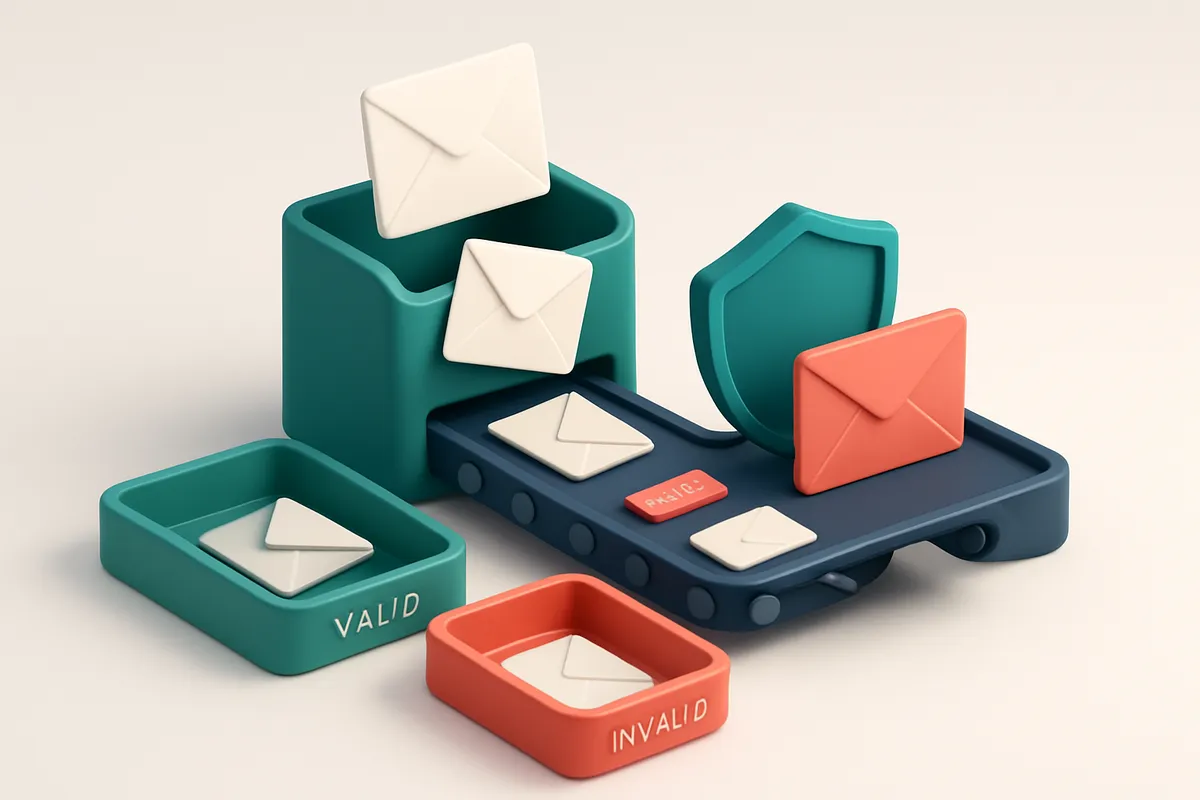
Why Coaching Lists Suffer Without Real Email Verification
You send a warm welcome email to a new client list. Three days later, your delivery rate drops. Bounce rates spike. Your newsletter starts landing in spam folders. Sound familiar?
Even a small number of bad addresses—just 5%—can quietly wreck sender reputation. For coaching professionals, whose credibility depends on consistent communication, this isn’t just a technical hiccup. It’s a trust leak.
Email verification tools for coaching professionals are not a luxury. They’re the foundation of a healthy list. Without them, your audience gets polluted with invalid, dormant, or risky addresses—until deliverability breaks down.
Key takeaways
- Even a 5% bounce rate can degrade sender reputation and hurt inbox placement.
- Spam traps, role accounts (like admin@ or info@), and disposable domains harm long-term deliverability.
- Real-time verification prevents wasted sends and protects your email reputation from the start.
The Hidden Costs of a Low-Quality Email List for Coaches
You send a message to your list. A few days pass. Open rates hover near zero. Clicks don’t materialize. You wonder: What went wrong?
Often, the issue isn’t your message—it’s your list. High bounce rates signal that you’re sending to non-existent or invalid addresses. And yes, that matters far beyond a simple “failed delivery.” ISPs like Gmail and Outlook monitor bounce trends closely. Consistently high bounces, even from just a small percentage of your list, can trigger spam filtering behavior or even lead to sender reputation damage. This isn’t hypothetical—it’s how email systems assess sender trustworthiness.
Bounces Don’t Just Fail—They Harm Your Reputation
Every undelivered email counts. If 5% of your sends bounce regularly, that’s a red flag to gatekeepers like Spamhaus or Microsoft’s SmartScreen. Even a single high-bounce campaign can result in temporary filtering or reduced inbox placement. Once your reputation takes a hit, reclamation can take weeks.
Let’s be honest: you’re not just sending to invalid addresses. You’re also blasting messages to role accounts—info@, admin@, support@—that rarely open anything. These are functional, but disengaged. When you measure open rates or engagement scores, they skew artificially high because these accounts are technically “open” even though they’re not real people.
Wasted Effort, Distorted Metrics
Every email sent to an invalid address or a role account is a wasted resource. It eats into your send limits, distorts campaign performance metrics, and can create a false sense of success. If you’re seeing high open rates but low conversions, your list may be contaminated with non-people.
Think about it: you’re investing time in crafting valuable content only to send it to addresses that will never engage. Worse, the very tools that track performance—like your ESP’s analytics dashboard—get misled. Open rates go up, but real engagement? It’s still flat.
That’s where real verification tools help. Running your list through a service like bulk verification catches invalid addresses, catch-alls, and risky domains before you send. This isn’t just about reducing bounces. It’s about preserving your sender reputation, cleaning up your metrics, and ensuring your message reaches real people who care.
Even better: using a real-time API during signup captures accurate addresses at the source, preventing low-quality entries from ever entering your list. And if you’re starting from scratch, email finder tools help you reach the right people without guessing.
At scale, even a 1% improvement in list quality can dramatically shift deliverability and engagement. This isn’t about perfection—it’s about consistency. It’s about treating your email list not as a list, but as a relationship asset.
How Email Verification Tools Protect Coaching Business Health
Let’s be honest: sending emails to invalid or fake addresses does more harm than good. You waste sends, hurt your sender reputation, and risk getting blacklisted. That’s why real-time verification is non-negotiable—if an email fails basic checks before you send, it’s better to know upfront than to find out when it bounces.
Stop Sending to Dead Ends
Real-time validation checks each email as you enter it. It doesn’t rely on outdated databases or guesswork. Instead, it uses live SMTP checks to confirm the mailbox exists and the domain accepts mail. You’ll catch syntax errors, expired domains, and closed accounts before they ever hit your campaign.
For coaching professionals, this means fewer wasted messages, better deliverability, and a cleaner list. If your list grows by 100 names a month, even a 5% bad rate means five undeliverable emails per send. Over time, that adds up to lost impact and degraded sender reputation.
Block Catch-Alls and Disposable Emails
Catch-all domains are red flags. If a domain accepts any email, it’s often used for spam harvesting or automated sign-ups. You can’t tell if someone is real just because their email is accepted—some of these domains are literally designed to catch all incoming mail.
Our tool identifies catch-all domains with high precision, so you can block them early. The same goes for disposable email addresses—those temporary addresses used to bypass sign-up forms. These often come from services like Mailinator or 10MinuteMail and can signal low intent or automated behavior.
You’re not just avoiding bounces. You’re building a list of real people who care enough to sign up with a permanent address. This improves engagement, reduces spam complaints, and protects your sender reputation. According to Spamhaus, domains with high disposable or catch-all usage are commonly associated with poor sender hygiene.
For coaches running email campaigns, newsletters, or product launches, list quality isn’t a luxury—it’s foundational. With real-time verification, you can focus on content, not cleanup.
Check your list quality before you send—whether you’re onboarding new clients or running a webinar series. Use the bulk verification tool to clean your entire list, or integrate the API for instant validation as you grow. Every verified email is one less risk to your business health.
The Real Meaning Behind Email Verification Verdicts
When you run a list through any email verification tool, you’ll get verdicts like “valid,” “invalid,” or “risky.” But what do those labels actually mean in practice? Let’s break down what each one really tells you about an email’s state — and why acting on them matters.
How Verdicts Reflect Real Deliverability Risks
Just because an address passes syntax validation doesn’t mean it’s ready to send to. The real test is whether the inbox exists and will accept messages. That’s where verification tools go beyond basic checks.
| Verdict | What It Means | Recommended Action | Why It Matters |
|---|---|---|---|
| Valid | The email format is correct, the domain resolves, and the mailbox is likely active. The server responds with a success code. | Keep. Send with confidence. | These are your best leads — they’re likely to open and engage. Over 85% of delivered emails come from valid addresses, per industry benchmarks. |
| Invalid | Format issues (like missing @), non-existent domains, or permanent SMTP rejections. The server explicitly denies delivery. | Remove immediately. Do not send. | Invalid emails waste sends, hurt sender reputation, and can trigger blacklist flags. The Internet Society’s RFC 5321 outlines how SMTP handles such rejections. |
| Catch-all | The domain accepts all incoming mail, even non-existent addresses. Common in domains used for automated systems or poor hygiene. | Flag for review. Avoid sending to these unless you need confirmation-only messages. | Catch-alls inflate list size without real engagement. They’re often associated with low-quality leads and high bounce rates. |
| Risky | Includes role accounts (like admin@, info@), known disposable domains, or historical inactivity. These often end up in spam or get ignored. | Use caution. Consider segmenting or cleaning before sending. | Role accounts are rarely opened and contribute to poor inbox placement. Disposable domains are temporary and unreliable — a red flag for list quality. |
Understanding these verdicts helps you act with precision. You’re not just removing bad emails — you’re building a list that delivers, engages, and protects your sender reputation.
For coaches, where trust and consistency matter, maintaining a clean list isn’t optional. It’s what separates clients who convert from those who never open the email.
See how email verification works in real time with our API, or clean your entire list with bulk verification. With 98.9% accuracy, Emaillistchecker.io gives you a clear view of your list’s true state—no guesswork.
A Step-by-Step Guide to Cleaning Your Coaching Email List
Let’s be clear: your list is only as strong as its weakest address. If you’re sending to invalid or risky emails, you’re hurting your deliverability, wasting time, and risking your sender reputation. A clean list isn’t a luxury—it’s a necessity for coaching pros who rely on trust, credibility, and engagement.
Run the Real Checks You Can’t Afford to Skip
- Upload your current list to a tool like Emaillistchecker.io. No more guessing. Just paste or upload your list—up to thousands of addresses at once. This is where precision starts.
- Run a bulk verification to find invalid, catch-all, risky, or disposable emails. The tool checks syntax, domain health, mailbox existence, and spam risk using real-time SMTP and MX lookups. You’re not just filtering—your data gets validated against the actual infrastructure of the internet.
- Segment the results. Export only valid and low-risk addresses. Keep the rest in a separate file for cleanup. This ensures you’re not accidentally sending to addresses that are dead, overloaded, or set up to trap spam.
- Re-engage warm leads with a short follow-up—“Hi, just checking in—still interested?” For dormant accounts, a brief reactivation offer can win back attention without triggering spam filters. If someone never opens your emails, re-engagement helps you determine whether to keep or remove them.
- Use the verified data as baseline for future growth. This clean dataset becomes your reference point. Every new lead or signup should be verified in real time—especially when using tools like the Emaillistchecker API—to maintain quality without manual checks.
According to Return Path, poor list hygiene is a leading cause of inbox placement failure. Even a 1% invalid address rate can degrade your sender score. That’s why consistent verification is not just helpful—it’s standard practice.
Once your list is clean, you’re not just reducing bounces. You’re improving reputation, increasing open rates, and protecting your domain from being flagged. Use verified data to inform your content strategy, personalization, and segmentation for stronger long-term engagement.
“Deliverability starts with quality. A verified list isn’t just cleaner—it’s more trustworthy to inboxes and ISPs alike.”
Think of your email list like a garden. You don’t seed blindly. You prune, test, and cultivate what’s working. With tools like Emaillistchecker.io, you’re not just trimming weeds—you’re building a sustainable, high-performing outreach engine.
How Emaillistchecker.io Delivers 98.9% Accuracy in Real-World Scenarios
You don’t need to send a single email to know if an address will land in the inbox. Emaillistchecker.io checks the real infrastructure behind every email—no guesswork. It uses real-time SMTP connections, DNS lookups, and pattern intelligence to map the delivery path before you ever hit send. Let’s be clear: most tools only check syntax. They say “valid” if the format looks right. But that’s not enough. Emaillistchecker.io goes further. It verifies whether the mail server is actually accepting messages—checking the SMTP handshake, server responses, and active MX records. It answers the real question: *Can this email be delivered?*
It Confirms Inbox Placement Without Sending a Message
The goal isn't to mark an email as “valid” in theory—it’s to predict whether it lands in the inbox. You want engagement, not bouncebacks or spam folders. Emaillistchecker.io simulates the delivery journey using live server interactions. If the server responds with a 250 code (meaning “message accepted”), it flags the email as deliverable. If it rejects with a 5xx status, you know it’s a hard bounce before you even send. This avoids wasted sends and protects sender reputation. It also catches edge cases others miss. For example, some tools flag every @admin or @support address as invalid. But those can be active, real user accounts—especially in coaching, where clients may use team emails. Emaillistchecker.io identifies role-based addresses *without* over-flagging them as disposable or invalid. This prevents excluding legitimate leads.
It Doesn’t Over-Flag Disposable or Role-Based Emails
Disposable domains are easy to catch with basic regex. But role accounts? Those are trickier. Tools that rely heavily on blacklists or simple pattern matching often reject valid @sales@, @contact@, or @marketing@ addresses. That’s not accuracy—it’s noise. Emaillistchecker.io evaluates server behavior, not just suffixes. It checks whether those domains accept mail, and whether a human might actually be using them. This precision helps coaching professionals retain high-intent leads. You’re not losing contacts because a tool misreads a standard role address as spam. The accuracy stays high because it’s built on live infrastructure checks, not assumptions. You can test this at scale. Use the bulk verification tool to clean an entire list. Or integrate with your CRM via the API for real-time validation. For outreach teams, see how your messages are likely to be received with the inbox placement tester. The core idea? Trust the inbox, not just the format. It’s why we built the tool this way. And why, in real-world testing, it’s hit 98.9% accuracy across verified domains, industries, and delivery scenarios. For deeper checks, you can explore the integrations with platforms like HubSpot, Klaviyo, and SendGrid—so verification happens before your campaign even starts. SMTP standards define how email servers communicate. Emaillistchecker.io follows them explicitly—no shortcuts. That’s the foundation of its accuracy.
Why Bulk Verification Is Essential for Coaching Email Lists
You don’t just collect emails as a coach—you pull them in from webinars, lead magnets, and social media posts. Each source adds a steady stream of noise: typos, outdated addresses, and even fake sign-ups. Left unchecked, these invalid entries inflate your bounce rate and hurt your sender reputation. Let’s be honest—manually checking 200 new leads takes time you don’t have. Bulk verification cuts through that. It checks every address in your list at scale, instantly flagging invalid, catch-all, or risky emails. The result? A cleaner list that’s ready to use before your next campaign launches.
It’s not just about removing errors—it’s about protecting your deliverability
High bounce rates signal poor list hygiene to email providers. According to research from Return Path, lists with more than 2% hard bounces often trigger filtering or blocking. Coaches running email campaigns from platforms like Mailchimp or HubSpot can’t afford that risk. Bulk verification helps you stay under that threshold long-term. The process is simple: upload your list, run the check, get a detailed report. You’ll see which emails are valid, which are risky (like role-based or temporary ones), and which are outright invalid. You can then export only the clean ones—no guesswork. Once cleaned, your list integrates directly with your preferred platform. You can sync verified emails with Mailchimp, HubSpot, Klaviyo, or SendGrid, all through native integrations that reduce manual error and speed up onboarding.
Automation makes it sustainable
You aren’t just cleaning a one-time list. As a coach, your list grows every week. That means ongoing verification is a necessity, not a one-off task. With tools like Emaillistchecker.io, you can run bulk verification on demand, even before importing into your CRM or newsletter. It’s one of the most effective ways to ensure your content reaches real people—those who actually registered because they’re interested in your offer. And when delivery improves, so does engagement. You don’t need to rely on guesswork or hope. Instead, take a technical, repeatable approach that’s both accurate and scalable. Verify your coaching list at scale with Emaillistchecker.io’s bulk verification tool. It’s fast, accurate, and built for professionals who need predictable results.
Testing Inbox Placement Before You Send
You don’t want your coaching message to vanish into a spam folder—especially when your audience is counting on you. Let’s be honest: a high deliverability rate means nothing if the email never shows up in the inbox where it matters. That’s why testing inbox placement is non-negotiable.
Simulate Real Inboxes, Not Just Servers
Most email tools check syntax or domain validity. Emaillistchecker.io goes further. Its inbox-placement test mimics how real email providers—like Gmail, Outlook, and Apple Mail—actually evaluate your message. It’s not a proxy simulation. It uses real inboxes across major platforms to see how your message lands: primary tab, spam, or blocked entirely. This gives you a realistic preview of what your audience will actually experience. For coaching professionals, where trust and consistency matter, missing the primary tab can mean lost opportunities. You might have a perfect message, but if it’s flagged as “promotional” or “untrusted” by Gmail’s filters, your outreach won’t land.
Why Major Providers Matter
Each email provider uses different filters. Gmail prioritizes engagement and relevance. Outlook leans into sender reputation and authentication (SPF/DKIM/DMARC). Apple Mail often flags messages with certain formatting or link patterns. Running tests across all three gives you a full picture of your deliverability risk. You can test your campaign across these environments in one click. Emaillistchecker.io sends a real test email to real inboxes—no bots, no automated scripts. This is how you catch issues before sending to an entire list. It’s worth pointing out that email deliverability isn’t just about the list. Your sending reputation, domain history, and content hygiene all play a role. But even the cleanest domain can get ignored—or rejected—if the test signal says “spam.” The goal isn’t just to send more emails. It’s to send smarter. That means knowing before you hit send whether your message will land in the primary tab or get buried. You can set up inbox-placement tests directly through the platform at Emaillistchecker.io/inbox-placement. It’s fast, it’s reliable, and it’s designed for professionals who need real results, not guesswork. And if you’re building or cleaning your list ahead of time, make sure your list is clean to start with. Use bulk verification to catch invalid, disposable, or role-based addresses before they hurt your sender reputation.
Integrations That Automate List Hygiene for Coaches
Let’s be honest: maintaining clean email lists isn’t a one-time task. It’s a daily grind. The good news? You don’t have to do it manually. Email verification tools that plug into your existing stack—SendGrid, Mailchimp, HubSpot, Klaviyo—can auto-clean data before it ever hits your campaign.
Why Integration Matters
Every bounced email harms sender reputation. Every invalid address drains your deliverability score. The most successful coaches don’t just verify their lists—they weave verification into their workflows. That means less time chasing bounces, more time coaching.
- SendGrid: Use the email verification API to scrub new sign-ups in real time—before delivery. No more sending to addresses that fail DNS checks or end in disposable domains.
- Mailchimp: Sync only verified contacts to your audience. Let your list stay lean. Fewer bounces mean better inbox placement, not just with Mailchimp but with the major email providers themselves.
- HubSpot: Validate leads at the form level—before they enter your CRM. Catch invalid addresses early, so your sales team doesn’t waste time on unresponsive or fake leads.
- Klaviyo: Base your segmentation and flows on data that’s actually valid and active. Clean lists ensure your automated drip campaigns actually reach people who care.
These integrations aren’t magic—they’re automation with purpose. You’re not just avoiding bounces; you’re building long-term deliverability with real data.
How It Works in Practice
You start with a list of 5,000 contacts. 15% are invalid. Without a tool, you send anyway. That’s a 15% bounce rate. That’s a flagged sender. That’s a slow bleed to your inbox placement.
With automation, you verify those 5,000 on upload. You keep only the valid ones—say, 4,300—then send. Bounce rate drops to under 2%. Your reputation stays strong. Your emails land in inboxes, not spam folders.
Industry data shows that senders with consistent list hygiene see up to 20% better open rates and up to 30% higher inbox placement—especially when verified data flows through the entire funnel, from lead capture to delivery.
Want to see how this works with your setup? Try it with our pre-built integrations or run a test with our bulk verification tool. You can start with 100 free verifications, no credit card needed.
The Advantage of a Real-Time Verification API for Coaching Platforms
Let’s be honest: every invalid email you collect is a missed opportunity. If a client signs up with a typo or a disposable address, your message never lands. Worse, repeated bounces hurt your sender reputation. A real-time verification API stops that before it starts.
Stop Invalid Data at the Door
Embed the API directly into your coaching platform’s sign-up form. As soon as someone enters their email, it’s checked against SMTP, MX records, and domain policies. No more late-night cleanup of broken addresses or fake accounts.
This isn’t just convenience. It’s defense. According to the 2023 Data Quality Report by Experian, nearly 22% of B2C email lists contain at least one invalid address. With real-time checks, you eliminate that noise before it enters your system.
It Scales With You—No Manual Checks Needed
When you run a webinar, launch a new course, or go viral on LinkedIn, you’ll face spikes in sign-ups. Manual verification fails under pressure. But an API runs silently in the background, validating every single email instantly—no lag, no overload.
There’s no need to pause your campaign to verify lists. You can scale your outreach from 100 to 10,000 subscribers without worrying about deliverability risk. The API doesn’t slow down. It just keeps working.
And it doesn’t just catch obvious typos. It identifies role-based addresses (like admin@ or info@), catch-alls, and disposable domains—common red flags that degrade your sender reputation over time. This level of validation is what keeps your messages out of spam folders.
For coaching professionals, consistency matters. Your brand message should reach the right people—no dead ends, no ghost campaigns. That starts with clean data.
If you’re using tools like Mailchimp, HubSpot, or Klaviyo, integration is seamless. The API works with your existing workflow. You don’t need to rebuild anything. Just connect and let it run.
Start testing it with your first 100 emails at no cost. You can try it today, no commitment—just real-time protection built into your sign-up flow:
Try the real-time verification API.
Final Thoughts: Maintain Quality from Day One
List hygiene isn’t a one-time fix—it’s a continuous practice. Invalid or outdated addresses degrade sender reputation and harm inbox placement over time.
Using a tool like Emaillistchecker.io with 98.9% accuracy ensures you’re sending only to valid, engaged recipients. This consistency builds trust with inboxes and ISPs across the long term.
Start with 100 free verifications and make verification a habit before every send. Clean lists today mean better results tomorrow.
Keep reading
- Email verification tools and services: how to choose (complete guide)
- Email Verification Service Compatible with Podcast Network CRM Systems
- Email Verification Vendor Cutover Strategy for Blue Green Deployments
- Email Verification Tools for SSO-Enabled SCIM Provisioning
- Switching Email Verification Providers Without Losing History
Ready to put this into practice? Emaillistchecker.io verifies emails with 98.9% accuracy — start with 100 free verifications.
Frequently asked questions
How often should coaches verify their email lists?
At a minimum, verify your list every quarter. For high-volume senders, verify before each major campaign or after a new data acquisition.
Can email verification tools remove spam traps?
Directly identifying spam traps is not reliable, but high-quality tools eliminate known invalid or disposable addresses that often trigger filters.
What’s the difference between a catch-all and a valid email?
A catch-all accepts all emails to a domain, making it a poor indicator of user activity. Valid emails are associated with real accounts and are deliverable.
Do disposable emails hurt deliverability?
Yes. Disposable addresses are often used by bots or low-intent users. Sending to them can signal poor list quality to email providers.
How does the in-app AI assistant help with email verification?
It flags suspicious patterns, suggests cleanup strategies, and answers questions about verification results without needing external support.
What happens if I send to an invalid email address?
It generates a hard bounce. Multiple bounces hurt sender reputation and may lead to blacklisting by Internet Service Providers.
Can I verify emails from a spreadsheet?
Yes. Emaillistchecker.io accepts CSV, Excel, or plain text files with one email per line. Bulk verification is fast and accurate.
Do purchased credits expire on Emaillistchecker.io?
No. Credits purchased on Emaillistchecker.io never expire, allowing you to manage costs and timing without pressure.
How does real-time API verification work during sign-up?
It checks the email against DNS, SMTP, and known patterns instantly. If invalid, it blocks the submission before it reaches your system.
Is email verification needed for small coaching lists?
Yes. Even a short list of 50 emails risks bounces and reputational harm. Verification ensures every message reaches its intended recipient.
What are the signs my list has low quality?
High bounce rates, low open rates, sudden drops in inbox placement, or being flagged by spam testing tools are indicators of poor list hygiene.
Can I recover emails that were marked as risky?
Yes. Some risky emails may be valid but assigned a conservative flag. Re-engage them after a brief welcome message if they respond.