Email Validation for Wellness and Fitness Centers in Healthcare Space
Clean your wellness and fitness center email list with precise validation. Reduce bounces, boost deliverability, and protect your sender reputation—start with
Why Email Validation Is Non-Negotiable for Wellness & Fitness Centers
You send a personalized wellness plan to a client—three days later, you get a bounce. Not a reply. Not a question. Just silence. That single failure isn’t just a missed touchpoint; it’s a signal to email providers that your sender reputation is shaky.
For wellness and fitness centers operating in the healthcare space, consistent, accurate communication isn’t convenience—it’s compliance. Invalid or outdated email addresses on your list don’t just clutter your database; they risk damaging sender reputation, increasing bounce rates, and triggering spam filters. Email validation for wellness and fitness centers isn’t optional. It’s a requirement for reliable outreach, trust-building, and data integrity.
Key takeaways
- Invalid emails harm sender reputation and reduce inbox placement, especially for healthcare-adjacent services.
- Email validation ensures compliance with data integrity standards when handling client health and wellness information.
- A clean list supports consistent, trusted communication without risking deliverability or client engagement.
The Hidden Costs of a Dirty Email List in Healthcare-Adjacent Services
You might think your wellness center’s newsletters are hitting the right inbox — but a single invalid email can quietly damage your sender reputation. Even if your content is helpful and properly formatted, ISPs like Gmail and Outlook track delivery patterns. A high volume of undeliverable messages, especially hard bounces, triggers spam filters. This isn’t about content quality — it’s about infrastructure integrity.
Bounce Rates and Sender Reputation: The Silent Killers
Every hard bounce — a permanent delivery failure — tells email providers your list is unreliable. The more you send to invalid addresses, the higher your bounce rate. ISPs use these metrics to assess sender credibility. Once your reputation drops, even well-crafted emails land in the spam folder or outright get blocked.
According to data from Return Path, senders with bounce rates over 2% are more likely to be flagged as suspicious. In healthcare-aligned services, this means appointments, follow-ups, and wellness check-ins can miss their mark entirely. A client who doesn’t get a reminder about a physical therapy session isn’t just inconvenienced — they might disengage entirely.
When Delivery Fails, Engagement Suffers
In wellness and fitness programs tied to healthcare outcomes, timely communication isn’t just convenient — it’s part of care continuity. If your email reminders, nutrition tips, or progress updates don’t arrive, the client experience breaks down. Over time, this erodes trust and reduces program completion rates.
Let’s be clear: a dirty list doesn’t just waste a few sends. It compounds into lost client retention, reduced program efficacy, and missed opportunities to reinforce healthy habits. And unlike a bad website or a late reply, this issue isn’t visible to your staff — it’s invisible until it’s too late.
That’s why checking your list before every campaign is not extra work — it’s operational hygiene. Tools like bulk email verification can catch invalid, fake, and risky addresses in seconds, so you’re only sending to real people who actually want your content. You can also validate individual emails in real time with our API, or find missing contacts with our email finder.
Even if you’re not hitting spam traps, a high bounce rate still harms your inbox placement. It's not about being malicious — it’s about being predictable. And in healthcare, where trust is everything, being predictable isn’t enough. You need precision.
“Consistent, reliable delivery is as important as content quality in maintaining trust with health-conscious audiences.” — Industry best practices, verified by email deliverability standards.
Before you send another campaign, ask: are your messages getting where they’re meant to go? A clean list doesn’t just improve deliverability — it strengthens the care you’re delivering.
How Email Validation Works: Beyond Simple Syntax Checks
Let’s be honest—just checking if an email has an @ symbol and a domain isn’t enough. That’s like confirming a door is closed without verifying someone’s actually home. Syntax checks only catch obvious errors, like missing @ signs or invalid characters. But for wellness and fitness centers in healthcare, this is where your list starts to break down.
SMTP Checks and Real Inbox Confirmation
True email validation goes deeper. At its core, it uses SMTP-level verification to check whether a domain actually accepts mail. This process simulates sending a message to see if the server responds as expected. If the server says, “This address doesn’t exist,” or “You can’t send here,” the email is flagged. This catches dead or mistyped addresses before you waste a send. It also detects catch-all setups—where a domain accepts any email, no matter the user. These can inflate your list with fake or placeholder accounts, leading to bad deliverability and even spam complaints. For wellness centers, sending a time-sensitive reminder to a catch-all address does nothing to help a patient. You want only real, active inboxes. Disposable email domains (like tempmail.com) and role-based addresses (admin@, info@) are also flagged. These are often used for temporary signups or bulk signups, and they rarely open emails. In healthcare communications—appointment confirmations, wellness tips, or mental health resources—these fail to deliver real engagement.
Why This Matters for Wellness and Fitness Centers
When you send a reminder about a stress-management workshop or a hydration challenge, you’re not just sharing content—you’re supporting patient outcomes. If that email lands in a disposable inbox or is blocked by a catch-all system, your message disappears into the void. You’ll see high bounce rates and low engagement, which harms sender reputation and inbox placement. According to the Messaging, Malware, and Mobile Anti-Abuse Working Group (M3AAWG), poorly validated lists contribute to spam reputation decline. For health-focused organizations, trust is everything. Email validation isn’t just about reducing bounces—it’s about ensuring your wellness content lands where it should: in a real person’s inbox. With tools like bulk verification, you can scrub large lists quickly. The real-time API integrates directly into sign-up forms, catching invalid entries before they enter your database. For outreach, inbox placement testing lets you simulate how your emails will perform across inboxes. These aren’t magic fixes—they’re foundational checks that make your wellness outreach actually work.
Understanding Email Verification Verdicts: What Each Result Means
When you're verifying emails for wellness and fitness centers in the healthcare space, you’re not just cleaning data—you’re protecting sender reputation, avoiding spam traps, and making sure your outreach actually lands in inboxes. The verdicts you get from a tool like Emaillistchecker.io aren't just labels; they’re signals about deliverability risk.
What Each Verification Result Really Means
Let’s break down what each status tells you—no jargon, no guesswork.
| Verdict | What It Means | Recommended Action | Why It Matters in Healthcare |
|---|---|---|---|
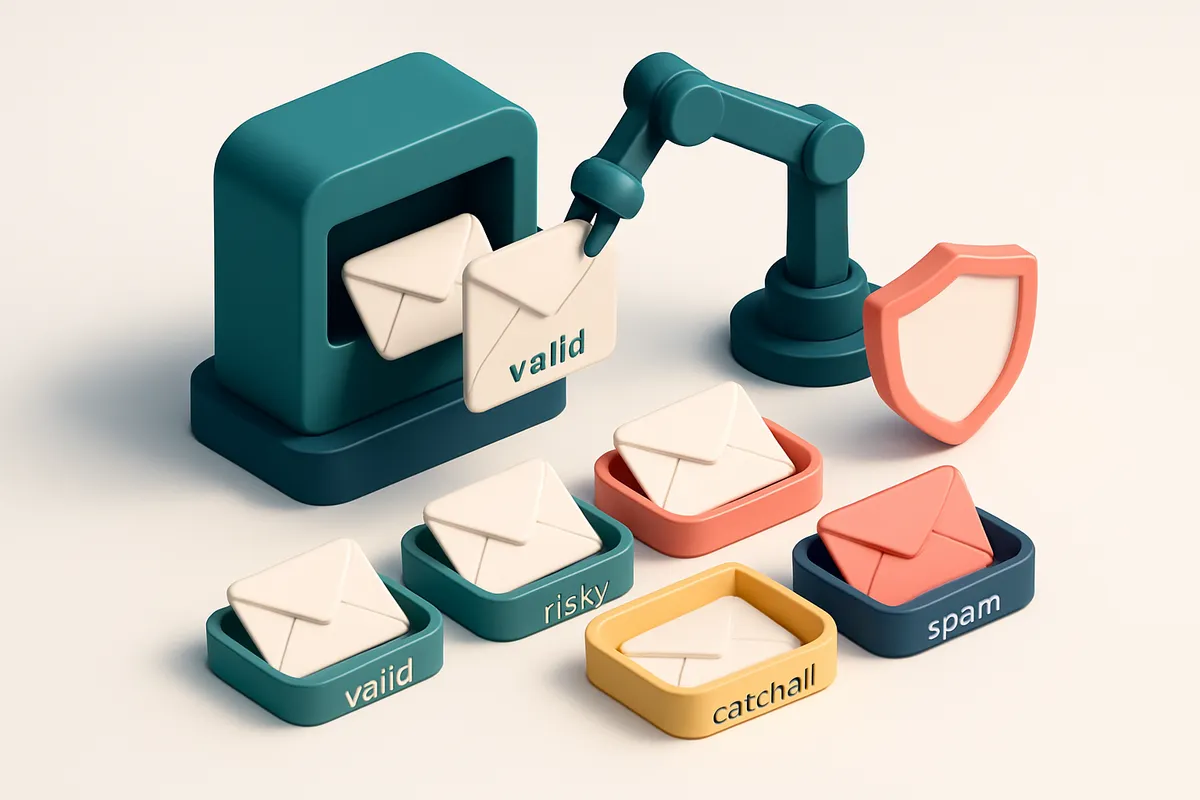
| Valid | The email address exists and accepts messages. No delivery issues detected. | Proceed with outreach. High confidence for engagement. | These are the only addresses you should include in campaigns meant for patient follow-up, appointment reminders, or wellness content. |
| Invalid | The address is permanently undeliverable—either misspelled, deleted, or blocked by the recipient’s server. | Remove immediately. Including these harms sender reputation. | For healthcare providers, sending to invalid addresses can trigger blacklists, especially if multiple bouncebacks occur. |
| Catch-all | The domain accepts all incoming emails, even non-existent ones. Often a sign of poor email hygiene. | Flag for review. Avoid high-volume outreach. | Catch-alls are common in some healthcare domains but signal weak infrastructure. Messages here often end up in spam or never reach anyone. |
| Risky | May be a role-based address (like info@ or contact@), a disposable address, or associated with low engagement. | Use with caution. Consider segmenting or removing. | Role accounts in wellness centers often have low open rates and can trigger spam filters when used at scale. |
| Disposable | Created for short-term use, often used in spam or fraud. Typically expires within hours or days. | Automatically exclude. Never send to these. | Disposables indicate low intent. For healthcare outreach, they harm your sender reputation faster than other bounces. |
Understanding these verdicts helps you decide what to do—send, pause, or remove. This is where tools like Emaillistchecker.io add real value. If you're running a campaign for a physical therapy clinic or a mental wellness program, you can run your list through bulk verification and see exactly which addresses are safe to include.
The process works on real SMTP and MX checks. It doesn’t just guess—it simulates actual delivery steps like a mail server would. Tools like Spamhaus and RFC 5321 define how mail servers communicate. Verification tools follow those rules to detect real deliverability risks. Let’s be clear: a valid email isn’t always a good email. But invalid, disposable, or catch-all addresses? Those are red flags that hurt your deliverability.
Email Validation for Healthcare-Focused Wellness Lists: A Step-by-Step Process
Start with Your List, Not Guesswork
You’ve got a list—maybe from client sign-ups at a yoga studio, wellness webinars, or past email campaigns. But how many of those addresses are actually usable? Let’s not send emails to invalid or ghost domains. Upload your list directly to Emaillistchecker.io. The platform handles CSV, Excel, or plain text files, and starts processing immediately.
Run the Verification: Accuracy You Can Trust
Once uploaded, run a bulk verification using our 98.9% accurate system. This isn’t a guess—it’s a technical check against live mail servers, MX records, and syntax rules. You get clear verdicts: valid, invalid, catch-all, disposable, or risky. It’s not just about removing dead ends. It’s about understanding who’s actually reachable.
Filter Smart, Not Just Fast
Now, filter out what shouldn’t be sent. Remove all invalid addresses—those with syntax errors or non-existent domains. Skip catch-all domains (they’re risky; messages might arrive, but you can’t know if the recipient actually sees them). And delete disposable emails—these are often used for temporary sign-ups and never lead to real engagement. You don’t want to waste sends on throwaway addresses. Role-based emails like admin@, info@, or support@ are flagged as risky. They’re not personal, not owned, and often not monitored. If you’re reaching out to wellness coordinators or care providers, don’t rely on these. Isolate them and treat them differently—maybe verify manually or avoid them unless you have a known contact.
Re-verify High-Value Contacts in Real Time
Let’s say you have a list of primary care coordinators or certified wellness coaches. These are your high-value leads. Run them through the real-time API verification for instant results. This is especially useful when syncing with CRM systems or scheduling automated outreach. You’re not just cleaning up—it’s preventing bounces on critical follow-ups.
Clean, Correct, and Export
Now comes the smart part. Use the in-app AI assistant to spot typos—like “[email protected]” when the correct domain is “wellness-center.com”. It can suggest corrections and even flag domain issues that might hurt deliverability. If a domain lacks SPF records or has poor feedback loops, it’ll highlight it. Then, export your clean list in your preferred format. No manual sorting. No missed typos. You’re ready to send with confidence. This process isn’t optional—it’s a standard practice for any healthcare-focused campaign. Even minor errors can lead to high bounce rates, poor sender reputation, and reduced inbox placement. According to the SMTP specification (RFC 5321), mail servers reject messages based on domain and address validity, so verification isn’t just helpful—it’s required.
Integrating Email Validation Into Your Wellness Center’s Workflow
Let’s get real: a single invalid email in your campaign list can hurt deliverability, lower open rates, and waste your time. For fitness and wellness centers in healthcare, where trust and consistency matter, every email must count.
Automate validation at the source
- Sync new sign-ups from your website or booking form with Mailchimp or Klaviyo so email validation happens before the lead enters your campaign list.
- Use the Emaillistchecker.io API during onboarding or appointment booking to verify emails in real time—stop bad addresses before they ever reach your CRM.
- Let validation happen silently in the background. You don’t need to pause your workflow. It’s just one more safeguard, like confirming a client’s ID at check-in.
Maintain long-term list health
- Schedule monthly automated cleanups using bulk verification to remove inactive or invalid emails—no manual sorting, no guesswork.
- Attach verification results directly to CRM records (like Salesforce or HubSpot). A valid email isn’t just a format match—it’s a signal that this client is more likely to engage.
- Track trends over time: if a high percentage of emails are flagged as “risky” or “catch-all,” it may point to a form design issue or a broader deliverability concern.
Think of email validation as part of your operational hygiene, like sterilizing equipment or verifying staff credentials. It’s not optional—it’s expected.
“Even a single bounce from a verified domain can degrade sender reputation. Maintaining a clean list is a baseline requirement for inbox placement.” — RFC 5321, SMTP specification
When you add verification to your workflow, you’re not just cleaning your list—you’re building trust with email providers. A consistent sender reputation means your newsletters, appointment reminders, and wellness tips land in the inbox, not the spam folder.
And yes, it works across health tech platforms. Whether you’re running a physical studio or a virtual wellness program, a verified email list is one of the most reliable ways to ensure your messages get seen.
Try it once—auto-verify new sign-ups with integrations and see how many invalid addresses you catch. Then set a monthly cleanup. It’s one of the few maintenance tasks that actually improves your reach.
Why 98.9% Accuracy Matters in Health and Wellness Email Lists
You're not just sending emails—you're supporting patient outcomes. In wellness and fitness centers operating within the healthcare space, a missed message can mean a missed appointment, delayed follow-up care, or a drop in engagement. Your emails aren’t fluff; they’re part of a care journey.
False Negatives Are Costly in Health-Centric Communication
Even a small number of false negatives—valid email addresses wrongly marked as invalid—can have real consequences. When you send a reminder for a post-workout recovery session or a hydration check-in, that message needs to land. A 98.9% accuracy rate means fewer of those valid addresses slip through the cracks.
That level of precision is more than a number—it’s a foundation for trust. Patients and clients expect consistency. They don’t want to wait for a second attempt. They don’t want to re-register. They want to be reached, reliably.
Accuracy Drives Long-Term Engagement
Low list accuracy doesn’t just cause bounces—it erodes confidence. If someone signs up and never hears back, they assume you’re unreliable. In wellness, where consistency builds trust, even one missed touchpoint can weaken the connection.
With 98.9% accuracy, you reduce the risk of false negatives across your entire list. That means more clients receive your follow-ups, reminders, and educational content on time. This consistency supports long-term engagement and reinforces your brand as dependable.
It’s not just about deliverability—it’s about impact. When your email system catches errors early, you maintain a clean, high-integrity list. That’s why real-time verification is a must for any wellness organization handling sensitive health data and scheduled care.
Let’s be clear: accuracy isn’t a feature. It’s a necessity. And it’s measurable. Tools like bulk verification help you validate entire lists before sending, so you start with confidence.
For the healthcare-adjacent wellness sector, where each email can be part of a patient’s health journey, precision isn’t optional. It’s the difference between effective outreach and missed opportunities.
A well-verified list reduces bounce rates, protects sender reputation, and keeps your messages inboxes—where they belong. You’re not just managing contacts; you’re supporting wellness goals, one confirmed email at a time.
And it starts with knowing your list is accurate. Inbox placement testing confirms your messages aren’t just sent—they’re seen.
Avoiding Role-Based and Disposable Email Addresses in Client Lists
You’re building trust with clients in the wellness and fitness space—so why risk your reputation by sending emails to addresses that don’t belong to real people?
Role-Based Emails Don’t Reach Real People
Addresses like support@, info@, or admin@ are standard in wellness centers, but they’re rarely tied to individuals. These are role-based emails, often set up as catch-alls—meaning they accept any message without rejecting it.
When you send to them at scale, your emails go into inboxes that don’t exist. They bounce hard, and that hurts your sender reputation. Many mail servers flag repeated sends to role-based domains as untargeted or spam-like behavior.
According to industry best practices, mail sent to generic or role-based addresses has dramatically lower engagement and higher deliverability risk—especially when promoting health-related content or wellness programs.
Disposable Domains Are a Red Flag
You might also see temporary email services like mailinator.com or tmpmail.org cropping up in your client lists. These are disposable domains, designed for short-term use and account creation without verification.
They’re common in fake registrations and can trigger spam filters. If even a small percentage of your list uses them, you’re exposing your brand to blacklists and reduced inbox placement—especially in regulated healthcare contexts.
Services like Emaillistchecker.io detect these patterns automatically. You’ll see clear warnings when a domain is disposable or when an address is flagged as a role-based email. This gives you the confidence to remove them before sending campaigns, especially those involving care coordination or health reminders.
With our bulk verification tool, you can process thousands of addresses at once and know exactly which ones to clean. It’s not about volume—it’s about quality. A list with 10% disposable or role-based emails can sink your deliverability, even if the rest are valid.
Let’s not assume every email in your list is a real person. Use verified data—because wellness and healthcare depend on accuracy. Check your list before you send.
Verify your wellness center's client list with bulk email validation and ensure every message reaches a real inbox.
Real-Time Delivery Testing: Ensuring Your Wellness Content Lands in the Inbox
Even if your list passes basic validation, your wellness center’s email campaigns can still end up in spam folders—or not arrive at all. That’s because deliverability isn’t just about valid addresses. Sender reputation, domain alignment, and content patterns play a big role. A clean email doesn’t guarantee inbox placement. If your domain has a poor sending history or your message triggers automated filters, even well-intentioned content gets blocked. Let’s be clear: deliverability isn’t a binary state. It’s a dynamic mix of technical configuration and reputation signals. SPF, DKIM, and DMARC must be set up correctly—otherwise, major providers like Gmail and Outlook treat your message as suspicious. Even if your list is perfect, misconfigured authentication can lead to rejection or filtering.
Test your actual deliverability before you send
That’s where inbox-placement testing comes in. Instead of guessing whether your newsletter or appointment reminder will land in the inbox, you can simulate a real send. With Emaillistchecker.io’s inbox-placement test, you send a sample message to 12+ inboxes across major providers—Gmail, Outlook, Apple Mail, Yahoo, and more. You get real-time results showing delivery status, spam score, delivery time, and whether the message was flagged as promotional or filtered. This isn’t just about avoiding bounces. It’s about understanding how your content performs in actual user inboxes. Is your wellness reminder getting delivered in under 30 seconds? Does it score low on spam indicators? Is it treated as a marketing message and tucked away? You’ll see everything in a clear, actionable report. The test also helps you catch issues in advance. If your message gets flagged due to a high link-to-text ratio, a mismatched from address, or an outdated SPF setup, you can adjust before sending to 1,000 subscribers. This kind of testing is an industry-standard practice, and providers like Google and Microsoft use real-time feedback loops to determine inbox placement—so testing with real inboxes gives you a realistic view.
Turn insights into better outreach
Once you’ve tested, you can refine your email structure, improve authentication, or adjust your sending frequency. You can even use the same tool to validate your list before sending—or find missing email addresses with Emaillistchecker.io’s email finder. If you’re looping in marketing platforms, their integrations with Mailchimp, HubSpot, and Klaviyo ensure your verified and tested list stays clean. No more wasted sends. For more, check out the inbox-placement test: see real results across providers. With every test, you’re not just cleaning a list—you’re building a reliable, trusted channel for your wellness community.
Why 100 Free Verifications Make Email Hygiene Accessible
Test Your Lists Risk-Free
You don’t need a credit card to start cleaning your email list. With 100 free verifications, you can check a full client database—no trials, no billing forms, no commitment.
Let’s be honest: most tools lock you behind a payment wall before you even see results. That’s a barrier. Ours isn’t. You’ll know exactly how many addresses are real, invalid, or at risk before you spend a dollar.
Use Them When You're Ready—Not When You're Forced
These credits never expire. Use them now. Save them for a holiday campaign. Or spread them across quarterly list cleanups.
Email hygiene isn’t a one-time fix. It’s an ongoing practice. The fact that you can hold onto your free verifications means you’re never stuck waiting to act.
- Start with your most active clients—those who open, click, and engage. Validate them first to see what works.
- Check high-volume lists like newsletter subscribers or post-workout follow-ups. These often carry the highest bounce risk.
- Run a small test campaign on your cleaned list. Measure inbox placement before scaling.
- Use the results to adjust your sign-up process: catch invalid or disposable emails before they enter your system.
- Integrate with your CRM or email platform via our API—once you’ve verified your main audience.
You don’t need to jump in with a full list. The safest path is testing, refining, and scaling only when you see deliverability improve.
According to Spamhaus, over 50% of email bounces come from invalid or outdated addresses. For wellness and fitness centers in a healthcare context—where trust and compliance matter—this is a clear compliance risk. Validating emails isn’t just about deliverability. It’s about reputation.
And it’s not just about avoiding bounces. A clean list leads to better sender reputation, better inbox placement, and less chance of your messages ending up in spam folders.
Try it on your next outreach list. Start with just 20 emails. See how many are dead or risky. Then scale up.
The tools for email hygiene exist. The barrier isn’t technology—it’s fear of cost or effort. That’s why we give you 100 free verifications. No risk. No friction. Just clarity.
When you’re ready to go deeper, bulk verification is built for large healthcare client lists. Or use our inbox placement tool to test delivery in real inboxes before you send.
Clean Lists, Trusted Communication: The Foundation of Wellness Outreach
A validated email list reduces bounces, but its real value lies in building long-term trust with patients and clients. When messages reach active inboxes, they signal reliability and respect for the recipient’s time.
For wellness and fitness centers in healthcare, consistent communication reinforces credibility. Every message that lands in the inbox is a small act of care—proof that the center remains engaged and attentive.
With Emaillistchecker.io, you’re not just cleaning data—you’re strengthening the channel that connects care to outcome. Reliable delivery means your message isn’t lost in the noise; it reaches those who need it most.
Keep reading
- Bulk email verification and list cleaning: when and how to verify (complete guide)
- Master CIDR Calculator for Email Infrastructure
- Enhance Campaigns with Effective Email List Validation
- SaaS Email Marketing: Boost Engagement & Retention
- List Cleaning: Boost Deliverability & Engagement
Ready to put this into practice? Emaillistchecker.io verifies emails with 98.9% accuracy — start with 100 free verifications.
Frequently asked questions
What happens if I send emails to invalid addresses in a wellness center list?
High bounce rates damage sender reputation, increasing the chance your legitimate messages are filtered or blocked. This disrupts patient engagement and appointment follow-ups.
Can email validation prevent my wellness center from being flagged as spam?
Yes—by removing invalid, disposable, and catch-all addresses, validation reduces spam-triggering behaviors and improves overall email health.
How accurate is Emaillistchecker.io's email verification?
It achieves 98.9% accuracy through real-time SMTP checks, domain analysis, and pattern detection based on live mail server responses.
Do I need a subscription to start validating emails?
No. You get 100 free verifications with no time limit or obligation. Credits never expire, so you can use them when needed.
Can I integrate email validation with Mailchimp or HubSpot?
Yes. Emaillistchecker.io integrates directly with Mailchimp, HubSpot, Klaviyo, and SendGrid for automatic validation during sign-ups or list imports.
What is a catch-all email address, and why should I avoid it?
A catch-all domain accepts all emails, even invalid ones. This inflates bounce rates and harms reputation. It’s a red flag for spam filters.
Are disposable email addresses common in wellness center sign-ups?
Yes. They’re often used to create fake accounts. These are typically disposable domains and should be removed to avoid spam reputation issues.
How often should I validate my wellness center’s email list?
Quarterly validation is recommended. For high-volume campaigns or new sign-up influxes, validate monthly to maintain optimal deliverability.
Does Emaillistchecker.io check for role-based addresses like info@ or admin@?
Yes. It identifies and flags role-based addresses as 'risky' so you can assess whether to include or remove them based on your outreach goals.
Can I test how well my wellness email lands in real inboxes?
Yes. The inbox-placement testing feature sends a sample message to multiple real mailboxes and reports delivery status, timing, and spam score.