Email Validation API for Medical Practices to Improve Patient Communication
Improve patient communication with an email validation API that reduces bounces and boosts inbox placement. Verify emails at scale with 98.9% accuracy.
Why Medical Practices Waste Time on Invalid Patient Emails
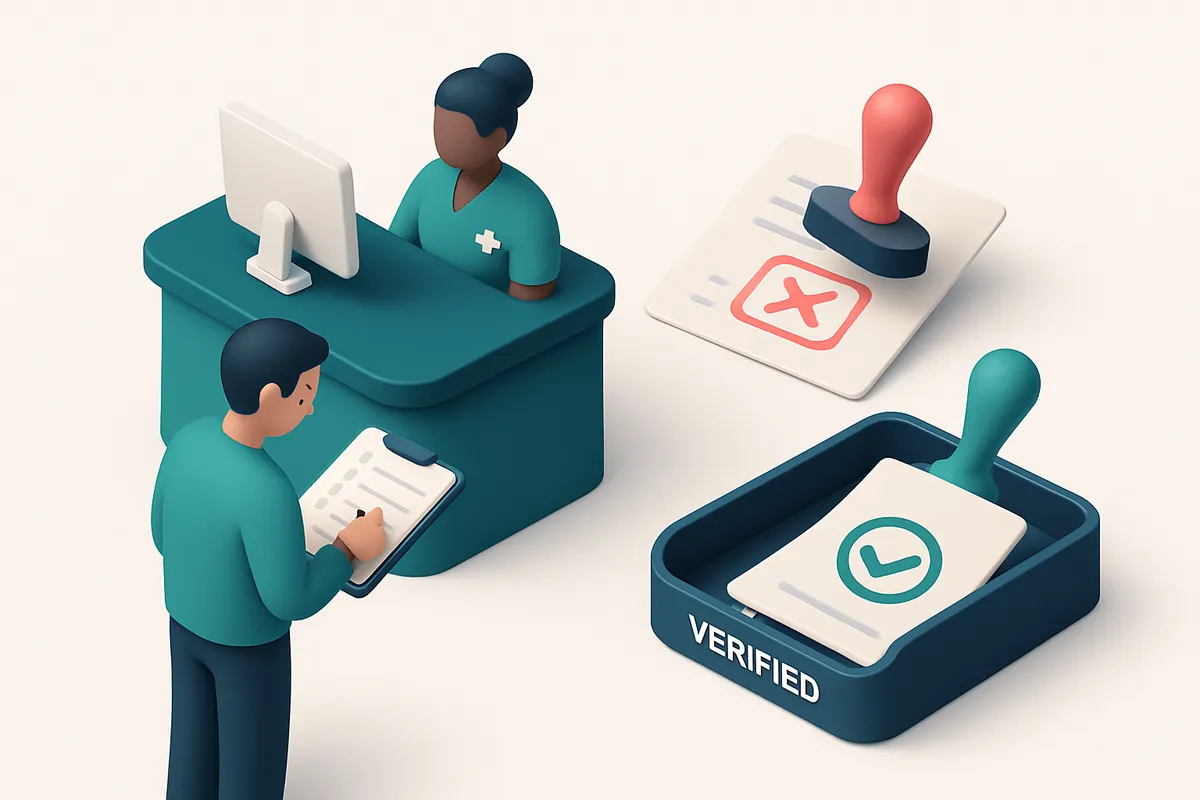
You send a reminder for a follow-up appointment, a billing update, or a vaccination notice—only to see it vanish into the void. No bounce, no error, just silence. Your system shows “sent,” but your patient never saw it.
That’s not a technical glitch. It’s a list full of outdated, misspelled, or dead patient emails. And for healthcare providers, every undelivered message costs more than time—it impacts care coordination, billing efficiency, and patient trust.
An email validation API for medical practices isn’t just about avoiding bounces. It’s about fixing a workflow that loses patients, delays care, and inflates administrative overhead. Without real-time validation, your messaging pipeline runs on outdated data—and that’s a risk you can’t afford.
Key takeaways
- 18–25% bounce rates on unverified healthcare email lists are common, far above the 2% benchmark for deliverability
- Invalid emails lead to missed appointments, delayed billing, and fragmented care coordination
- An email validation API helps maintain clean lists, reduces delivery failures, and improves patient engagement
The Real Cost of Sending to Invalid or Risky Email Addresses
You send a welcome email to a new patient. It bounces. You don’t notice. That one hard bounce might seem minor—but it’s not. Each hard bounce signals to email providers that your domain is sending to non-existent addresses. Over time, this damages your sender reputation.
Hard Bounces and the Reputation Tipping Point
When an email fails to reach an address due to a permanent error—like a typo or deleted inbox—the receiving server replies with a hard bounce. These are the red flags email services monitor closely. A spike in hard bounces, even just a few hundred per month, can trigger a review from providers like Gmail or Outlook.
According to industry guidelines, consistent hard bounce rates above 0.5% can start to trigger deliverability warnings. The longer you ignore them, the higher the chance your entire domain gets blacklisted. Once that happens, your next 10,000 messages may never reach an inbox.
Let’s be clear: a single invalid email is cheap. The cost isn’t the $0.01 it takes to send it. It’s the long-term risk to your domain’s standing. That’s why clean data isn't a luxury—it’s a necessity.
Hidden Risks in Your List: Catch-alls, Role Accounts, and Disposables
Some addresses look valid but aren’t. Catch-all domains, like [email protected] or [email protected], accept all incoming messages without feedback. You send to them, and the email is delivered—your system marks it as successful. But no real person ever sees it.
These fake validations inflate your list size artificially. You think you’re reaching 10,000 patients, but only a fraction are real. This signals poor list hygiene to email providers, which penalize high volumes of low-intent traffic.
Role-based emails like noreply@, admin@, or support@ aren’t just unengaged—they’re outright red flags. These are commonly flagged by email providers as low-value, high-risk senders. Disposables—emails from temporary domains like tempmail.com or 10-minute-mail.com—are even worse. They’re used for signups with no intention to engage. Sending to them wastes bandwidth and harms perception of your brand.
These aren’t just bad users. They’re data that drags your deliverability down. You’re not just sending to ghosts—you’re training algorithms to ignore you.
Use a real-time email validation API to catch these before you send. Our email validation API checks each address against live servers and flags risks—invalid, catch-all, disposable, role-based—so you only send to real, active inboxes.
How Real-Time Email Validation API Integration Works for Clinics
Let’s walk through how a real-time email validation API actually works when a patient submits their email during intake. No delays. No guesswork. Just instant clarity.
Instant Validation at the Point of Entry
- Form submission triggers the API — When a patient enters their email on a clinic’s website, patient portal, or mobile app, the system sends that address through the email validation API in the background.
- Checks run in under 500ms — The API validates syntax, confirms the domain exists, and checks if the mailbox is reachable. This happens faster than most users notice, keeping the experience smooth. For context, industry standards like RFC 5322 define email format rules, and services like MxToolbox help verify domain reachability.
- Results return instantly — The API returns one of four verdicts: valid, invalid, catch-all, or risky. You see it all in real time, before the data hits your database.
- Invalid emails are blocked — If syntax is wrong or the domain doesn’t exist, the system flags the email and prompts the user to correct it. This stops garbage data from entering your system.
- Risky emails are flagged — Disposable domains, role accounts (like info@ or admin@), or catch-all setups are marked but not rejected. You decide how to treat them: approve, alert, or hold.
- Valid emails move forward — Clean, deliverable email addresses go straight into your patient database, CRM, or email service provider — no delays, no wasted sends.
This process isn’t just faster — it’s smarter. You avoid sending appointment reminders, pre-visit instructions, or consent forms to addresses that’ll never get read. Or worse, bounce back and hurt your sender reputation.
Why Real-Time Matters in Healthcare
Patients expect smooth, reliable experiences. Every delay or error in email communication can lead to missed appointments, frustration, and administrative overhead. Real-time validation catches issues before they cause problems.
Unlike batch processing, where you might only catch bad emails days later, real-time validation prevents them from ever entering your system. It’s especially important for intake forms, automated follow-ups, and telehealth confirmations.
You can integrate this API into any system that accepts patient data. For clinics already using tools like Mailchimp, HubSpot, or SendGrid, seamless integration is built in. Check how it works: see our integrations.
Start testing the API with 100 free verifications. No expiry, no commitment: try the Email Validation API today.
What Each Email Verification Verdict Means in Practice
When you’re verifying patient emails for appointment reminders, consent forms, or follow-up care, not all "valid" emails are created equal. Let’s break down what each verdict actually means behind the scenes — and why it matters for medical outreach.
Understanding the Verdicts
Each result isn’t just a label. It reflects how the mail server behaves, which directly impacts deliverability and patient trust. Here’s what you’re really seeing:
| Verdict | What It Means | Practical Implication for Medical Practices |
|---|---|---|
| Valid | The mail server accepts the address and will attempt delivery. No syntax or routing issues. | Safe to send. These are your best prospects for inbox placement. Use the API to verify lists in real time during onboarding. |
| Invalid | The server rejects the address outright — missing domain, typo, or non-existent mailbox. | Do not send. These cause hard bounces. Remove them before campaigns. A bulk check catches these early. |
| Catch-all | The server accepts all incoming emails, regardless of mailbox existence. | High risk. You can’t verify individual inboxes. Sending here may lead to spam complaints. Common with older or poorly configured systems. |
| Risky | Disposable, freemail (Gmail, Outlook), or role-based (billing@, info@) addresses. | Delivery possible, but high bounce and low engagement. Freemail addresses, for instance, rarely receive patient communication seriously. |
| Unknown | The server failed to respond after multiple attempts. May indicate temporary failure or greylisting. | Potential deliverability issues. These should be monitored or rechecked later. Not suitable for time-sensitive messages. |
These verdicts are based on real SMTP and DNS checks — not guesswork. The same validation steps used by major email providers like Google and Microsoft to filter spam are applied at scale.
For example, role-based addresses (like admin@ or support@) often go unnoticed in patient workflows. Yet they're included in lists accidentally. The email finder helps recover accurate contact points when you're missing data.
When in doubt, a inbox placement test shows how your message performs across real inboxes — including spam folders. This isn't just about validity. It’s about reputation, real delivery, and care continuity.
The goal isn’t perfection. It’s reducing noise. A 2% bounce rate in healthcare is already below average; most practices hover around 5–10%. You’re not fixing every single issue — you’re filtering out the ones that hurt sender reputation.
Why Bulk Verification Before Patient Campaigns Matters
You’re launching a patient reminder campaign. You’ve pulled a list of 5,000 email addresses from an old intake form, merged it with a legacy CRM, and now you’re ready to send.
But how many of those emails are still valid? How many are outdated, misspelled, or tied to a retired inbox?
Bad data kills deliverability
Without bulk verification, you’re sending to a mix of active addresses and dead ones. You might see 1,000+ bounces—more than 20% of your list—which is the kind of volume that raises red flags with inbox providers.
Spam filters track sending behavior. A sudden spike in hard bounces can trigger automated filtering, especially if your sender reputation is already near the edge. That means your next patient update—critical, like appointment confirmations or lab results—gets stuck in a spam folder, or worse, never arrives.
According to a Return Path deliverability study, bounce rates above 5% significantly increase the risk of being marked as spam, particularly for healthcare senders who rely on consistent inbox access.
Verification isn’t optional—it’s operational hygiene
Validating your list before sending means you’re only reaching real patients. That reduces waste, strengthens your sender reputation, and keeps your domain on good standing with email providers.
It also gives you a clearer picture of your actual outreach reach. Want to know how many of your patients are still using email? You’ll see it in the verification results—no guesswork.
Let’s be honest: sending to a dirty list isn't just inefficient. It hurts trust. If a patient doesn’t receive a follow-up, they might assume you’re unreliable—or worse, that your practice has outdated systems.
Use an email validation API to scrub your list before every campaign. You can integrate with your existing tools—Mailchimp, HubSpot, Klaviyo, SendGrid—with a simple API call. This way, every new patient form or merged dataset gets cleaned automatically.
For medical teams, even a few misplaced emails can cause real delays. That’s why tools like bulk verification—which checks 10,000+ emails in minutes—aren’t just useful. They’re necessary for staying compliant, credible, and effective.
How Emaillistchecker.io’s 98.9% Accuracy Applies to Healthcare Data
Let’s be clear: in healthcare, every email matters. A missed message can mean a delayed appointment, a forgotten referral, or worse—a patient not receiving critical follow-up care. That’s why accuracy isn’t just a feature; it’s a necessity.
Multi-Layered Verification for Trusted Results
Email validation isn’t about one check. It’s about stacking real-time signals to reduce guesswork. Emaillistchecker.io runs multiple verification layers: DNS lookups confirm the domain exists and has valid MX records, SMTP checks simulate actual delivery attempts to see if the server accepts mail, and pattern analysis evaluates real-time responses from mail servers to catch tricky edge cases—like catch-all addresses that accept all emails but aren’t useful. You’re not just checking syntax. You’re testing intent and infrastructure.
Why 98.9% Matters in Patient Communication
That 98.9% accuracy figure isn’t marketing noise. It means fewer false negatives—valid patient emails that are wrongly flagged invalid—and significantly fewer false positives. In healthcare, false negatives are especially costly. Missed alerts mean missed care. A patient might receive no reminder about test results or medication refills because their email was marked invalid in error. Even a 1% error rate could mean dozens of patients slipping through the cracks per year in a medium-sized clinic. Real-world studies show that inaccurate contact data is a leading cause of failed outreach in health systems. According to a report from the Health Information Management Systems Society (HIMSS), up to 25% of patient outreach efforts fail due to outdated or invalid contact details—many of which are preventable. Our verification API runs these checks at scale, helping medical practices validate thousands of emails in minutes. It’s not just about filtering out obviously bad domains. It’s about spotting the ones that *look* valid but won’t deliver, or worse, are role-based (like info@ or support@), which often route into spam or drop entirely. You can test this with our in-app inbox placement tool to see how likely a message is to reach a patient’s inbox, not just their spam folder. Or if you’re still building your list, our email finder can help you source accurate addresses for patients who’ve interacted with your website or clinic portal. The goal isn’t just higher deliverability. It’s about ensuring patients actually receive what they need—on time. You don't need 100% accuracy; but you do need close to it when lives are involved. Try our real-time verification API today to integrate email validation directly into your patient communication workflow. With 100 free verifications to start and credits that never expire, there’s no risk to testing the difference real accuracy can make.
Integrating Real-Time Email Validation with Common Healthcare Tools
Seamless Integration with Your Existing Stack
You don’t need to overhaul your current CRM or marketing tools to improve patient communication. Emaillistchecker.io integrates directly with the platforms your medical practice already uses—Mailchimp, SendGrid, HubSpot, and Klaviyo—through API or embedded webhooks.
Let’s say a new patient fills out a form on your website. Instead of adding a bad email to your system, Emaillistchecker.io runs a real-time validation before the contact record is created. No waiting. No manual reviews. It happens in under 500 milliseconds.
The Process Is Silent, But Powerful
- You enable real-time validation in your HubSpot integration. Every new lead submission triggers a silent verification check via API.
- Emails are screened for syntax, domain existence, and inbox health—before they ever reach your marketing or scheduling systems.
- Invalid, malformed, or disposable emails are flagged immediately; only verified addresses proceed to your contact database.
- No one on your team needs to intervene. The system runs in the background, reducing bounce rates without adding workflow friction.
- Bounced emails mean missed follow-ups and lower deliverability. This approach prevents those issues—proactively—before they impact your sender reputation.
- Even if your list grows by thousands, validation scales automatically. You’re not stuck with stale or inaccurate data.
- For practices using email campaigns, this layer ensures messages land in inboxes, not spam folders. Tools like SendGrid work better when sender reputation is intact.
According to the Return Path’s 2023 Email Deliverability Report, even a 1% increase in clean email lists can reduce spam complaints by 15% on average—a measurable gain for compliance and trust.
Think about the time saved not chasing down bounce reports, rebuilding campaigns, or dealing with frustrated patients who never got their reminders. That’s not just efficiency. It’s better patient care.
With Emaillistchecker.io, you’re not just verifying emails. You’re protecting your reputation, improving engagement, and ensuring every outreach has a real chance to be seen.
See how the verification API fits into your workflow—or explore the full setup at our integrations page. Start with 100 free verifications at no risk. Credits never expire.
Using Inbox-Placement Testing to Confirm Deliverability
Let’s be honest: you don’t want a patient reminder or post-appointment survey to vanish into spam or get blocked. That’s why you need to test deliverability before sending to real patients. Even with a clean list, sender reputation, domain alignment, and content can all affect inbox placement.
Real Inboxes. Real Results.
With inbox-placement testing, you send test emails to a private pool of real inboxes across Gmail, Outlook, and Yahoo—no bots, no simulations. These are actual user mailboxes, so the results reflect real-world behavior. You’re not guessing whether your message arrives; you’re seeing exactly where it lands. This step is especially important for medical practices. A time-sensitive reminder about an upcoming appointment or a post-care survey can lose all value if it’s flagged as spam or blocked entirely. Testing ahead of time gives you confidence—before you risk losing a patient’s attention.
Know Where Your Message Goes—Before It’s Sent
The results show clear outcomes: inbox, spam, or blocked. This is the only way to know if your message will actually reach your patients. Some messages pass validation but still get caught by a third-party filter or a provider’s dynamic spam score. Inbox-placement testing catches those issues early. This is how you avoid the last-minute panic. You’re not relying on post-send reports from your ESP or waiting for patient feedback to realize your message never arrived. You’re proactively verifying deliverability with real, measurable results across the most widely used email platforms. For medical practices managing dozens of follow-ups daily, this isn’t a luxury—it’s a necessity. A single failed message can delay care or reduce patient satisfaction. A recent study by Return Path found that over 20% of marketing emails end up in spam filters, even when sent from compliant senders. That’s why you need to test, not just validate. Using a real-time email validation API like EmailListChecker’s API or inbound placement testing adds another layer of verification. It doesn’t just tell you if an email exists—it tells you if it will be seen. Once you’ve verified your list and tested deliverability, you’re ready to send confidently. No more surprises. No more lost appointments. No more frustrated patients. You’re not just sending emails. You’re improving care delivery—with every message that lands where it should.
Starting with 100 Free Verifications: No Risk, No Commitment
Test the system without spending a dime
You don’t need a budget to see if email verification works for your patient outreach.
When you sign up, you get 100 free verifications—enough to run a real test on your current list.
Let’s say you have a small group of patients from last month’s follow-up campaign. Run them through the bulk verification tool and see how many are actually deliverable.
Use them when it's convenient for you
- You can test the API with a handful of emails right now—no credit card required.
- These credits never expire, so you can save them for when your clinic’s patient volume picks up.
- Need to verify a list before launching a new appointment reminder system? Use the free credits then.
- Perfect for solo practitioners or small teams testing the tool before asking IT or admin to roll it out across departments.
- Even if you pause campaigns during low seasons, your credits stay active—no rush, no pressure.
Think of it like a trial period with real, usable value. There’s no obligation. No formality. Just a few clicks to see if your lists are clean.
Healthcare email deliverability is not a guessing game. Bounced messages waste time and can harm sender reputation—especially if you’re sending appointment reminders or chronic care updates. According to the Spamhaus Project, even a 1% bounce rate on critical health communications can trigger filtering systems. Validating emails in advance reduces that risk.
The goal isn’t just to cut dead addresses—it’s to make sure your messages land in patient inboxes, not quarantine folders.
Once you’ve validated your small test list, you can start building a habit: scrub your list before every campaign. Whether you're using email marketing tools in Mailchimp, HubSpot, or Klaviyo, cleaning your data before export improves inbox placement and avoids deliverability issues.
Your patients expect timely, accurate communication. Your systems should deliver—on time, every time.
Start small. Test freely. Build confidence. Then scale up.
The One Step Every Medical Practice Should Take to Improve Patient Outreach
Every new patient email should be validated in real time at point of entry. Quarterly scrubbing of existing lists ensures outdated or invalid addresses don’t accumulate.
Unverified emails lead to bounces, trigger spam filters, and damage sender reputation. This harms patient communication and risks missing critical care updates.
A simple verification step — integrated via an email validation API — prevents delivery failures, improves inbox placement, and directly supports patient satisfaction and operational efficiency.
Keep reading
- Email Verification API & SDKs: the complete developer guide (complete guide)
- Real-Time Email Validation API for Blockchain Platform Registration
- API to Verify Email Addresses During E-Commerce Account Creation
- Verify Email Addresses for SaaS Signups Using REST API
- Email Deliverability API for Boutique Hotel Email Lists
Ready to put this into practice? Emaillistchecker.io verifies emails with 98.9% accuracy — start with 100 free verifications.
Frequently asked questions
How does email validation API prevent patient appointments from being missed?
By verifying email addresses at registration, clinics catch typos and invalid entries before sending reminders, significantly reducing missed appointments due to undelivered messages.
Does email validation reduce spam complaints in healthcare outreach?
Yes. Sending to invalid or disposable emails increases spam complaints. Cleaning lists improves delivery rates and reduces risk of inbox filter triggers.
Can I integrate email validation with my clinic's patient portal?
Yes. The API supports real-time validation on form submissions, making it easy to block invalid entries at the point of capture.
How does catch-all detection affect medical communications?
Catch-all domains accept all emails without response. They can't confirm if an individual inbox exists, so messages may not be delivered—leading to communication gaps.
Why does sender reputation matter for medical email campaigns?
Low sender reputation leads to emails being filtered into spam folders. High bounce rates hurt reputation; verification reduces bounces and protects deliverability.
What happens to emails marked as risky?
Risky emails—like role-based or disposable—are flagged for review. They're not automatically blocked but should not be used for critical communications without extra verification.
Can I verify legacy patient lists without technical help?
Yes. Emaillistchecker.io supports bulk upload and verification with a simple CSV file. No coding is required.
How often should medical practices clean their patient email lists?
Quarterly cleansing is recommended. This includes removing expired, invalid, or unused addresses to maintain list health.
Does Emaillistchecker.io store my patient data?
No. Emails are processed in real time and are not stored or retained after verification session ends.
Is real-time validation slow for high-volume clinics?
No. The API delivers results in under 500ms, making it suitable for clinics processing hundreds of new patient sign-ups daily.