Email Deliverability Checker for Freelance Developers
Ensure your freelance outreach lands in inboxes with a reliable email deliverability checker. Test sender reputation, spam filters, and mailbox placement before
Why Your Freelance Outreach Is Getting Blocked (And How to Fix It)
You send a crisp, personalized email to a potential client. You’ve done the research, crafted the pitch, and hit send. Days pass. Silence.
That’s not lack of interest — it’s likely a blocked message. Your email never hit the inbox. Instead, it disappeared into a filter, flagged by spam signals or a dead address. This happens to freelance developers all the time, not because of weak writing, but because of invisible technical barriers.
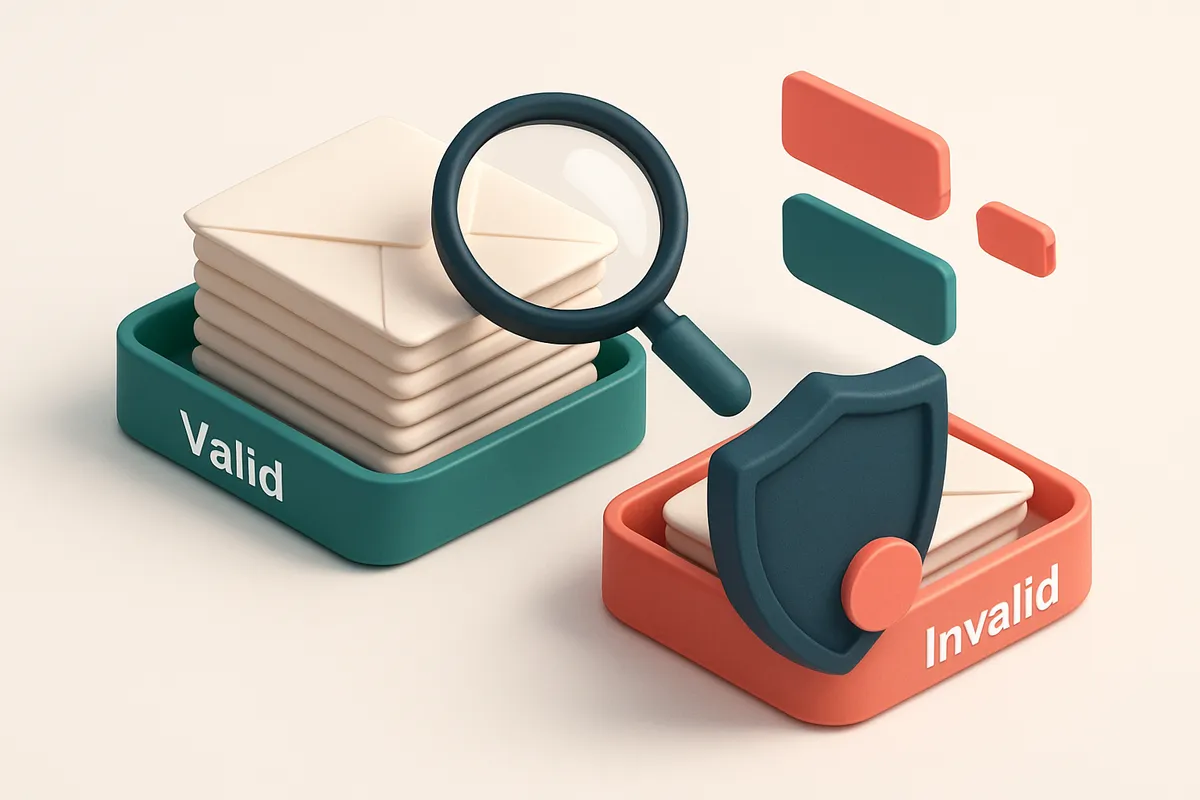
What you need isn’t more emails — it’s smarter outreach. An email deliverability checker for freelance developers identifies invalid addresses, bad sender reputations, and spam triggers before you send. It’s not magic. It’s verification.
You’re not just avoiding bounces. You’re protecting your credibility with Gmail, Outlook, and every corporate email system that sees your name as a sender.
Key takeaways
- Freelance developers lose leads to email blocks, not pitch quality.
- Invalid addresses, poor sender reputation, and spam filters are the real roadblocks.
- A real-time email deliverability checker catches issues before you send.
The Hidden Cost of Sending to Invalid or Suspicious Emails
Every email that bounces—hard or soft—adds weight to your sender reputation score. Even a single bounce from a non-existent address can make your domain look unstable to inbox providers. For freelance developers sending to client lists or outreach campaigns, this isn’t just a technical detail. It’s a direct contributor to being flagged as spam.
Bounces Don't Just Wasteful—They’re Harmful
Mail servers track your bounce rate closely. A sudden spike—especially above 2%—can trigger automatic filtering. If your domain hasn’t been warmed up (a common oversight when freelancers start sending), your messages are more likely to land in spam or be silently dropped. This isn’t theory: inbox providers like Gmail and Outlook use real-time feedback loops to assess sender behavior. Low reputation = lower inbox placement.
Let’s be honest: you’re not just wasting sends. You’re risking long-term deliverability. A list with just 10% invalid addresses can push your bounce rate beyond thresholds that trigger filters. And once your domain is on a blocklist, recovery takes weeks, not days.
Where You Send Matters as Much as Who You Send To
Role-based addresses like admin@, support@, or info@ aren’t just common—they’re red flags. These addresses often serve catch-all mailboxes, meaning your email gets accepted but never read. ISPs (Internet Service Providers) know this. They penalize senders who repeatedly target role accounts.
When your list includes non-existent or role-based addresses, inbox placement drops by up to 30%—a drop that directly affects conversions. Your message might never reach the person it’s meant for. One study from Return Path (now Validity) found that campaigns with clean lists see significantly higher deliverability and engagement than those with unverified data.
Freelancers using unverified lists often report open rates under 15%. Clean lists—verified with tools like Emaillistchecker.io—achieve 30–40%. That’s not a small difference. It’s the difference between being ignored and getting noticed.
Let’s cut through the noise: your outreach fails not because your message is bad, but because the list is.
Before sending your next blast, verify every address. Use a tool with high accuracy—98.9% to be exact. Check your lists for invalid, risky, or catch-all addresses before you spend time and energy on outreach that never lands. Bulk verification gives you instant clarity. No more guessing.
And if you're building a list from scratch, pair your outreach with a tool that helps find real addresses: email finder is built for developers who need precise, actionable data.
What an Email Deliverability Checker Actually Tests
Let’s be clear: an email deliverability checker doesn’t just tell you if an address is valid. It runs a real-world test under the hood to predict whether your message will actually land in the inbox — or end up in spam, or get rejected entirely.
How It Works: A Step-by-Step Look
- Check SMTP connectivity — The tool connects directly to the recipient's mail server using SMTP. If the server accepts the connection and responds with a "250" code, the mailbox exists and is open to receiving mail. This catches invalid addresses, typos, and closed accounts early.
- Validate DNS records — It checks for SPF, DKIM, and DMARC records. These are the foundation of email authentication. Without them, even legitimate emails can be flagged by providers like Gmail or Outlook. If any are missing or misconfigured, the sender’s reputation takes a hit.
- Assess sender reputation — The tool queries known blocklists like Spamhaus and abuse.net, and checks historical patterns of spam or bounce abuse tied to the sender’s IP or domain. If your sending IP has been flagged before, even a clean message might not make it past filtering.
- Test inbox placement behavior — This simulates how real email providers like Gmail, Outlook, or Apple Mail would treat your email. It evaluates content signals (like links, subject lines, and sender alignment), and predicts whether your message will land in the inbox or be auto-filtered into spam.
Why This Matters for Freelance Developers
As a freelance developer, you’re often sending emails to clients, recruiters, or collaborators. If your message lands in spam or gets dropped, you’re invisible — even if your portfolio is solid.
You don’t want to waste time on emails that won’t be seen. A good deliverability checker does more than validate syntax; it gives you a real pre-send forecast on inbox placement.
For example, if you’re cold-emailing 100 prospects, and 30% of those addresses are catch-alls or blocked, you’ve already lost half your chances before the first message sends. That’s why tools like bulk verification are essential — they prune the list before you send anything.
Many developers assume “valid email” equals “delivered.” It doesn’t. A valid address might still be rejected due to poor sender reputation or weak authentication. A proper check surfaces these risks before they cost you a client.
Think of it like deploying code: you test it in staging. Your email should too. Inbox placement testing gives you that staging environment — one that mirrors how real providers behave.
And if you’re building a tool or app that sends emails, integrating with a real-time verification API like our verification API helps you catch bad addresses at the point of entry.
How Emaillistchecker.io Tests Deliverability in Real Time
Let’s cut through the noise. You don’t just want to know if an email is valid—you want to know if it’ll actually land in the inbox. That’s where real-time deliverability testing comes in.
The Real-World Test: SMTP Handshake
- Initiate a real SMTP connection to the recipient’s mail server. This isn’t a simulation—you’re sending a test message using a valid envelope (MAIL FROM, RCPT TO) as a real sender would.
- Read the server’s response code directly. A
250means the server accepted the message. A550means it rejected it outright. Codes starting with4xxsignal a temporary issue—like greylisting or rate limiting. - Classify results based on actual server feedback. This is the most reliable signal you can get. No guesswork. No outdated rules. Just the raw response from the inbox.
You’re not just verifying syntax. You’re simulating what a real email will experience—down to the exact response code the server returns.
Authentication & Reputation Checks
- Verify SPF, DKIM, and DMARC alignment. These aren’t optional. Many messages get silently blocked if the sender’s authentication setup is off. We check whether the domain’s DNS records support the sending server’s authentication.
- Look up IP and domain reputation. We cross-reference your sending IP and domain against live blocklists like Spamhaus DNSBL and Spamhaus SBL. If your IP or domain is listed, your email risk goes way up—even if the address is technically valid.
- Score the deliverability risk. The result isn’t just “valid” or “invalid.” It’s a full assessment: real-time deliverability score based on how the server would respond under actual conditions.
Authentication issues cause around 30% of email failures, even if the address is right. We catch those early.
Email authentication is not a suggestion—it’s a requirement for inbox placement. The RFC 7072 standard confirms that receiving servers expect alignment between sender domains and SPF/DKIM records.
Deliverability isn’t just about the email address. It’s about how the server sees your sender. That’s why Emaillistchecker.io doesn’t stop at syntax—our checks simulate real sender behavior.
Want to verify your entire list with this precision? Run a full bulk verification and see which emails are truly deliverable. For developers building automation, our real-time API integrates seamlessly into your workflow. Or test your sender setup with our inbox placement tool. All with 98.9% accuracy. No fluff.
Real-Time Verification vs. Bulk List Checks: Which Is Right for You?
Let’s cut to the chase: your outreach strategy depends on which stage of the game you’re in. Whether you’re cold-emailing a single prospect or sending a monthly newsletter to 500 contacts, the right verification method makes the difference between a reply and a bounce.
Use Real-Time API for Individual Outreach
- When you’re reaching out to a client or hiring manager one-on-one, verify the email before you hit send. Use the real-time verification API to check validity instantly. It’s fast, lightweight, and fits naturally into your workflow.
- Real-time checks catch invalid domains, typos, and temporary inbox issues before you waste your time. A bad email won’t just bounce — it can hurt your sender reputation over time.
- According to Return Path’s deliverability benchmarks, even a 0.5% bounce rate can start to degrade inbox placement. That’s why catching errors before sending matters.
Run Bulk Checks for Campaigns and Sequences
- If you’re managing a recurring outreach sequence, maintain a clean list. You’ll get better engagement with fewer bounces, higher open rates, and less time spent on invalid addresses.
- Run regular bulk checks on your contact list to remove outdated, malformed, and non-existent emails. This stops your campaigns from being flagged as spammer behavior.
- Integrate with platforms like Mailchimp, HubSpot, or SendGrid via Emaillistchecker.io’s integrations. New sign-ups get verified automatically — no manual cleanup needed.
When you're done with verification, the inbox placement test shows how likely your message is to land in the primary inbox — not the spam folder.
For deeper insight, the in-app AI assistant parses the results and suggests next steps. A “catch-all” email? That’s not a valid address — it’s a red flag. A “risky” account? Likely outdated or monitored. The AI doesn’t guess — it uses known patterns from real-world delivery behavior.
Even one invalid email can harm your sender reputation, especially when it’s part of a large list. Clean data is the baseline of deliverability.
Start with 100 free verifications at no risk — check your next contact list, and see how much cleaner your outreach becomes.
The Meaning of Each Email Verification Verdict on Your List
When you’re sending outreach or onboarding emails as a freelancer, hitting “send” shouldn’t be a gamble. The truth is, 20% of outbound emails don’t reach inboxes—often because of poor list hygiene. Let's break down what each verification verdict actually means, so you know what to do next.
Understanding Verification Verdicts
Each result from an email deliverability checker tells you something specific about an address. Not all bad addresses are equally dangerous—and not every bounce is the same.
| Verdict | What It Means | What You Should Do |
|---|---|---|
| Valid | The address exists and accepts messages. Format is correct, domain resolves, and the mailbox is active. | Send with confidence. These are your best leads—ideal for outreach and onboarding. |
| Invalid | Format error (e.g., missing @ or domain), or the domain doesn’t exist. Common in typos or fake signups. | Remove immediately. These will hard bounce and hurt your sender score. |
| Catch-all | The domain accepts all emails, but you can't confirm if a specific address is real. Often used by low-quality domains. | Avoid. If you send to catch-all domains, your message may be flagged or your IP blacklisted. |
| Risky | The domain has a history of high bounce rates, poor sender reputation, or was previously linked to spam. | Use caution. These addresses may be outdated or associated with spam traps. Verify the context before sending. |
| Disposable | The email is temporary (e.g., mailinator.com, temp-mail.org). Used for signups and rarely checked. | Remove. These users won’t engage or respond—and they can hurt your domain reputation if used in bulk. |
| Role-based | Addresses like admin@, support@, or sales@. May be monitored, but not tied to a real decision-maker. | Use sparingly. While not invalid, they’re low-value for outreach. Focus on personal, individual emails when possible. |
These verdicts aren’t just labels—they’re signals. An email deliverability checker like Emaillistchecker.io uses SMTP checks, MX record validation, and real-time blacklisting lookups to return this data accurately. We run 98.9% of our checks against live email servers, so results reflect what your inbox placement will actually look like.
For developers, it's especially important to understand how mail servers respond. You’re not just sending data—you’re interacting with systems. Misunderstanding a catch-all or role-based email can lead to unexpected bounces, reputation damage, or even temporary blacklisting. The RFC 5321 standard governs SMTP behavior, and our tool respects those rules by testing against actual server responses, not guesswork.
When you're scaling client outreach, knowing what each verdict means lets you make better decisions. Remove the invalids. Avoid catch-alls. Skip disposable emails. That leaves you with a clean, high-quality list—ones that actually get seen.
Common Deliverability Pitfalls for Freelance Developers
You’d think sending a few emails to clients from Upwork or LinkedIn would be harmless. But if you’re blasting a list of contacts gathered from those platforms without verifying them, you’re risking your sender reputation.
Many freelance developers assume their outreach is safe because they’re “just asking for work.” But unverified lists include outdated, fake, or catch-all addresses. These don’t just bounce — they can get you flagged by spam filters or even blacklisted.
Personal Domains and Missing Authentication
Using your personal domain (like [email protected]) for client outreach sounds professional. But if you haven’t set up SPF, DKIM, or DMARC records, you’re leaving your emails wide open to spoofing.
Spamhaus and other blocklist providers monitor authentication protocols. Without them, your emails are treated with suspicion — even if you’re sending legitimate messages. And unlike big brands, you don’t have existing sender reputation to fall back on.
Let’s be clear: a clean list isn’t enough. You also need technical hygiene. If you’re just starting out, you need to warm up your domain with slow, consistent sending — and that takes time. Jumping into heavy volume won’t help; it’ll hurt.
The Danger of Old and Inactive Lists
Reusing old email lists — especially those purchased or scraped from public sites — is a bad habit. These lists often include addresses that haven’t been verified in years, if ever.
Even a few invalid addresses can trigger a bounce rate spike. According to industry data, a bounce rate above 2% can start to hurt deliverability. And if your list includes disposable email domains or role accounts (like team@ or contact@), your chances of reaching an actual human drop significantly.
Before you send that pitch email, run your list through a real-time verification tool. You want to catch catch-alls, invalid addresses, and risky domains before they damage your sender reputation.
Tools like bulk email verification can filter out dead or risky addresses in minutes, so you’re only sending to valid, inbox-ready emails. And if you’re integrating with platforms like Mailchimp or HubSpot, our integrations make it easy to verify before each campaign.
How to Prevent Being Marked as Spam (Even When You’re Not)
Let’s be honest: even your best outreach can get flagged as spam if the technical foundation is weak. A single misstep in setup or sending behavior can tank your deliverability — and your reputation — faster than you expect.
Build the Right Foundation Before You Send
- Use a dedicated domain for outreach. Don’t send client offers from your personal Gmail or Hotmail. Spammers dominate those domains, and ISPs use that history to judge legitimacy. A dedicated domain (e.g.,
[email protected]or[email protected]) signals you mean business. It’s not a luxury — it’s a baseline for credibility. - Set up SPF, DKIM, and DMARC properly. These are the three core authentication protocols that prove your email wasn’t forged. SPF tells receivers which IPs are allowed to send on your behalf. DKIM adds a digital signature to verify the message hasn’t changed in transit. DMARC ties it all together by telling receiving servers what to do if authentication fails. If any are missing or misconfigured, even legitimate emails are likely to land in junk folders. You can verify this with tools like dmarcanalyzer.com or MXToolbox, which check all three in real time.
- Warm up your domain gradually. If you send 100 emails on day one from a fresh domain, email providers assume you’re a spammer. Start with 5–10 emails per day—targeting real people, not random lists. Gradually increase volume over 2–3 weeks. This builds trust with ISPs like Gmail, Yahoo, and Outlook, which track sending patterns over time.
- Avoid sending to catch-all or disposable domains. Catch-all emails (like
[email protected]) accept every message, but they’re often used by spammers or bots. Disposable domains (liketempmail.com) are short-lived and signal low intent. Sending to these increases your spam score and harms your sender reputation. Use a tool like EmailListChecker’s bulk verification to filter out invalid, risky, or disposable addresses before you send.
Keep Your Sending Habits Clean and Consistent
Even after setting up authentication and warming your domain, you need ongoing discipline. Monitor for hard bounces — they hurt deliverability fast. If more than 2% of your emails bounce, you’re sending to outdated or invalid addresses. That’s why you should clean your list regularly and verify before each campaign.
Think of your sending behavior like a reputation score. Every good email — delivered, opened, engaged with — adds points. Every bounce, complaint, or blocked message subtracts them. The system is simple: be consistent, be authentic, be real. If you’re not, it doesn’t matter how good your pitch is — the inbox will never open.
How to Use Emaillistchecker.io With Your Existing Workflow
Let’s get your email list clean and your deliverability on point—no fluff, just steps that fit into how you already work.
Bulk Verification for Immediate Cleanup
- Paste your list directly into the bulk verification tool—no setup, no friction. You’ll get back which addresses are valid, invalid, catch-all, or risky within minutes.
- Focus on removing hard bounces (like misspelled domains or non-existent users) and high-risk addresses (those likely to mark you as spam). This reduces your bounce rate—something Spamhaus tracks closely, as high bounce rates hurt sender reputation.
Automate Verification in Real Time
- Use the real-time API to verify every email as it’s added to your CRM or newsletter sign-up form. No more late-night cleanup after a failed campaign.
- This prevents dirty data from ever entering your system. It’s especially useful if you’re building client lists, managing outreach, or running referral campaigns.
Test Inbox Placement Before You Send
- Run your campaign through the inbox placement tester to see how likely it is to hit the inbox—or get buried in spam.
- Many deliverability issues come from poor sender reputation, unverified sending practices, or alignment with mailbox provider filters. Testing lets you fix that before you send.
Prep Your List for Major Platforms
- Before sending to Mailchimp, Klaviyo, or SendGrid, run your list through Emaillistchecker.io. Clean lists get better delivery, lower bounce rates, and stronger long-term trust from inbox providers.
- Moving forward, this becomes a habit: verify first, send second. Your open rates, engagement, and sender score all improve over time.
Deliverability isn’t just about sending—it’s about being trusted. The cleaner your list, the more inbox providers treat your messages as welcome.
Start with 100 free verifications at https://emaillistchecker.io/pricing. Credits never expire. Use the integrations to plug into your favorite tools. There’s no reason to wait—clean your list today.
Why Accuracy Matters (And How Emaillistchecker.io Achieves 98.9%)
You’re not just checking email addresses — you’re protecting your reputation as a freelance developer. A single bounce, a misdelivered message, or a blocked send can hurt your credibility. That’s why accuracy isn’t a bonus. It’s the baseline.
Real SMTP Checks, Not Guesswork
Many tools only scan syntax — does it look like an email? That’s not enough. We go further. Every address is validated via actual SMTP responses, meaning we check whether a domain’s mail server accepts or rejects it, just like a real email would.
It’s not about patterns or regex. It’s about whether that inbox actually exists and is open to receiving mail. This is how you avoid false positives — addresses that seem valid but never deliver.
Filtering Out the Noise
You don’t want to waste time on disposable domains, catch-all systems, or role accounts like admin@, support@, or billing@. These are often misused, trigger spam filters, or never result in real engagement.
Emaillistchecker.io automatically flags and removes these from your list, so you only send to real, active addresses. That clean data means higher deliverability and fewer bounces.
For freelance developers, this means you’re not just sending emails — you're building trust with prospects, vendors, and collaborators. And consistency matters. That’s why credits never expire — you’re not rushing to use them before they vanish. Send when you need to, not when it’s convenient.
Even if you send only a few times a month, your list stays clean and ready. No pressure. No wasted spend.
When it comes to deliverability, you’re working with real infrastructure. The same standards used by large-scale email providers — DNS, MX records, TLS — are part of our process. This isn’t theory. It’s how the internet actually works. You can read more about how email is delivered at RFC 5321, the foundational specification for SMTP.
And for the technical side, our real-time API fits seamlessly into your workflow, whether you’re onboarding clients or managing outreach. Use it to verify lists before sending, or check individual emails during project communication.
Let’s be clear: 98.9% accuracy isn’t about a marketing claim. It’s about eliminating guesswork. You get results you can trust, every time. No overpromising. No hidden traps. Just the data you need to send confidently.
Keep Your Outreach Effective — Clean Your List, Win More Clients
Email deliverability isn’t about writing better subject lines—it’s about ensuring your message gets there. A single invalid address can hurt your sender reputation, trigger filters, or cause your entire campaign to fail silently.
An email deliverability checker helps you act before you send. It identifies dead, malformed, or risky addresses before they harm your deliverability metrics or waste your time.
With 100 free verifications and no expiration on purchased credits, Emaillistchecker.io is low-risk to test. Freelancers who verify their lists consistently achieve higher response rates and better client acquisition through reliable, trusted outreach.
Keep reading
- Deliverability, blocklists and sender reputation (complete guide)
- Prevent Email Blacklisting in Hotel Marketing with Validation
- How to Maintain High Email Sender Reputation for Dating Apps
- How to Test Email Deliverability Before Campaigns in 2026
- Ensure Email Deliverability When Targeting C-Suite Consultants
Ready to put this into practice? Emaillistchecker.io verifies emails with 98.9% accuracy — start with 100 free verifications.
Frequently asked questions
How do I check if my email is being blocked by Gmail or Outlook?
Use an email deliverability checker with inbox placement testing. It simulates sending to real inboxes and shows whether your message lands in the inbox, spam, or is rejected.
Can an email deliverability checker fix my sender reputation?
No. It identifies issues like poor authentication or high bounce rates. Fixing reputation requires consistent sending behavior and proper email infrastructure.
What is a catch-all email address, and why should I avoid it?
A catch-all accepts all emails sent to any address on a domain. It often leads to spam traps and high bounce rates. Avoid such addresses to protect your sender reputation.
How many emails can I verify for free with Emaillistchecker.io?
You get 100 free verifications to start with. You can use them all at once or over time—no expiration on credits.
Can I integrate Emaillistchecker.io with my CRM or email platform?
Yes. It integrates with Mailchimp, HubSpot, Klaviyo, and SendGrid, allowing automatic verification when contacts are added.
What’s the difference between a soft bounce and a hard bounce?
A hard bounce means the email address is permanently invalid. A soft bounce indicates a temporary issue like a full inbox. Both hurt sender reputation if frequent.
Is it safe to check my client’s email addresses publicly?
Yes. Emaillistchecker.io doesn't store or log addresses by default. Verification is done per request, and data privacy is maintained.
Do I need to set up SPF, DKIM, and DMARC to use Emaillistchecker.io?
No. The tool checks for these records as part of deliverability testing but doesn’t require them to run a check.
How does a real-time API help me with cold outreach?
It verifies emails on-demand when a prospect is added to your list. You avoid sending to invalid addresses and reduce bounce rates.
Why should I verify emails before sending cold outreach campaigns?
To avoid damaging your sender reputation, maximize inbox placement, and improve response rates by targeting real people.
What happens if my domain is blacklisted?
Your emails are blocked or marked as spam. Use a deliverability checker to confirm blacklisting and take steps to resolve it through delisting requests.
Can I use Emaillistchecker.io to find email addresses for cold outreach?
Yes. It includes an email finder tool that helps you locate valid email addresses based on first name, last name, and company.