
Mastering Newsletter Email Segmentation for Success
Improve your email marketing strategy with effective newsletter email segmentation methods. Learn actionable strategies now.
Understanding the Importance of Email Segmentation
Ever opened an email and wondered why on Earth it landed in your inbox? You’re not alone. Many newsletters still treat their audience as a monolith, delivering the same content to everyone, regardless of their interests. The challenge with this one-size-fits-all approach is simple: irrelevance. And irrelevance can lead to unengaged readers and poor conversion rates.
Email segmentation is the antidote. By categorizing your newsletter subscribers into distinct groups based on specific criteria, you can tailor your messages to fit their unique needs and preferences. This personalization is not just a nice-to-have; it transforms the reader's experience, making each email feel relevant and tailored just for them.
Through effective email segmentation, businesses see higher engagement and conversion rates. Why? Because targeted messaging resonates more with recipients, compelling them to take action. In this article, we’ll explore exactly how segmentation works, why it’s crucial for successful email campaigns, and how you can implement it to improve your communication strategy.
Key takeaways
- One-size-fits-all email campaigns often lead to disengaged readers.
- Segmentation allows for messaging that is relevant and personalized.
- Targeted emails significantly enhance engagement and conversion rates.
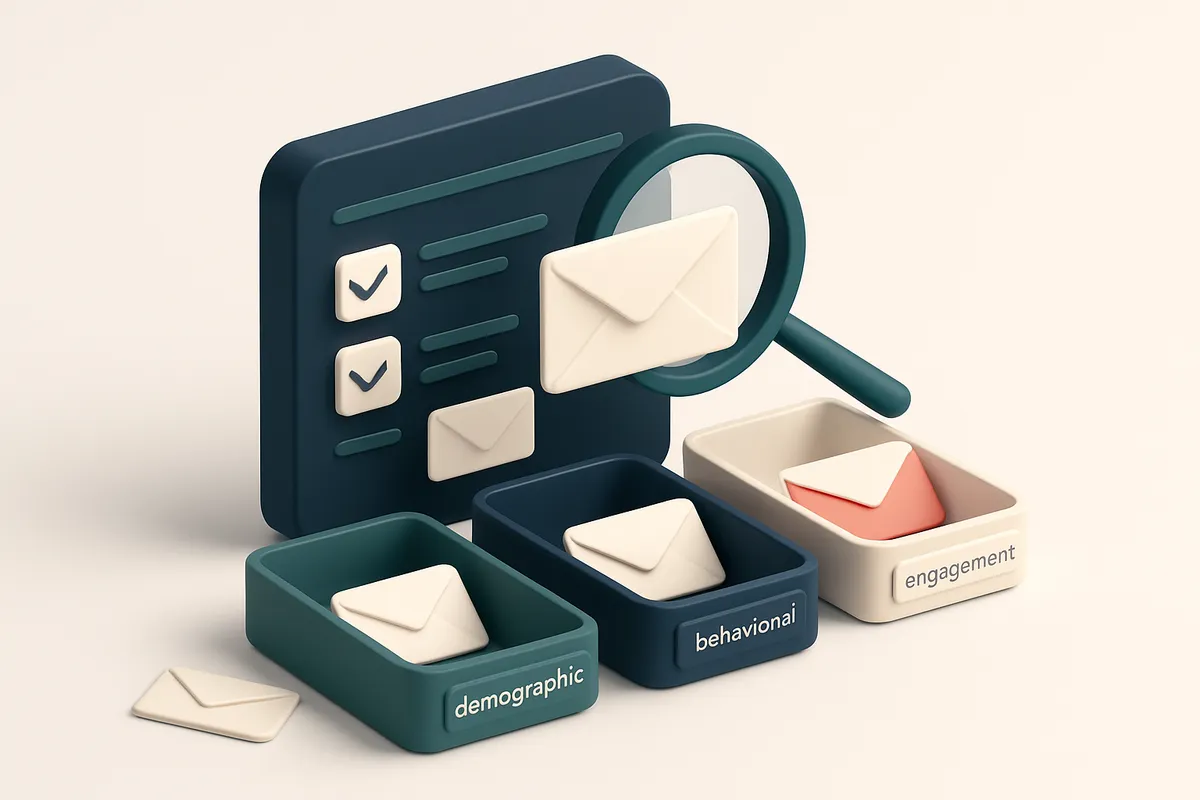
Different Approaches to Segmenting Your Email List
Segmenting your email list is crucial for effective newsletter targeting and improving engagement. Let's explore some practical ways to make your segmentation more precise and effective.
Demographic Segmentation
Demographic information provides a simple and effective way to tailor your newsletters to specific audience groups.
- Age: Personalize content to suit different age groups. Younger audiences might prefer shorter, visual content, while older segments might appreciate detailed information.
- Gender: Consider product or service recommendations that align with gender preferences where applicable.
- Location: Time your sends for optimal open rates and adjust according to local holidays or events. This is especially useful for geo-targeted promotions.
Understanding these demographic factors helps in crafting content that resonates with specific groups, enhancing your relevance and impact.
Behavioral Segmentation
Behavioral segmentation focuses on how subscribers interact with your brand, allowing for more targeted messaging.
- Past Purchases: Segment by previous purchase history to send relevant product recommendations or offers.
- Browsing Behavior: Track browsing patterns to identify interests and send personalized suggestions. For instance, if someone frequently visits your tech products section, they might appreciate updates on new arrivals in that category.
Behavioral targeting can significantly boost conversion rates by delivering emails that align closely with user interests. For more on targeting strategies, you might find this Salesforce guide insightful.
Engagement Level
Assessing engagement levels is vital for maintaining a healthy sender reputation. Low engagement can lead to deliverability issues, including landing in spam folders.
- Open and Click Rates: Classify subscribers into segments based on how frequently they open or click your emails. This helps in tailoring re-engagement campaigns for less active subscribers.
- Recent Activity: Focus on the most active subscribers with exclusive offers or early access messages to maintain their loyalty.
By understanding engagement levels, you can boost your overall email performance and keep your audience engaged. For a more in-depth look at deliverability testing, consider exploring our inbox placement testing tools.
"Segmentation isn't about the data you collect; it's about what you do with the data."
These different approaches help you meet subscribers where they are, making your messages more relevant and actionable. By refining your segmentation strategy, you not only improve engagement metrics but also reduce wasteful sends.
Leveraging Data for Effective Segmentation
When you're working on newsletter email segmentation, understanding your audience begins with the data they provide when signing up. Sign-up forms are more than just gateways; they are data collection points that, when utilized correctly, can significantly enhance your segmentation strategy. By capturing details like age, location, and preferences during sign-up, you can start building profiles that help you tailor your messaging.
Harnessing User Interactions
Beyond initial sign-up data, it's crucial to pay attention to how subscribers engage with your content. Their clicks, opens, and even time spent reading specific sections of your newsletter all contribute valuable insights. This interaction data allows you to refine your segments over time, adapting to your audience's evolving interests. Using tools that track these interactions can provide you with actionable metrics to guide your strategy.
Integrations with Customer Relationship Management (CRM) systems can amplify these insights. CRM tools aggregate data from various sources, offering a more comprehensive view of each customer. By integrating your email analytics with CRM platforms, you gain deeper insights into purchase behaviors, previous interactions, and more. This integration not only enhances your segmentation efforts but also personalizes your overall communication strategy.
Data Accuracy and Compliance
While collecting data is critical, maintaining its accuracy is equally important. Stale or incorrect data can undermine even the most sophisticated segmentation efforts. Regular data cleansing is necessary to ensure your segments are based on accurate and up-to-date information. Utilizing systems like EmailListChecker.io's bulk verification can help keep your lists clean and accurate, ultimately improving the quality of your segmentation.
Furthermore, compliance with data privacy laws is non-negotiable. Regulations such as GDPR and CCPA dictate how you must handle subscriber information. Following these guidelines not only keeps you compliant but also builds trust with your audience. Adhering to privacy standards and clearly communicating how you use subscriber data fortifies your relationship with your subscribers, all while protecting your business.
Effective email segmentation isn't about more data—it's about better data.
The goal of newsletter email segmentation is to deliver the right message to the right person at the right time. By leveraging user data wisely, integrating with CRM tools, and ensuring data accuracy and compliance, you can enhance your segmentation strategy effectively. This focused approach not only improves engagement metrics like open and click-through rates but also fosters a more personalized connection with your subscribers.
For more insights on how integrations can benefit your strategy, explore our integration options that can simplify data management and boost your segmentation efforts.
Implementing Real-Time Verification to Boost Segmentation
When it comes to newsletter email segmentation, having accurate data is crucial. Without it, your beautifully crafted content ends up in the wrong inbox or doesn't reach its destination at all. Bounces don't just reduce your reach; they can also tarnish your sender reputation, directly affecting your future campaigns. Let's explore how real-time verification can make a difference.
Why Real-Time Verification Matters
Real-time verification acts as a gatekeeper for your email list, ensuring only validated addresses make it through. By using tools like Emaillistchecker.io's API, you can verify emails as they're captured, minimizing the risk of faulty data entry or outdated addresses slipping into your segments.
SMTP and MX protocols are at play here, confirming the existence and activity status of each address. This verification process ensures that your cleverly segmented lists aren't disrupted by unnecessary bounces. According to Radicati Group, email remains a critical communication channel, but data accuracy is vital for its success. Without it, your segmentation strategies falter before they even begin.
Using Emaillistchecker.io's API
Integrating a real-time verification API allows you to streamline email list management seamlessly. At Emaillistchecker.io, our API is designed to integrate smoothly with platforms like Mailchimp and HubSpot, fitting effortlessly into your existing workflows.
This approach reduces bounces significantly because you're continuously feeding your lists with verified, active subscribers. By keeping bounces to a minimum, you protect your sender reputation, a critical factor that influences whether your emails land in the inbox or get relegated to spam folders.
Remember, your sender reputation is akin to your credit score. A poor reputation translates into fewer emails making it to their intended recipients. Conversely, a strong reputation keeps you in good standing with email service providers, ensuring higher delivery rates.
Real-time verification is more than just data hygiene; it's a strategic enhancement that bolsters every facet of your email marketing efforts.
In essence, deploying real-time verification isn't just about reducing the number of bounces. It's about building a foundation of trust and reliability for your email communications, enhancing deliverability, and maximizing engagement with your well-segmented newsletters.
Newsletter Email Segmentation Strategies
Breaking down your audience into specific segments is crucial for making newsletters more relevant and impactful. Below, we’ll guide you through some strategic approaches to better segmenting your email list for more effective campaigns.
Testing and Optimizing Segments
- Define Clear Objectives: Start by setting measurable goals for your email segments. Whether it's driving more clicks, increasing open rates, or boosting sales, having a clear target helps in shaping your strategy. According to Salesforce research, emails with a single, clear objective improve engagement.
- Create Segments Based on User Behavior: Look at how subscribers interact with your previous emails and website. Are they frequent openers? Have they purchased before? This behavioral data helps you create segments that cater specifically to each group's habits and preferences.
- Use Demographics and Interests: Incorporate demographic information such as location, age, and interests obtained from surveys or sign-up details. This helps tailor content that resonates with different segments more personally.
- Test and Optimize Regularly: Constantly test your segments to ensure effectiveness. Use past campaigns as a benchmark and adjust segments based on performance metrics. This ongoing process helps in refining your approach over time.
A/B Testing Segmented Campaigns
- Set Up A/B Tests for Segments: Use A/B testing to compare different messaging, images, or offers within your segments. For instance, split a segment into two groups and change a single element to see which performs better. Learn more about A/B testing setups from Optimizely.
- Analyze Results for Insights: After conducting A/B tests, analyze the data to understand which segments respond best to certain changes. This insight can guide future campaigns, allowing you to refine messages based on what works.
- Implement Learnings Broadly: Apply insights from A/B testing to wider segments as appropriate. This can maximize the results of high-performing strategies and elevate your campaign success across segments.
Effective segmentation isn’t just about dividing your list—it's about understanding your audience deeply and crafting messages that meet their desires.
Taking the time to refine your segmentation strategy can significantly impact your newsletter's success. As you implement these techniques, consider using our bulk verification tools to ensure your email lists are clean and up-to-date. This ensures your segments are using the most accurate data possible, reducing bounces and improving deliverability.
Managing and Maintaining Segmented Lists
Keeping your newsletter segments accurate and effective is an ongoing process. Without regular maintenance, even the best-segmented lists can lose their effectiveness over time.
Regular Cleaning for Better Results
Inactive subscribers can skew your engagement metrics and harm deliverability. Here's how to manage your segmented lists effectively:
- Conduct routine list pruning: Regularly remove inactive users from your segments. This ensures your list stays fresh and relevant. A common practice is to target users who haven’t engaged in the last six months.
- Identify and re-engage lapsing subscribers: Before removing, consider a re-engagement campaign to win back interest. This can help salvage valuable contacts before they’re removed.
Utilizing tools like Emaillistchecker.io can assist in verifying your lists, ensuring accurate identification of inactive addresses and reducing bounce rates.
Monitoring Engagement Metrics
Paying attention to how your audience engages with your content can inform further segmentation and targeting strategies. Here are key actions to take:
- Track opens and clicks: These metrics are crucial. Per the Litmus State of Email report, average open rates are around 21.33% across industries. Adjust segments based on actual performance, not industry norms.
- Adapt segments based on interaction: Move subscribers between segments according to their behavior. For example, if a lead originally categorized as "low engagement" starts frequently interacting, shift them to a more engaged segment to target with higher intent content.
“Email list hygiene can make or break your deliverability. Frequent checks ensure high engagement and effective segmentation.”
Using a real-time verification API can further enhance your ability to maintain list health, allowing for immediate data hygiene with newly captured addresses.
Ultimately, the aim is to ensure your lists remain dynamic and aligned with your evolving strategy. By staying proactive and precise in your list management, you increase the chances of your emails landing in inboxes rather than spam folders.

Integrating Segmentation with Your Email Marketing Platform
Effective newsletter email segmentation can transform how you engage with your audience. But it's essential to integrate your segmentation strategy with the right email marketing platform. Platforms like Mailchimp, HubSpot, Klaviyo, and SendGrid offer robust tools that make this integration straightforward and highly efficient. Let's explore how these integrations can enhance your email strategy.
Streamlining Automation with Integration
Integration between your email list segmentation and marketing platform should feel seamless. By linking these systems, you enable the automation of personalized messages based on your audience's behavior and preferences. This ensures that your subscribers receive the most relevant content at the best possible times, reducing the chance of your emails landing in the spam folder.
For example, Mailchimp's powerful automation features allow you to target specific segments with tailored messages efficiently. HubSpot, known for its CRM capabilities, offers in-depth segmentation that integrates directly with its marketing suite, enhancing automated email workflows. According to a report from Salesforce, marketers see a 20% increase in sales opportunities from nurtured leads compared to non-nurtured ones.
Leveraging Platform Features for Advanced Segmentation
The features available on platforms such as Klaviyo and SendGrid can take your segmentation strategy to the next level. Klaviyo excels at data-driven marketing by providing insights that help refine audience segments based on customer behavior, helping you create more personalized and effective campaigns.
SendGrid's segmentation tools are particularly useful for those aiming to scale their outreach and customize communication. With the availability of click-tracking and open-rate analytics, you can better understand what drives engagement in your audience segments. Whether you need to differentiate based on recent purchases or past interaction frequencies, these platforms can help.
To further optimize segmentation and ensure high deliverability rates, integrating with specialized services like Emaillistchecker.io's integrations can ensure your list remains clean and verified before sending. This minimizes the risk of bounces and helps maintain a strong sender reputation.
As you refine your segmentation strategy, consider referring to resources like Emailmonday for the latest trends and research in email automation. Understanding these dynamics ensures you're using the most recent data and techniques in your campaigns.
Successful integration not only saves time but also enhances message relevance and delivery success.
By marrying segmentation with the features offered by your email marketing platform, you enable a sophisticated, data-driven approach that resonates more effectively with your audience. This integration isn't just about convenience; it's about ensuring your messages hit the mark every time.
Analyzing the Impact of Segmented Campaigns
Segmenting your newsletter audience isn't just about organization; it’s a strategic approach that significantly enhances engagement. By monitoring key metrics such as open rates, click-through rates (CTR), and conversions, you gain insight into how well your segmentation efforts are working. These metrics serve as a direct reflection of how your audience responds to tailored content.
Key Metrics: Measuring Success
Open rates reveal the effectiveness of your subject lines and timing. When you segment your list based on user preferences and behavior, you're more likely to see your open rates climb. According to a study by Mailchimp, segmented campaigns receive nearly 14% higher open rates than non-segmented ones.
Click-through rates are next on the radar. They show how compelling your content is and how well it matches the interests of your segmented groups. When CTRs increase, it means your audience finds your content relevant, encouraging them to explore further. Conversions close the loop by showing the final outcome of your campaigns. Whether these are sales, signups, or other actions, increased conversions indicate that your segmentation strategy is yielding tangible results.
Analyzing these metrics helps you make data-driven adjustments. For instance, if you notice a particular segment isn't engaging, it might be time to redefine that group's character or preferences.
Adjusting Segmentation Strategies
Insights from metrics allow you to refine your segmentation strategy with precision. If open rates are lagging in a specific segment, consider revising the content to better align with their interests. For declining CTRs, ensure that your call-to-action is clear and compelling.
The cycle of testing, learning, and adjusting is central to email marketing success. Use these insights to fine-tune your segments. You might discover that segments defined by behavior outperform those based solely on demographics. Continual adaptation is critical, ensuring that your strategies remain relevant and effective.
Effective segmentation isn't static — it’s a dynamic process of continuous improvement.
The Long-term Return on Investment
The benefits of effective segmentation extend beyond immediate campaign performance. Over time, you build a more engaged audience, which is more likely to convert and remain loyal. This is where the long-term return on investment (ROI) becomes evident.
Email marketing experts at Litmus have observed that personalized campaigns, a key feature of segmentation, can deliver up to a 122% ROI, far above other marketing forms. By consistently delivering relevant content, you nurture a connection with your audience, contributing to brand loyalty and customer retention.
As you refine your segmentation, consider integrating tools that automate analysis and adjustments. Our integrations with platforms like HubSpot and Mailchimp can simplify the process, allowing you to focus more on strategy than on data crunching. For large lists, our bulk verification service ensures accuracy, removing potential barriers to engagement.
By embracing segmentation as a continuous practice, you not only improve immediate campaign results but also enhance your overall digital marketing ROI.
Conclusion: Maximizing Engagement through Segmentation
Segmenting your newsletter emails enhances engagement by delivering more relevant content to your audience. Tailoring messages by interests, preferences, or behavior leads to increased open rates and conversions. The more precise your segmentation, the more effectively you can communicate with your subscribers.
Segmentation is not a one-time task but a process of continual optimization. As your audience grows and changes, so should your segments. Regularly refine your strategy to sustain engagement and improve performance metrics over time.
Keep reading
- Email marketing fundamentals for clean data (complete guide)
- How to Improve Email List Health for Restaurant SMS and Email Campaigns
- Mastering Campaign Management with Email Verification
- Email Validation for Freelancers: Clean Lists for Better Newsletters
- Maximize Newsletter Engagement with Proven Strategies
Keep reading
- Mastering Email List Segmentation for Better Engagement
- Email List Validation Tools for Subscription Box Customer Segmentation
- How to Improve Email Newsletter Performance for Dealerships in 2026
- How Email List Segmentation Improves Deliverability
Ready to put this into practice? Emaillistchecker.io verifies emails with 98.9% accuracy — start with 100 free verifications.
Frequently asked questions
Why is email segmentation important in marketing?
Segmentation allows for personalized messaging, which improves engagement and conversion rates by addressing the specific needs and interests of different audience groups.
What are the common methods of segmenting an email list?
Common methods include demographic, behavioral, and engagement-based segmentation, each providing different insights to tailor marketing messages.
How can I ensure my email list data is accurate?
Use email verification services like Emaillistchecker.io to verify and clean your lists, reducing bounces and maintaining a strong sender reputation.
What role does data play in effective segmentation?
Data is crucial for understanding customer preferences and behaviors, allowing for insightful and targeted segment creation.
Can segmentation help improve my email campaign metrics?
Yes, segmentation can enhance open rates, click-through rates, and overall conversions by sending relevant content to targeted audience groups.
What tools can assist with email list segmentation?
Email marketing platforms like Mailchimp, HubSpot, Klaviyo, and verification tools like Emaillistchecker.io help manage and optimize segmentation effectively.
How often should I update my email list segmentation?
Regular updates are recommended based on engagement metrics and customer behaviors to keep segments relevant and effective.
What steps should I take to implement segmentation?
Begin with collecting and analyzing data, define key segments based on goals, and continuously test and optimize for best results.
How does real-time verification integrate with segmentation?
Real-time verification ensures data accuracy through platforms like Emaillistchecker.io, improving segmentation reliability and minimizing list-related issues.
What should I prioritize when segmenting a newsletter?
Focus on creating segments that align with your marketing objectives, using data-driven insights to enhance relevance and maximize engagement.