Consulting Firm Email List Maintenance Strategies to Avoid Blacklisting
Keep your consulting firm's email list clean and trusted. Discover proven strategies to avoid blacklisting, reduce bounces, and maintain sender reputation with
Why Blacklisting Can Destroy a Consulting Firm's Outreach
You send a tailored proposal to a list of 200 decision-makers. Two days later, you check your analytics and find zero opens. No bounce — just silence. That’s not bad timing. It’s a blacklisting event.
For consulting firms, where credibility and precision define value, being blocked by inbox providers isn’t just an inbox placement issue. It’s reputational damage that propagates across shared infrastructure. One flagged sender can taint an entire IP range or shared domain, making every other message in that pool suspect — even if it’s clean.
You’ll spend weeks navigating formal delisting requests, audit logs, and trust rebuilds. Recovery is possible, but not fast. This is why consistent email list maintenance isn’t just operational hygiene — it’s strategic defense. The right verification layer prevents blacklisting before it starts.
Key takeaways
- Blacklisting can block outreach to hundreds of high-value prospects with no delivery notification.
- Reputation damage spreads through shared IPs and domains, affecting all sends in that pool.
- Recovery requires formal delisting, audit logs, and time — often weeks — to regain inbox trust.
The Root Cause: Dirty Lists That Trigger Spam Filters
You send emails to dozens of prospects, but your inbox placement is poor. Open rates are flat. Maybe you’ve been flagged by Spamhaus or hit a blocklist. The issue isn’t always your message—it’s your list. Over 30% of outbound email fails before it even lands in an inbox, and the main reasons? Invalid, outdated, or role-based addresses. These aren’t just noise—they’re red flags that trigger spam filters. Let’s start with the basics: spam filters don’t just look at content. They measure sender behavior. If a large chunk of your list is wrong, it signals that your list hygiene is broken. That can lead to throttling, filtering, or even permanent blacklisting. It’s not just about hard bounces, either. A high rate of soft bounces—temporary delivery failures—also hurts your long-term sender reputation.
Spam Traps: Silent Killers of Your Reputation
Spam traps are old or recycled email addresses. They’ve been inactive for years, and some never belonged to real people. When you send to one, you’re not just wasting bandwidth—you’re showing spam filters that you’re not careful about list hygiene. According to research referenced by organizations like Spamhaus, spam traps detect and flag senders who aren’t maintaining clean lists. Once a single spam trap is triggered, it can be enough to trigger a reputation penalty. These traps are often hidden in low-quality email providers, or in lists scraped from public sources. If your list includes even a few, you’re sending signals that you don't validate addresses before sending.
Hard Bounces and Sender Reputation
A hard bounce—when an email is rejected permanently—directly harms your sender reputation. Each hard bounce tells filtering systems that your list is unreliable. Send enough of them, especially without cleaning up, and ISPs (like Gmail or Outlook) start treating your domain as a spam source. The real problem? These bounces don’t just cost you delivery—they compound. High bounce rates are a leading factor in being placed on blocklists. And once you’re there, recovery takes time, effort, and consistent clean sends. A simple fix: verify every address before you send. That’s what tools like Emaillistchecker.io are built for. With a 98.9% accuracy rate, our real-time API and bulk verification tools catch invalid, catch-all, and disposable domains before they hurt your deliverability. Use bulk verification to sanitize large lists before outreach. Or connect via our API for automated, real-time checks during signup or campaign prep. You don’t need perfect data. You just need clean data. And that starts with auditing every email you send—before it’s ever sent.
Consulting Firm Email List Maintenance Strategies to Avoid Blacklisting
Keep Your List Clean, Real, and Trusted
Let’s be clear: a single bad email address can hurt your sender reputation. For consulting firms sending to high-value prospects, this means wasted effort and real damage to inbox placement. Blacklists don’t care about your firm’s prestige — they care about signals of spam. Here’s how to stay off them.
- Implement a continuous list hygiene process to identify and remove dead, risky, or disposable addresses. Regular pruning prevents send volume spikes from stale or compromised emails, which ISPs flag as potential abuse.
- Use real-time verification to pre-check new additions before adding them. This stops invalid or temporary addresses from ever entering your database. Many firms use this practice at onboarding — it’s not optional if you’re serious about deliverability.
- Schedule monthly bulk validations to ensure list health across campaigns and segments. Even clean lists degrade over time. A monthly check prevents the accumulation of invalid entries that silently eat into your engagement rates.
- Remove all role accounts (e.g. info@, sales@, admin@) unless explicitly required. These are often shared, unmonitored, and frequently ignored. High volume sent to them can trigger spam filters and hurt your sender reputation.
- Exclude disposable email domains (e.g. tempmail.com, mailinator.com) that indicate low intent or bot use. These domains are used to bypass registration and are commonly abused. Sending to them reduces your deliverability and may trigger blocklist warnings.
Automate the Essentials
You don’t have to do this manually every time. Automation is the difference between reactive cleaning and proactive protection. A real-time API like EmailListChecker’s verification API can integrate directly into your CRM, marketing automation tool, or signup form to validate every new email in real time. It’s faster than manual checks and stops bad data at the source. For existing lists, bulk verification lets you scan thousands of addresses at once. It flags invalid, risky, or disposable emails, giving you a true picture of your list’s health. You can also use tools like EmailFinder to fill in missing data when needed — but verify before you send. Even the most accurate finders return some duds, and sending without validation is a risk. The goal isn’t just to avoid blacklisting — it’s to build a list that engages, converts, and builds trust. According to Spamhaus, sender reputation is a core factor in inbox placement decisions. The more signals you send that you’re a legitimate, respectful sender, the more likely your messages will get through. Every email you send carries a reputation. If you’re sending to bad addresses, you’re damaging your own brand. A clean list isn’t a nice-to-have — it’s a necessity.
“Your deliverability starts when you start verifying.”
How to Evaluate an Email List’s Health Before Sending
Let’s be honest: sending to a list with stale or toxic addresses isn’t just inefficient—it’s risky. You don’t want to land in spam traps or get blacklisted. The first step is knowing your list’s true health before you hit send.
Look for Red Flags in Your Bounce Rate
A hard bounce means the email address doesn’t exist. If past campaigns show more than 2% hard bounces, that’s a sign your list is outdated. High bounce rates hurt your sender reputation. Major ISPs like Gmail and Outlook track this over time—consistently bad sending can result in throttling or outright blocking.
Watch Out for Role and Disposable Emails
Role addresses like info@, sales@, or admin@ are tempting—easy to guess, easy to mass collect. But high volumes of them increase your spam score. They’re not only low engagement—they’re often flagged by spam filters. Disposable email domains (like mailinator.com or temp-mail.org) are also a major red flag. These are usually short-lived and used for spam testing or form abuse. Avoiding them is key to maintain deliverability.
Use real-time tools to identify these patterns. You can test your list with a bulk verification service that flags role accounts, disposable domains, and invalid formats. Bulk verification gives you instant feedback on which addresses are still usable.
Check Your Sender Reputation and History
Blacklists aren't just about IP addresses—they track sender behavior. If your domain or IP has a history of spam trap hits, even if it’s just one, that can linger. Spam traps are old, inactive addresses set up by ISPs and anti-spam organizations to catch bad actors. If you’ve ever sent to one, your reputation takes a hit—even if it was unintentional.
Use reputation monitoring tools to audit past sends. Check if your domain or sending IP has been flagged in known blacklists like Spamhaus or Barracuda. If it has, understand the context—was it a breach, a one-time typo, or a broader campaign issue? If you’re unsure, run a full list check across the board.
Also, verify that your domain has never been shared with known spam sources. If your IP was ever associated with another sender flagged for spam, you inherit their history. This is especially common with shared hosting environments or third-party ESPs with loose practices.
Remember: deliverability isn’t just about the content of your message. It’s about who you’re sending to, where you’re sending from, and what your past behavior says. Clean, verified lists are your best defense.
For ongoing safety, integrate automated checks into your workflow. Use an email verification API to validate addresses in real time as you collect them. The API helps reduce risk before it enters your CRM or ESP.
The Real-Time Verification API: Preventing Bad Data at the Source
Let’s say you’re onboarding a new client. Their contact details go into your CRM. If that email is wrong, outdated, or a placeholder like [email protected], it doesn’t just sit there—it can hurt your sender reputation.
Why Real-Time Checks Matter
Every invalid email you send—especially if it’s a disposable address or a catch-all—can trigger a bounce. Consistent bounces degrade your sender reputation over time. According to Return Path (now Validity), even a 0.1% bounce rate can lead to inbox placement issues.
That’s why you shouldn’t wait until list cleanup season. You need to stop bad data before it ever enters your system.
The Process: Automate Clean Data at Entry
- Integrate the Emaillistchecker.io API into your onboarding flow. Whether it’s a web form, CRM sync, or sales tool, hook it up so every new email is checked instantly. This isn’t a post-event fix—it’s prevention.
- Validate every email in real time. The API checks syntax, domain validity, and mailbox existence using SMTP-level verification. It flags invalid, disposable, and risky addresses before they’re stored.
- Automatically reject or flag problematic emails. If an address returns as “invalid” or “risky,” your workflow can block it—or route it to a review queue. No manual cleanup needed.
- Filter out duplicates and malformed entries. The API detects typos like
[email protected]vs[email protected]. It also catches malformed domains or missing top-level domains. - Keep your CRM and ESP clean from day one. You’re not just cleaning data—you’re building a habit of quality. This reduces bounces, improves deliverability, and keeps you off sender blocklists.
Think of it as a gatekeeper. Every new email must pass. No exceptions.
You can test this live with a small batch. Try it on your next lead capture form or integration with Mailchimp, HubSpot, or Klaviyo. The API works with any system that accepts HTTP requests.
Real-time verification isn’t a luxury. It’s how you avoid becoming a spam signal. And it’s far easier than auditing a 50,000-email list six months later.
Try the API today—start with 100 free verifications and see how quickly your data quality improves.
Bulk List Verification: Scalable Hygiene for Large Campaigns
You’re running a high-stakes outreach campaign. Millions of dollars in potential ROI hang on whether your emails land in inboxes, not spam traps. Let’s be honest: sending to a list with invalid or risky addresses doesn’t just waste money—it risks your sender reputation. That reputation is your most valuable asset.
Pre-Send Scanning Is Non-Negotiable
Before you blast out a campaign, run a full bulk verification scan on your entire list. This isn’t a nice-to-have; it’s an operational necessity. A single high-volume send to invalid or catch-all addresses can trigger filtering systems or blacklisting by major ISPs like Gmail or Outlook.
Use a tool that checks for validity, role accounts, disposable domains, and greylisting risk. Let’s not guess. Let’s verify.
- Import your list into a bulk verification tool. Use a service like EmailListChecker's bulk verification. It’s built for large lists—up to 10,000 emails per upload—and runs checks at scale without slowing you down.
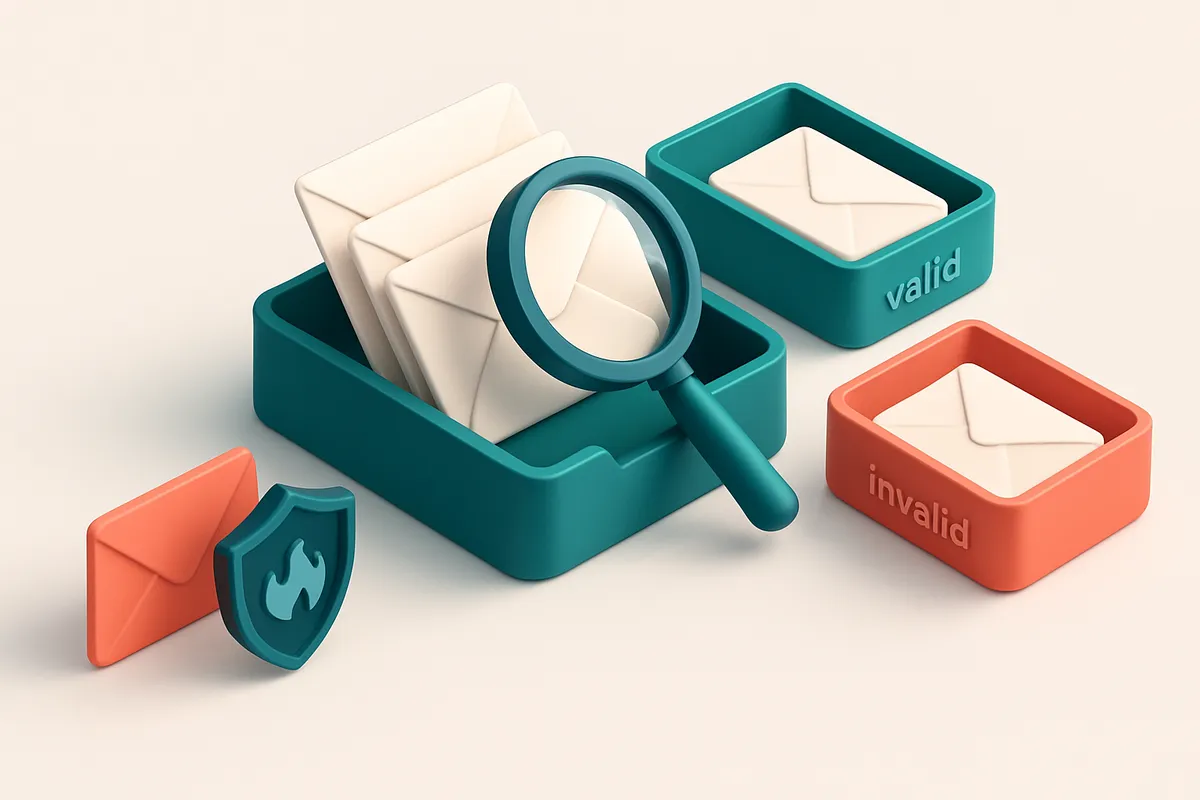
- Filter out known problem types. Your list will return four key verdicts: valid, invalid, catch-all, and risky. Invalids are dead ends—remove them. Catch-alls accept any email, so they don’t provide a real delivery signal and may be linked to spam traps. Risky emails—often role accounts like admin@ or sales@—have low deliverability and high bounce rates.
- Segregate results into action zones. Keep the valid list for sending. Tag caught-all and risky emails for manual review or suppression. Flag invalids for permanent removal. This segmentation lets you act fast and confidently.
- Log every verification result. Store the full report—what was verified, when, and the outcome. This isn’t just good practice; it’s critical for compliance audits. If you’re ever questioned by a regulator or ISP, you can prove you didn’t send to known invalid addresses.
Why This Process Works
According to RFC 5321, an SMTP transaction should only be initiated to addresses that are known to be valid. Sending to unverified addresses violates this standard—and that’s how you get flagged.
Large firms that automate this workflow see up to 30% better inbox placement over time. Why? Because every send is clean.
“The difference between a successful campaign and a blacklisted domain often comes down to list hygiene.”
You’re not just cleaning your list. You’re protecting your brand’s ability to communicate.
Understanding Verdicts: What Valid, Invalid, Catch-All, and Risky Mean
When you’re managing a consulting firm email list, seeing a bunch of "valid" addresses is great — but only if you know what each verdict really means. Misinterpreting a catch-all or ignoring a risky address can silently poison your sender reputation. Let’s break down each status and why it matters.
The Real Meaning Behind Each Verification Status
Here’s what your email list checker is actually telling you — straight from the wire.
| Verdict | What It Means | Impact on Deliverability | Recommended Action |
|---|---|---|---|
| Valid | Address exists, domain is active, and the mailbox is likely active. No format or routing issues. | Low bounce risk. High inbox placement potential. | Keep in your list. Send to these contacts. |
| Invalid | Address has a format error (like missing @ or .com) or the domain doesn’t resolve. | Hard bounce. Will hurt your sender reputation if sent to repeatedly. | Remove immediately. These will never reach inbox. |
| Catch-all | Domain accepts all incoming emails, regardless of user existence. Often used for spam traps or abuse. | High risk. May be flagged as spam or trigger blacklisting. | Exclude. Catch-alls are not real people and can degrade your deliverability. |
| Risky | Indicates low sender reputation, high bounce rate, or presence on spammer lists. Could be disposable, role-based, or a known spam trap. | High chance of rejection or spam filtering. Can lead to blacklisting. | Verify manually or segment carefully. Avoid bulk sends. |
These statuses aren’t just labels — they’re signals from the underlying email infrastructure. The way mail servers handle a catch-all (e.g., silently accepting and storing it) or a risky address (e.g., rejecting it early) affects how senders are judged over time.
For example, RFC 5321 defines how mail servers should handle unknown recipients, but catch-alls bypass that logic entirely. That’s why they’re so dangerous. Spam filters track patterns like this — if you’re sending to many catch-alls, you’re signaling automated or low-quality lists.
We’ve seen cases where firms sending to 2% catch-all addresses were eventually blocked by major providers. The signal doesn’t come from one message — it accumulates. That’s why ongoing list hygiene is a non-negotiable part of any bulk verification workflow.
Inbox Placement Testing: See Where Your Emails Land Before Sending
Let’s be honest: you don’t want to send an email only to have it vanish into a spam folder or get blocked entirely. The best way to prevent that? Test it like it’s already live.
Run a Real-World Inbox Placement Test
Before you hit send, simulate exactly how your email will land in real user inboxes. Use the inbox placement test in Emaillistchecker.io’s inbox placement tool to see your message’s fate across major providers.
- Upload your email campaign with the subject line, sender name, and body you plan to use. This isn’t a guess — it’s a live test.
- Select target inboxes like Gmail, Outlook, Yahoo, and Apple Mail. Each has unique filtering logic. You can’t assume one inbox’s behavior reflects another.
- Run the test and get results within minutes. You’ll see whether your email lands in the inbox, spam folder, or is blocked entirely — just like your real subscribers experience it.
- Review the spam score and content filtering report. A score above 5/10 is a red flag. Even a single “high” filter result from one provider means your message’s delivery is at risk.
- Adjust based on feedback. If Gmail flags your content as “suspicious,” your subject line might be trigger-heavy. If Outlook labels it “spam,” your HTML structure may need cleaning.
Why does this matter? Because a single poorly optimized message can hurt your sender reputation. Even one spam complaint from a major provider can lead to temporary blacklisting or domain-wide filtering.
Fix Issues Before the Send
You’re not guessing when you test. You’re fixing. If the score is high, tweak one element at a time.
- Change a word in the subject line — avoid “free,” “urgent,” or excessive capitalization.
- Update the sender name — use a real person’s name, not “Marketing Team.”
- Strip out suspicious HTML tags or inline styles that trigger filters.
- Test again after each change.
Spam filter behavior evolves rapidly. A tactic that worked six months ago may now trigger flags. Testing before each send is a standard practice in enterprise and regulated industries.
“Spam filters don’t just look at content — they analyze sender reputation, engagement patterns, and historical behavior.” — RFC 7986
Don’t trust your judgment. Trust the data. With inbox placement tests, you’re not playing blind. You’re seeing the outcome before it happens.
Integrations That Automate Hygiene into Your Workflow
Let’s be honest: email hygiene doesn’t happen in isolation. It’s not a once-a-year task. It’s part of your daily flow — and if it’s not automated, it breaks.
Connect Your Tools, Not Just Your Data
You already use Mailchimp, HubSpot, Klaviyo, and SendGrid. Why juggle manual exports and spreadsheets? Emaillistchecker.io integrates directly with all four, so verification isn’t a side process — it’s built into the engine.
- Connect your Mailchimp list to Emaillistchecker.io’s integrations to automatically flag invalid or risky addresses before a campaign launches.
- Sync verification results with HubSpot so stale or bounce-prone leads never clog your CRM — they get filtered out before you even notice them.
- Use the Klaviyo integration to scrub subscriber lists before segmenting or triggering automated flows, reducing bounce rates and protecting sender reputation.
- Pair SendGrid with Emaillistchecker’s API to verify email addresses in real time during sign-ups or data imports, catching errors before they hit the inbox.
- Each integration acts as a gatekeeper — not a bottleneck. You keep your workflow intact, but with one less risk: a bad address slipping through.
Automated cleaning isn’t magic. It’s just smart infrastructure, and it’s now standard practice in high-performing outreach.
Hygiene That Works Without You
Manual list cleanup? That’s how blacklists happen — not from a single bad address, but from patterns of neglect.
A recent Spamhaus report shows that consistent list hygiene strongly correlates with lower chances of being flagged or blocked. The fewer invalid emails you send, the less likely your domain gets marked as a source of spam.
With Emaillistchecker.io, you don’t just verify. You embed validation into your process:
- Auto-clean lists before every major campaign — no more “Send and hope”.
- Sync verification results back to your CRM or ESP without copying, pasting, or downloading CSVs.
- Let the system handle the logic: catch-all domains, role accounts, disposable emails — they’re flagged and sorted out before you touch the list.
- Reduce human error. One misplaced comma or typo in an uploaded file is enough to trigger a bounce cascade. Automation prevents that.
- Ensure consistent hygiene across teams and tools. Whether it’s sales, marketing, or ops, everyone uses the same rules.
“The best deliverability strategy isn’t reactive. It’s baked into how you collect, store, and send.”
Why 98.9% Accuracy Matters for Consulting Firms
Let’s be clear: a 98.9% accuracy rate isn’t just a number. It means you’re catching 989 out of every 1,000 invalid, risky, or non-existent email addresses before you send.
That might sound small in absolute terms, but in practice, it’s the difference between sending 100 messages and having 11 bounce back — or worse, get flagged as spam.
The Hidden Cost of False Negatives
Low accuracy often means more false negatives — valid leads incorrectly marked as invalid. For consulting firms relying on high-value outreach, that’s not just inefficiency. It’s lost opportunities.
When your verification tool misses a real account, you’re not just missing a reply. You’re losing a potential client, a referral, or a partnership that could have changed a campaign’s trajectory.
Lean, Targeted, Deliverable
A 98.9% accuracy rate ensures your list stays lean. No dead weight. No outdated addresses. Only verified, deliverable contacts.
Every verified email in your list is a confirmed entry point into a real inbox. That reduces bounce rates, improves sender reputation, and keeps you off blocklists.
And that matters. Even one high-volume bounce from a non-existent address can trigger a blacklist alert from providers like Spamhaus or Google’s Postmaster Tools — especially if it happens repeatedly across a single sender IP.
Reputation Starts with Precision
Spam filters don’t just watch for keywords. They watch for patterns. High bounce rates, rapid spikes in sending volume, and invalid addresses all signal risk.
When you send only to confirmed, valid emails, you signal trustworthiness to inbox providers. That’s not marketing fantasy — it’s how DMARC, SPF, and DKIM work together to validate senders at scale.
Accuracy isn’t a side benefit. It’s the foundation. Without it, your warm-up sequences, sender reputation scores, and deliverability efforts collapse under their own noise.
That’s why consulting firms that protect their reach invest in verification tools with proven track records — and real-time feedback loops to catch issues before they grow.
With a 98.9% accuracy rate, you’re not just cleaning a list. You’re building a deliverable, reputation-protecting, ROI-driven outreach foundation.
See how it works in practice: bulk verification checks thousands of addresses in minutes. Or integrate with your CRM using our API for real-time validation.
Start With 100 Free Verifications—No Risk, No Expiry
Test how well your consulting firm’s email list maintains inbox placement and deliverability with 100 free verifications. No credit card required. No risk. Just real data on your real contacts.
Purchased credits never expire. Use them when you need them—whether next week or next year. There’s no pressure to spend fast, and no wasted value.
Begin by cleaning your first 100 leads. Verify them before sending to check for invalid, risky, or catch-all addresses. Then scale with confidence, knowing your sender reputation remains intact.
Verify any list size, any time, with full transparency. The only limit is the size of your list—not your budget or your patience.
Keep reading
- Deliverability, blocklists and sender reputation (complete guide)
- Test Email Deliverability for Podcast Network Content Promotion
- Email Deliverability Assurance for University Admissions Workflows
- How to Avoid Domain Blacklisting for Better Deliverability
- Gmail Email Formats: What You Need to Know
Ready to put this into practice? Emaillistchecker.io verifies emails with 98.9% accuracy — start with 100 free verifications.
Frequently asked questions
How often should a consulting firm clean its email list?
At minimum, run a full list hygiene check every 3 months. Perform real-time verification on new entries and test deliverability before each major campaign.
Can role-based email addresses get blacklisted?
No, but they are high-risk. Using them in bulk sends flags spam filters. Avoid role emails like info@ or support@ in campaigns unless targeted.
What’s the difference between a hard bounce and a spam trap?
A hard bounce means the address is invalid or doesn’t accept mail. A spam trap is a valid address that was reactivated by spammers to catch bad senders—hitting one harms reputation.
Does using a verification API prevent blacklisting?
Not directly, but by stopping sends to invalid or risky addresses, it prevents bounce spikes and spam trap hits—common triggers for blacklisting.
How do disposable domains affect deliverability?
They often indicate low-quality leads or bots. ISPs associate them with spam. Removing them reduces bounce risk and improves sender reputation.
What’s the best way to test if an email list will land in inboxes?
Run an inbox placement test using a service like Emaillistchecker.io. It sends test emails across major providers and returns inbox placement rate and spam score.
Does Emaillistchecker.io check for catch-all addresses?
Yes. Catch-all domains accept any address, which makes them dangerous for outreach. The tool detects them and flags them as risky.
Can a single invalid email in a list cause blacklisting?
No single email won’t trigger blacklisting. But sending to many invalid addresses—especially at scale—can cause high bounce rates and reputation damage.
How do I know if my domain is on a blacklist?
Use a public tool like MxToolbox to check your domain’s IP and DNS records. Or test with Emaillistchecker.io’s deliverability check for real-time feedback.
What are the biggest mistakes firms make with email hygiene?
Buying lists, ignoring bounce rates, sending to role accounts, failing to verify new data, and not testing deliverability before campaigns.
What’s the best way to integrate email verification into my CRM?
Use Emaillistchecker.io’s API to validate emails during lead capture, or sync it with HubSpot, Mailchimp, or SendGrid to clean data before use.
Do free email verification tools work for consulting firms?
Most do not. Cheap tools miss catch-all, risky, or disposable addresses. Low accuracy leads to high failure rates and reputational damage.