
Master Email Verification to Boost Newsletter Success
Learn how email verification improves January newsletters and overall email strategy efficiency.
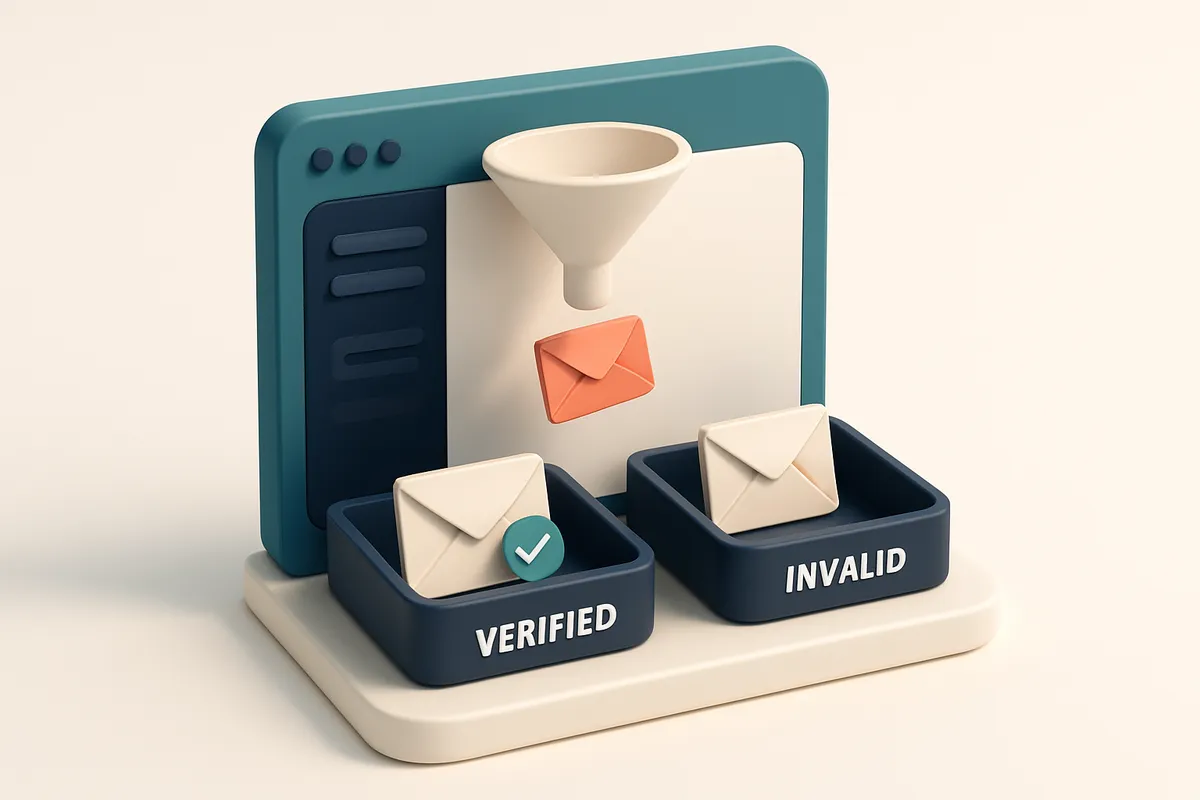
The Importance of Email Verification for Your Strategy
Imagine sending out an email campaign and watching as your bounce rate balloons, your hard-earned sender reputation dips, and your conversion metrics shrink. These are the hidden costs of an unverified email list. But they don't have to be your reality.
Email verification acts as a quality filter for your contact list. By distinguishing valid addresses from invalid or risky ones, it not only boosts your deliverability but also enhances user engagement. Accurate emails mean your message reaches real people who might actually subscribe, buy, or inquire.
This piece will guide you through how email verification reduces bounces, safeguards your sender reputation, and amplifies your email strategy's effectiveness. A verified list isn't just a cleaner list—it's a strategy to optimize your email marketing efforts.
Key takeaways
- Verify email lists to reduce bounce rates and enhance deliverability.
- Boost your sender reputation with a verified list.
- Increase user engagement by targeting valid email addresses.
How Email Verification Works
The Role of SMTP in Email Verification
At the heart of email verification is the SMTP protocol, which facilitates the sending and receiving of email messages between servers. It plays a crucial role in checking whether an email address is valid or not. When you verify an email address, the verification service initiates a handshake with the recipient's SMTP server to confirm if the address is active and ready to receive mail.
This process is akin to a conversation between servers, where they exchange data until the server confirms the validity of the address. For instance, if the server responds positively, you know the email address is good. Conversely, a negative response, such as a "550 No Such User" error, indicates an invalid address that will likely cause a bounce if used in a campaign.
Understanding MX Records
MX (Mail Exchange) records are DNS records crucial to directing emails to the correct servers. When verifying emails, understanding MX records allows us to determine which server is responsible for accepting emails for that domain. The verification process reaches out to these servers to confirm if they're configured to accept emails on behalf of the addresses you're checking.
This step is essential, especially for domains that may not have a valid MX setup, signaling a potential issue with deliverability. Without proper MX records, no email can reach its intended destination, making verification a proactive step to ensure addresses are contactable. You can learn more about the intricacies of MX records on Cloudflare's MX records page.
Navigating Catch-All Domains
Catch-all domains accept every email sent to them, regardless of whether the specific email address exists. This can pose a challenge during email verification as it’s harder to determine the validity of individual addresses. Verification services might return these emails as "risky" since there’s no definitive way to know if the specific user exists without sending an email first.
To address this, tools like our real-time verification API can help maintain a strong sender reputation by keeping you informed about these catch-all results. Evaluating and monitoring how often your messages land in such domains is crucial, particularly if you're looking to optimize deliverability.
By understanding these components—SMTP roles, MX records, and handling catch-all domains—you’re better equipped to manage your email list quality. A thorough verification process saves you from bounces, helps maintain a good sender reputation, and ultimately improves your email marketing's effectiveness.
Integrating Verification into Your January Newsletters
As the new year rolls around, it's the perfect time to ensure your newsletters reach the right inboxes. Effective email verification can help enhance engagement by minimizing bounces and improving your sender reputation. Here's a step-by-step guide to integrating verification into your January newsletters.
1. Prepare Your Newsletter List
- Extract Your Current List: Start by exporting your current subscriber list from tools like Mailchimp or HubSpot. This gives you a fresh perspective on your data before refining it.
- Bulk Verify Emails: Use a bulk verification tool like Emaillistchecker.io to swiftly cleanse your list. Verified lists reduce bounce rates, ensuring your newsletters are more likely to land in the right inboxes. This step saves time and boosts deliverability.
- Analyze the Results: Once verified, categorize the emails into segments: valid, invalid, catch-all, and risky. Focus on the valid emails to start with. This segmentation helps you target more effectively and maintain a healthy sender score.
2. Seamless Integration for Updates
- Integrate With Mailing Platforms: Leverage integrations with platforms like Mailchimp or HubSpot. These integrations simplify the process of updating your subscriber lists with verified contacts. Check our integrations page to see how we can help.
- Set Up Automation: Use automation features in these email platforms to ensure that your verified list is always up-to-date. Automated workflows can synchronize real-time data, which is essential for maintaining a responsive and relevant contact list.
3. Measure Engagement Improvements
- Monitor the Metrics: Track engagement metrics such as open rates, click-through rates, and unsubscribe rates. Compare these figures to your previous campaigns to understand the impact of verification on deliverability and engagement.
- Adjust Accordingly: Use insights from analytics tools to tweak content or timing based on recipient preferences. This data-driven approach ensures you’re sending messages that resonate with your audience, driving higher engagement.
- Report the Results: Share these enhanced metrics with your marketing team to illustrate the tangible benefits of verification. Reliable industry reports, such as those by Litmus, can provide benchmarks and further insights into industry standards.
Verification isn't just a one-time task; it's a strategic enhancement that keeps your communications effective and your reputation intact.
As you implement these steps, you're not just cleaning a list; you're enhancing engagement and laying the groundwork for a successful year in email marketing.
Types of Email Verification Outcomes
Understanding email verification outcomes is crucial for maintaining a clean contact list. Here's what you need to know about the different verdicts:
Detailed Outcomes Explained
Let's break down the types of email verification results you might encounter. Each outcome has implications for your email marketing strategy.
| Outcome | Description | Action |
|---|---|---|
| Valid | Email addresses that are deliverable and confirmed to exist. Messages sent to these will reach the recipient's inbox, optimizing your engagement rates. | Keep and engage. These addresses are ready for your campaigns. |
| Invalid | Emails that cannot be delivered. They may be formatted incorrectly or no longer in use. Sending to these can hurt your sender reputation. | Remove immediately. Keeping these leads to wasted resources and increased bounce rates. |
| Catch-All | Email servers configured to accept all mail sent to their domain, whether valid or not. Catch-all emails can be tricky, as they might be filtered to junk. | Proceed with caution. Monitor engagement closely if you choose to continue sending. |
Consider the Consequences
Sending emails without verifying their deliverability can lead to significant issues. For instance, a high bounce rate can damage your sender reputation, making it less likely your emails will land in the inbox of even valid addresses. That's why it's crucial to manage your list proactively.
When you work with an email verification service like EmailListChecker.io's bulk verification, you gain a 98.9% accuracy rate in ensuring your messages reach their intended audience. This service can help minimize complaints and boost your overall engagement.
“The cost of retaining bad email addresses isn't just monetary; it's the missed connection with engaged customers.”
For further explanation on the technical functioning behind different email results, the SMTP protocol documentation offers in-depth guidance. However, for most users, understanding these core outcomes will suffice to significantly improve email performance.
To explore more specific use cases or integrate seamless verification into your existing workflow, visit our integrations page.
Role of an Email Finder in Strategy Development
When you're mapping out your email marketing strategy, finding accurate email addresses becomes a cornerstone for any successful outreach effort. An effective email finder tool can help ensure you're reaching out to real, verified email addresses. This not only boosts your outreach efforts but also enhances your overall engagement rates.
Boosting Outreach with Accurate Data
The accuracy of your email list directly impacts your campaign results. By securing precise email addresses, you default to a higher open and engagement rate since messages actually reach a person's inbox rather than bouncing back. This is where a robust email finder comes into play.
Having the right tool can also help you avoid common email marketing pitfalls. For instance, it can reduce the chance of sending emails to generic role accounts like 'info@' or 'support@' that many times don't end up in front of a decision-maker. By targeting valid addresses, you increase the chance that your communication will reach someone interested.
For a better understanding on how important it is to maintain an up-to-date and clean email list, you might want to refer to industry analyses, such as one from Wikipedia's Email Marketing page.
Keeping Your List Clean
Role accounts can be a trap in email marketing as they might lead to poorer engagement rates. Focusing your list-cleaning efforts on eliminating these types of addresses improves deliverability and ensures you are communicating with real individuals. When you find and clean your list with precision, your sender reputation improves, leading to better inbox placement, which is fundamental for long-term success. For more details on inbox placement strategies, you could explore our Inbox Placement page.
An email finder tool should ideally work in tandem with a verification service to continuously keep your list at its best. To that end, you might consider exploring how such integrations can be maximized with platforms like Mailchimp and HubSpot, supported by our service.
Leveraging Emailable's AI Assistant
AI technology plays an integral role in refining your email strategy. Emailable offers an AI assistant designed to streamline the list building process. With intelligent suggestions and automated corrections, the AI assistant can help you catch inconsistencies or errors in real-time. This results in better list management and, ultimately, more effective outreach.
In the digital marketing landscape, the right tools aren't just helpful—they're essential for cutting through the noise and getting your message heard.
For a detailed understanding of how email finders can be a valuable part of your strategy, you may want to see what our Email Finder tool offers, or refer to reputable market guides such as Gartner's insights on sales enablement.
By combining strategic use of an email finder with the advantages of AI-driven insights, you'll find yourself better positioned to navigate and succeed in the constantly evolving digital marketing space.

Understanding Greylisting and Its Effects
You've probably encountered some delivery hiccups when sending out emails, and one common cause could be greylisting. Greylisting is a temporary email rejection method used by some mail servers to protect against spam. When your email server first tries to send a message, a greylisting server might reject it with a "try again later" message. The idea is that legitimate servers will attempt another delivery, while many spammers won't.
Strategies to Overcome Greylisting Delays
To navigate greylisting, patience is key, but there are some strategies you can employ to mitigate delays. First, ensure your email server is set up to automatically retry sending emails after a short delay. Most legitimate mail servers have retry mechanisms, and configuring these properly can help the email make it through on the second or third attempt.
Next, consider partnering with an experienced email service provider with robust infrastructure to handle retries efficiently. Some may even have pre-existing relationships with large email providers, reducing the impact of greylisting through trusted sender status. Additionally, using our real-time verification API can help ensure your sending lists are clean and up-to-date, which might help in bypassing some greylisting actions.
The Role of Sender Reputation and Authentication
Sender reputation is crucial in the world of email deliverability. Consistently hitting greylists can signal to receiving servers that your emails aren't trustworthy. To improve sender reputation, always send quality, relevant emails to engaged users and regularly clean your email lists. Read more on the importance of maintaining a good email reputation here.
Email authentication protocols like SPF, DKIM, and DMARC are also vital. These protocols verify that your emails are sent from authorized servers and haven't been tampered with. Proper authentication can improve your reputation and reduce the chance that your messages will be greylisted. You can use our inbox placement tool to test how these factors affect your emails.
“Greylisting is a signal, not a stop sign. Understand it, adjust for it, and let your emails shine through.”
Addressing greylisting involves a mix of technical adjustments and strategic planning of your email campaigns. While it's a layer of protection for inboxes, with a few optimizations, it doesn't have to be a permanent roadblock for your email’s journey to the recipient's inbox. Keep monitoring your strategies to ensure emails are not just sent, but delivered effectively.
Email Deliverability Tips for Better Performance
Boosting your email deliverability starts with understanding the finer points of email management. Let's explore how verified emails, sender reputation, and authentication protocols play their part.
Why Verified Emails Matter
Verified emails are essential to improving your email marketing outcomes. Ensuring your emails reach the inbox rather than the spam folder is crucial. Here's why:
- Enhanced Inbox Placement: Verified emails mean less bouncing. With bulk verification, you can avoid sending emails to non-existent addresses, significantly lowering bounce rates.
- Lower Spam Complaints: By cleaning up your email lists, you reduce the chances of being marked as spam, which directly affects your deliverability scores.
- Reduced Costs: By removing invalid addresses, you're not wasting resources on emails that won't convert.
“The more bounce-free your list, the more credible your sender reputation.”
Maintaining a Healthy Sender Reputation
Your sender reputation is akin to a credit score for email. A healthy reputation ensures that your emails stand a better chance of being delivered. Here's how to maintain it:
- Engagement Tracking: Monitor open rates and clicks. Low engagement could imply you're sending irrelevant content.
- Consistent Sending Patterns: Avoid erratic sending patterns. Sudden spikes in sending volume can trigger alerts with email service providers.
- Avoid Spamy Language: Words like "free", "offer", and excessive punctuation can signal spam filters.
The Role of SPF, DKIM, and DMARC
Authentication protocols play a pivotal role in email verification, ensuring your emails are trusted and reach their destination:
- SPF (Sender Policy Framework): SPF verifies that an IP address is authorized to send mail on behalf of your domain. It’s like an identifier that tells mailbox providers, "Hey, this email is legit."
- DKIM (DomainKeys Identified Mail): DKIM adds a digital signature to your emails, verifying that the content hasn't been altered.
- DMARC (Domain-based Message Authentication, Reporting, and Conformance): DMARC works alongside SPF and DKIM to give you the ability to protect your domain from unauthorized use. It also provides reports to help you monitor unauthorized activities.
Understanding these elements and employing them correctly can drastically improve your deliverability rates. For a deeper dive into how these aspects influence your email campaigns, the inbox placement services we offer at Emaillistchecker.io can clarify these points.
For further reading on email authentication methods, you might check out the thorough breakdown on DMARC.org.
By adopting these practices, you'll significantly enhance your email deliverability, ensuring more of your messages hit their targets and fewer land in the spam folder.
Conclusion: Strengthening Your Email Strategy
Email verification is an essential tool for maintaining high deliverability and protecting sender reputation. By regularly verifying your email lists, you reduce bounces and avoid being flagged by blocklists, ensuring your messages reach the intended inbox.
Proactively incorporating email verification into your campaign preparation helps maximize both response rates and engagement over time. Regular checks, combined with insights from validation results, lead to more effective email strategies.
EmailListChecker.io supports continuous improvement with credits that never expire, enabling you to manage verification needs at your own pace.
The Role of Email Verification in Successful Newsletters
You've spent time crafting the perfect newsletter content, only to find that your emails end up in spam folders. It's a frustrating scenario that many marketers face. Deliverability issues can diminish your newsletter's impact, affecting your brand's engagement and reach.
A clean email list is crucial. Invalid addresses contribute to bounces and blocklists, jeopardizing your sender reputation. Here, email verification plays a vital role by ensuring your lists are free from harmful data like invalid, role-based, and disposable addresses.
This article will guide you through the importance of email verification in boosting your newsletter's success. We'll explore how maintaining list hygiene through verification improves not only deliverability but also engagement. By the end, you'll understand why a proactive approach to email verification can transform your newsletter strategy.
Key takeaways
- Email verification reduces bounces and improves deliverability.
- A clean list enhances engagement and sender reputation.
- Verification helps avoid role accounts and disposable domains.
Understanding the Mechanics of Email Verification
The Role of SMTP in Verification
Email verification hinges on the mechanics of the Simple Mail Transfer Protocol (SMTP). SMTP acts as the bridge between different email servers, enabling the transmission of messages across the internet. During the verification process, SMTP comes into play by simulating a message send without actually delivering the email. This process, known as an SMTP handshake, allows us to check whether the recipient's server can receive the email. If the server doesn’t respond appropriately, the email address may be flagged as invalid or undeliverable.
Using SMTP protocols efficiently means understanding not just connectivity but also accommodating email server settings that might disrupt a smooth connection. Some servers may list their preferences in RFC 5321, which outlines the standards for SMTP. This ensures deliverability by checking if the path to the recipient is valid before you hit send.
MX Records: The Signposts of Email Delivery
The MX (Mail Exchange) records are crucial in directing emails to the correct server. Verifying these records forms a key part of the email verification process. MX records act like signposts that point to the recipient’s email server, ensuring that your email goes to the right place. If MX records are missing or incorrect, emails will simply bounce back, as there’s no valid server to receive them.
Email verification tools check MX records to confirm that they exist and are set up properly. This step is vital because an improperly configured MX record could make a legitimate email address appear inactive. By using our inbox placement service, you can ensure your emails are routed correctly.
Catch-all, Greylisting, and Role Accounts
In the realm of email verification, not all email addresses are created equal. Catch-all addresses are designed to receive all emails sent to a domain, regardless of the local part. This makes them challenging for verification, as they often appear valid even when individual addresses are not. The key is understanding that while these emails might land, their individual deliverability and engagement levels can be low.
Greylisting, on the other hand, is a method used by servers to temporarily reject an email from an unknown sender. The idea is to deter spam but it can also cause delays in email verification processes. Finally, role accounts (like info@ or sales@) are generally better avoided in your campaigns. They're designed to be accessed by multiple users, often leading to ambiguous responses and less engagement.
“Understanding these nuances in email verification can save you from investing in emails that will sit unopened or, worse, bounce back.”
Utilizing comprehensive verification services like our bulk verification can help navigate these complexities. By addressing each of these aspects precisely, you reduce wasted sends and improve your sender reputation over time.
Key Strategies for Improving March Newsletter Engagement
Segment Your Email List
Not all subscribers are the same, so don't treat them that way. Segmenting your email list allows you to tailor messages to different audience segments, improving engagement and reducing unsubscribes. Let's break down how you can effectively segment your audience.
- Start with basic demographics like age, gender, and location. This helps craft messages that resonate culturally and contextually.
- Use past purchase behavior or website interaction to tailor messages based on interests and needs.
- Consider creating segments based on engagement levels, such as frequent openers or those who've never clicked through.
Once you've segmented your list, consider using a bulk verification tool to ensure accuracy, improving overall deliverability.
Utilize A/B Testing
A/B testing helps you find what resonates best with your subscribers. It can be as simple or complex as you need, but the insights can dramatically affect engagement and conversions.
- Test different subject lines to see which garners more opens. For instance, compare using emojis versus plain text for emotional appeal.
- Experiment with different calls to action (CTAs) to find what drives the most clicks. Small changes can make a big difference.
- Use modern tools to assess variations in layout. Sometimes placement of images and text influences interaction significantly.
Remember, split testing isn't just a one-time gig. Regular testing helps refine your approach as audience preferences evolve. For more on testing, check out this resource by reliable email marketing platforms: Campaign Monitor.
Personalize Your Content
Personalization isn't just about using a subscriber's name. It's about tailoring content to their preferences, making the newsletter feel crafted just for them. This element can significantly boost reader interest.
- Use dynamic content to personalize sections of your email according to segments. You might show different images or offers based on the user's location or past behavior.
- Incorporate personalized product recommendations based on previous purchases or browsing history.
- Consider sending birthday or anniversary emails. Simple, but surprisingly effective at rekindling engagement.
“Personalization can deliver 6x higher transaction rates.” – Experian Data Quality
Sometimes partnering with an AI tool that can assist with these tasks becomes invaluable, peeling away layers of complexity to focus on your newsletter's creative core.
Improving engagement with your March newsletter doesn't have to be daunting. With strategies like list segmentation, A/B testing, and content personalization, you're equipping yourself for impactful, subscriber-focused communication. If you're exploring options to refine your list management and deliverability, explore our integrations to streamline your process.
Keep reading
- Bulk email verification and list cleaning: when and how to verify (complete guide)
- Email Validation for Credit Union Client Data Verification 2026
- Email Existence Verification: The Truth Behind Validating Addresses
- How to Verify Real Email Addresses and Filter Out Temporary Ones in 2026
- Master Email Scrubbing for Better Deliverability
Keep reading
- Mastering Email Verification Timing to Boost Deliverability
- How Real-Time Email Verification APIs Improve Deliverability
- How Bulk Email Verification Works for Better Campaign Results
- Comprehensive Email Verification Service Guide
Ready to put this into practice? Emaillistchecker.io verifies emails with 98.9% accuracy — start with 100 free verifications.
Frequently asked questions
Why is email verification important?
It reduces bounce rates and ensures emails reach the inbox, maintaining a good sender reputation.
How does email verification improve newsletter performance?
It ensures that your newsletter is only sent to active, deliverable addresses, thereby increasing engagement rates.
What is a catch-all email domain?
A catch-all domain is one that accepts email for any address on its domain, even if the email isn't actually valid.
How do SMTP and MX records relate to verification?
SMTP checks ensure email accounts exist, while MX records confirm the receiving server is ready to accept emails.
What is greylisting in email delivery?
Greylisting temporarily rejects email from unknown senders to assess their credibility, affecting delivery timing.
How does verification benefit email strategy?
It boosts deliverability and engagement, leading to more effective communication with the audience.
What are role accounts, and why avoid them?
Role accounts are non-personal addresses such as info@ or sales@. They are often less engaged and can harm deliverability.
What happens to emails marked as invalid?
Invalid emails do not deliver and should be removed to prevent sending reputation damage and wasted resources.
How does greylisting affect my campaigns?
Greylisting can delay delivery, but verified lists and proper authentication can minimize its impact.
How do EmailListChecker.io credits work?
Purchased credits never expire, allowing flexible use of verification services over time.