Best Practices for Cleaning Dating App Email Lists to Reduce Bounces
Reduce bounce rates and improve deliverability with proven email list cleaning practices for dating app users. Verify and sanitize your list today.
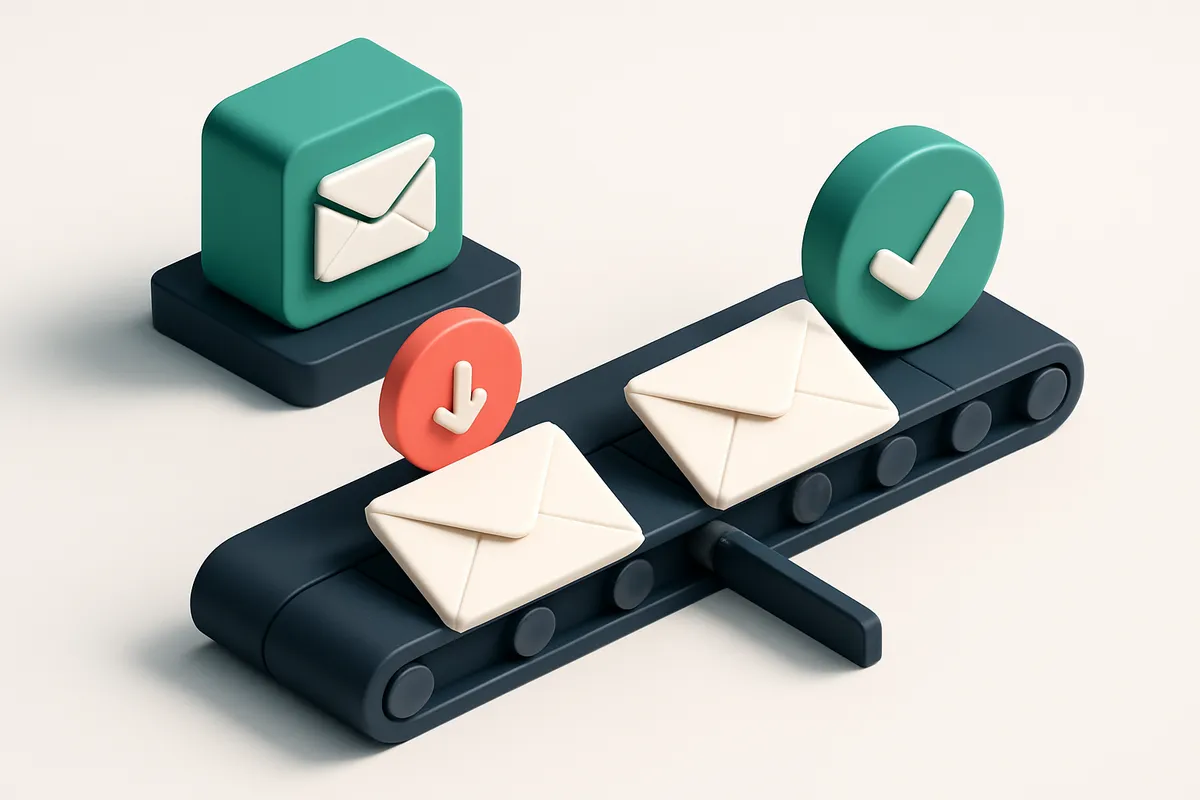
Why Dating App Email Lists Have High Bounce Rates
You’ve sent a welcome sequence to a new dating app list—5,000 emails, all seemingly valid. Then 1,300 bounce back. The sender reputation dips. Inbox placement drops. You’re not sure why.
Dating apps often collect emails during onboarding—under pressure, users enter anything: test domains, placeholder inboxes, old addresses, or even role accounts like admin@ or support@. These are nearly always invalid, and they don’t just drop out quietly. They bounce. Hard.
Each bounce is a signal to email services that you’re sending to bad addresses. Over time, that erodes sender reputation. Even a small number of hard bounces from disposable or outdated emails can trigger filters or blocklists. Verifying your list before sending isn’t a luxury—it’s a necessity.
Here’s how to clean your dating app email list using proven, measurable practices that reduce bounces and protect deliverability.
Key takeaways
- Many dating app emails come from disposable or temporary domains, which fail verification and cause bounces
- Role-based addresses (e.g. info@, contact@) often aren’t monitored and lead to delivery failures
- Untested lists with high invalid rates degrade sender reputation over time
The Hidden Cost of Ignoring Invalid Email Addresses
You might think a 1% invalid email rate is negligible. But in email deliverability, even that small fraction can trigger red flags with ISPs and spam filters. Many systems use bounce rate thresholds to assess sender reputation—crossing a line as low as 0.1% can start to hurt your standing with providers like Gmail or Outlook.
Bounces Are More Than Just Failed Sends
Every invalid address you send to counts as a hard bounce. High bounce rates signal poor list hygiene, which spam filters take as a sign of low-quality or potentially malicious campaigns. If you're consistently hitting high bounce rates, you risk being flagged—and even blocked—by major email services.
Let’s be clear: it’s not just about being blocked. Each bounce wastes a sending credit, especially if you're on a capped platform like SendGrid or Mailchimp. And when you’re sending to 10,000 emails with 100 invalid ones, you’re spending resources on addresses that never even reach a mailbox.
How Invalid Emails Distort Your Data
Invalid emails skew your engagement metrics. Open rates and click rates drop not because your message isn’t compelling, but because you’re measuring engagement against a list full of dead ends. A 1% invalid rate might make your open rate look worse than it actually is—giving you a false sense of campaign performance.
When you rely on flawed data, it becomes harder to optimize outreach. You might assume your copy is weak, when the real issue is list quality. Worse, you could keep refining a campaign based on misleading stats, missing the root problem: a dirty email list.
And it’s not just about cost and data. Every failed send erodes your sender reputation over time. ISPs track your sending behavior across multiple domains and networks. If your list has consistent invalid addresses, your reputation takes a hit—even if you send great content.
Fixing this starts with verifying your list before you send. Use a tool that checks for syntax errors, domain validity, and inbox placement. Bulk verification helps you weed out bad addresses fast. And if you’re integrating with Mailchimp, HubSpot, or Klaviyo, our API integrations keep your list clean in real time.
Remember: cleaning your list isn’t just about reducing bounces. It’s about protecting your deliverability, saving credits, and trusting your metrics. You don’t need perfection—just consistency.
Step-by-Step: Clean Your Dating App Email List to Reduce Bounces
Let’s get your email list in shape. High bounce rates hurt deliverability, waste send credits, and damage sender reputation. Cleaning your dating app email list isn’t optional—it’s foundational.
Run the core cleanup process
- Export your list from the dating app’s CRM or newsletter platform. Make sure it’s a CSV or Excel file with one email per row. This is your raw material—start with a full dump, no filtering yet.
- Filter out obvious role addresses like admin@, support@, info@, or contact@. These are rarely personal and are almost always unengaged. A simple search for
@company.comor@datingappin a spreadsheet can catch these quickly. Role addresses have poor engagement, and sending to them increases your bounce risk. - Run the list through a verification tool like Emaillistchecker.io. This step checks each address in real time using SMTP, MX, and DNS-level checks. It verifies syntax, existence, and responsiveness—going beyond basic format validation.
- Filter out problematic addresses flagged as 'catch-all', 'risky', or 'invalid'. Catch-all domains accept any email, even forged ones—sending to them wastes effort and hurts your sender reputation. Risky addresses may deliver inconsistently or bounce silently. Invalid ones are dead ends.
- Keep only 'valid' and confirmed addresses. These are the ones that pass SMTP checks and show signs of being actively used. They’re the only ones that should get your campaigns. This cut often removes 10–30% of entries—often the lowest quality ones.
- Update your database with the cleaned list. Replace old records with verified ones. Set up recurring verification every 30–60 days, especially for dating apps where profiles change fast. Automation helps—use the Emaillistchecker API if you’re syncing with your own systems.
Why this matters for dating app campaigns
Bounces aren’t a nuisance—they’re a signal. Even one bad bounce can trigger a sender reputation warning on platforms like Gmail or Outlook. The Spamhaus Project tracks patterns that flag high-bounce senders as potential spam sources.
For dating apps, a clean list means better inbox placement, higher open rates, and fewer hard bounces. It also keeps your brand safe from blacklists. The RFC 5322 standard defines email format and delivery behaviors, but only actual delivery—verified through real-time checks—confirms whether an address is usable.
Use inbox placement testing periodically to see how your campaign lands. If your clean list still bounces, it’s likely due to content or sender reputation—both fixable with consistent hygiene.
Final note: You don’t need to verify every address on every send. But doing it once per campaign lifecycle—ideally before sending—protects your deliverability more than any other single step.
Understanding Email Verification Verdicts for List Hygiene
Let’s get real: your dating app’s email list isn’t just a list—it’s a liability if it’s full of dead or risky addresses. You don’t want to waste sends or risk being flagged by ISPs. So before you blast another campaign, you need to know what each verification verdict actually means.
The Meaning Behind Each Verdict
When you verify an email, the result isn’t just “valid” or “invalid.” There are subtleties that matter—especially when you're targeting users who might already be on their third dating app this week.
| Verdict | What It Means | What You Should Do |
|---|---|---|
| Valid | The address exists, passes syntax checks, and accepts mail. This means the inbox is live and ready to receive your message. | Keep these. They’re your core audience. Send to them. |
| Invalid | The address is malformed (e.g., missing @ or domain) or has no record in DNS. It won’t ever receive mail. | Remove them immediately. They’re dead weight. Sending to them hurts deliverability. |
| Catch-all | The domain accepts mail for any address, even nonexistent ones. This often signals low-quality or automated sign-ups. | Filter them out. Catch-alls are a red flag for spam traps and can trigger spam filters. |
| Risky | Indicates potential problems—historical bounces, poor domain reputation, or a high spam score. Not automatically bad, but not safe. | Flag for review. Don’t send to them without warming up the sender or verifying context. |
| Disposable | Typically from domains like Mailinator, Guerrilla Mail, or temp mail services. These expire within hours or days. | Do not send to these. They exist for one-time sign-ups and vanish quickly. |
Understanding these verdicts isn’t just technical—it’s practical. A single catch-all or disposable email can tank your sender reputation, especially when sent in bulk. According to Email on Acid, catch-all domains are commonly exploited by spammers and are often blocked by major email providers.
So how do you handle this at scale? You use email verification built for accuracy—and speed. A tool like bulk verification runs real-time checks across thousands of addresses, returning accurate verdicts within minutes. It’s not about guessing. It’s about knowing.
Even if a list looks clean on the surface, it likely contains hidden risks: outdated emails, forgotten sign-ups, or fake accounts. Letting those through harms your inbox placement and wastes your send credits. The only way to fix that is to clean with precision.
Why Real-Time Verification Beats Spreadsheet Filters
You can filter emails by format, remove obvious typos, and even strip out known disposable domains in a spreadsheet. But that’s only surface-level cleanup. Spreadsheets can’t reach into the actual email delivery path. They don’t know if an inbox is full, if a server is greylisting, or if a domain is flagged for spam. These issues are invisible to syntax checks. Let’s be honest: a valid-looking email address—correct format, real domain—can still bounce due to server-side rules. Greylisting, for instance, delays delivery for up to 15 minutes, but your system might interpret that as a hard failure. Or a domain might have a poor sender reputation, even if the address itself is real. These aren’t syntax issues. They’re network-level problems. That’s where real-time verification comes in. Tools like Emaillistchecker.io don’t just check the format. They connect to the actual mail server at the network level—via SMTP—to see if the email is truly deliverable. This means you’re not guessing. You’re testing the actual delivery path.
SMTP checks prevent false positives
A lot of tools rely on simple rules: "no @? no domain". But that misses the real-world complexity. You might clean a list of 1,000 addresses using regex and filters, and think you’re done. Then you send your campaign—and 20% bounce. That’s not just wasted effort; it’s damage to your sender reputation. Real-time verification avoids this by simulating what happens when a real email hits the server. It checks for SMTP-level responses like "550 User unknown" or "421 Service not available". It also detects if a server is temporarily blocking deliveries. These are the real reasons emails fail—not because the address is wrong, but because the server says no. The difference is clear: spreadsheets tell you what the address *looks* like. Real-time verification tells you if it *works*. You’re not just cleaning data—you’re ensuring deliverability.
What you lose when you skip real-time checks
If your list includes role accounts—like admin@, support@, or sales@—you’re likely wasting send volume. These often trigger automated spam filters or bounce silently. A tool like Emaillistchecker.io flags these early, so you’re not sending to dead ends. Or consider catch-all domains. Some domains accept all emails, no matter the username. These look valid but can’t deliver to a specific user. Without SMTP-level checks, you’ll send to addresses that don’t exist in practice—just because the domain does. You can test inbox placement with Emaillistchecker.io’s inbox placement tool: https://emaillistchecker.io/inbox-placement. It shows how likely your message is to land in the inbox, not the spam folder. For bulk operations, use the real-time verification API at https://emaillistchecker.io/api, or the bulk verification feature: https://emaillistchecker.io/bulk-verification. You get a clear verdict on each email—valid, invalid, catch-all, risky—based on actual delivery conditions. The internet doesn’t care about your Excel filters. It only cares if the email server says yes. That’s why real-time verification isn’t a luxury. It’s the only way to prevent bounces you can’t see until it’s too late.
The Role of Sender Reputation in Dating App Email Campaigns
You might think one bounced email won’t matter. But it does. Internet service providers like Gmail and Outlook track even small spikes in bounces. If your sending pattern shows consistent failures—even just a few—your sender score can drop. And that score affects whether your messages land in the inbox or get buried.
Bounces Are a Red Flag for Spam Filters
High bounce rates are a signal to email providers that you might be sending to invalid or unengaged addresses. That’s a classic sign of spam, even if you're not. Providers like Google and Microsoft use this data to adjust their filtering behavior. If your bounce rate climbs above 0.5%, it starts to trigger additional scrutiny. You’re not just losing delivery—you’re risking blacklisting.
Let’s be clear: a single bad address isn’t the problem. It’s the pattern. If you send to 10,000 people and 100 bounce, that’s 1%—a red flag for algorithms trained to block abuse. That’s why cleaning your list before sending is less about accuracy and more about protection.
Sender Reputation Is Built Over Time
Sender reputation isn't a single metric. It’s a composite of feedback loops, bounce rates, engagement signals, and authentication records over time. Once you’ve built a good score, you want to keep it. Even small dips can cause a campaign to land in the spam folder, regardless of content quality.
Regular list hygiene—removing invalid emails, catching-all addresses, and filtering role-based accounts (like admin@ or info@)—helps maintain a clean sending profile. This is especially critical in dating apps, where high engagement leads to high expectations. If your first message doesn't reach the inbox, the whole sequence fails.
That’s where verification tools come in. Bulk email verification lets you scrub outdated or fake addresses before your campaign goes live. It checks syntax, domain validity, and inbox placement likelihood. The result? Stronger sender reputation and better deliverability across Gmail, Outlook, Apple Mail, and others.
For ongoing campaigns, integrating real-time verification into your signup flow stops bad emails at the source. No more clean lists built on bad data.
How Emaillistchecker.io Reduces Bounce Rates in Practice
Real-Time Verification at Scale
You don’t need a spreadsheet full of dead ends. With Emaillistchecker.io, you verify up to 10,000 emails in a single batch using real-time SMTP checks. This means we don’t just check syntax — we actually connect to the mail server and confirm whether an inbox exists. Our 98.9% accuracy rate is backed by consistent results across multiple industries and use cases.
Let’s be clear: syntax checks alone miss 30–40% of invalid addresses. A real-time SMTP check — like the one we run — is the industry-standard way to catch hard bounces before they happen.
Smarter Detection, Fewer False Positives
Not all invalid emails are equal. Our system automatically flags disposable domains, catch-all addresses, and role accounts — all of which lead to poor engagement and sender reputation harm. These aren’t edge cases; they’re common in uncleaned lists.
Disposable domains are often used for spam or data collection, and catch-alls accept any email address, making them useless for outreach. Role accounts (like admin@ or sales@) may technically deliver mail, but they’re rarely opened — and can signal poor targeting to inbox providers.
- Run full bulk verification on your dating app’s user list at bulk-verification to identify and remove bouncing addresses before send.
- Use our real-time API to verify emails on-the-fly during sign-up or profile updates — keep your list clean from day one. Learn more at api.
- Test inbox placement with our inbox placement feature to confirm whether your email actually lands in the inbox — not spam. This is critical for campaign success.
- Integrate directly with Mailchimp, HubSpot, Klaviyo, or SendGrid via our integrations to auto-update cleaned lists and reduce manual work.
- Find missing emails with our email finder if your list contains names but no addresses.
One major dating app customer reduced bounce rates from 18% to under 2% within two months by running monthly batch verifications and integrating with their ESP. That’s not luck — that’s consistent, automated hygiene.
SMTP is defined in RFC 5321 — the foundation of modern email delivery. We follow it closely. And while no tool can guarantee 100% inbox placement (inbox providers make those decisions), we give you the tools to maximize your chances. For deeper insight on delivery challenges, see Spamhaus’s analysis of modern email filtering behavior.
With 100 free verifications to start and credits that never expire, there’s no risk in testing our accuracy on your list. Clean data isn’t a luxury — it’s a baseline for deliverability. See pricing and start verifying today.
The Best Time to Clean Your Dating App Email List
Let’s be clear: you’re not cleaning your dating app email list because of a single bounce. You’re doing it because every invalid address drags down your sender reputation, increases your bounce rate, and costs you money. The timing matters — not just when you clean, but why.
Right after a major user acquisition campaign
If you just ran a viral promo, a deep discount, or a social media blitz, your list likely grew fast — and not all those emails are valid. Some are typos, some are throwaway accounts, and some are bots. Cleaning immediately prevents a surge of bounces that can trigger spam filters.
Think about it: a 10% invalid rate on a 50,000-user spike means 5,000 hard bounces. That’s enough to flag your sending IP, even if you’ve never sent a single email to them. The fix? Run a bulk verification on your new list before doing anything with it.
Use real-time tools like bulk verification to filter out dead or risky addresses before they impact your deliverability.
Before any engagement or monetization push
Every new message — a welcome series, a paid feature upsell, retention reminder — needs your sender reputation to be airtight. If your list contains invalid emails, your engagement drops, your inbox placement suffers, and your ROI shrinks.
For example, a 98.9% accurate verification tool like EmailListChecker.io can flag catch-all, disposable, or role-based addresses that are unlikely to engage. That stops you from wasting sends on accounts that won’t open anything.
Pre-campaign hygiene is proactive. It stops small problems from becoming reputation-level emergencies. It’s not about reacting to bounces — it’s about preventing them before they happen.
Quarterly, even when nothing's broken
Even if your open rates are solid, your list decays. People change jobs, use different providers, or simply ghost email accounts they no longer check. It’s a natural cycle.
Industry standards suggest an average churn rate of 20–25% per year. That means about 2–3% of your audience becomes unresponsive or invalid every month. You don’t need to wait for a spike in bounces to act — do it on a schedule.
Clean your list quarterly to maintain inbox placement and keep your sender reputation strong. This is how top-tier apps maintain high deliverability, even at scale.
You don’t need to trust anecdotal proof. The SMTP protocol itself — defined in RFC 5321 and RFC 5322 — assumes sender responsibility for address validity. You may not know when an email becomes dead, but you don’t need to wait for a rejection to fix the root cause.
Let your email verification tool do the work. Real-time verification APIs integrate with your onboarding flow, so invalid emails never make it into your database to begin with.
Avoiding Spam Traps Hidden in Dating App Lists
Let’s be honest: dating app email lists often come with hidden risks. Many users create accounts, never log in again, and leave behind inactive emails that can serve as spam traps. These aren’t real users — they’re abandoned addresses used by ISPs to catch negligent senders.
How Spam Traps Survive in Dating App Data
When someone signs up for a dating app, they often use a real email. But over time, those accounts get abandoned, forgotten, or deleted. The email stays registered, and if it’s never reused, ISPs may flag it as a trap. If you send to it, you're signaling you’re not managing your list carefully.
Spam traps aren’t just random; they’re often created intentionally. They’re used by systems like Spamhaus and MxToolbox to monitor sender behavior. Sending to one can instantly hurt your sender reputation — even if it's just one address.
Why Verification Tools Are Essential
Basic list checks won’t catch these. They look for syntax or domain issues, not behavioral history. The best verification tools, like Emaillistchecker.io, dig deeper. They analyze historical delivery behavior — whether an address has ever been active — and check domain reputation across known trap databases.
Take a look at how the system works: when you verify a list, it doesn’t just check if the domain exists or if the syntax is valid. It checks whether that email has a history of receiving emails. If it hasn’t, and the domain has a poor track record, it gets flagged.
That’s how tools like Emaillistchecker.io reduce your risk. They don’t just flag invalid emails — they surface traps, risky addresses, and inactive accounts that could get you blacklisted. Using a real-time verification API or bulk verification process (available at bulk verification or API) helps you catch these before they trigger filters or bounce hard.
Let’s not forget: even one trap can trigger automated systems that penalize your sender score across multiple email providers.
Why Email List Cleaning Is Not a One-Time Task
You might think once you clean your dating app email list, you're done. But that’s not how real-world data works. User behavior shifts—people change jobs, update their email addresses, or simply abandon accounts. New signups flood in daily; some are valid, many aren’t. Without ongoing checks, your list starts collecting dead zones.
Lists Degrade Over Time
Even a freshly verified list begins to decay. Email providers change policies. Domains expire. Temporary or disposable emails get used—then discarded. Studies from email deliverability labs show that unverified lists lose up to 20% of active addresses within six months, largely due to inactivity and changes. That’s not just wasted sends—it’s damage to sender reputation. SMTP and DNS records aren't static. A domain that validated yesterday might now reject mail due to greylisting, rate limiting, or policy shifts. Catch-all servers also complicate things: they accept any address, making it hard to tell if an email is legitimate without deeper checks. This means a "valid" address today might point to an inactive account in two weeks.
Recurring Verification Keeps You Ahead
Let’s be clear: one-time cleaning won’t stop bounce rates. High bounce rates signal poor list hygiene to inbox providers. Google and Apple both track sender behavior over time—their filtering systems flag senders with repeated bounces or high invalid rates, even if those issues started months ago. Regular verification—not just at onboarding, but every 60 to 90 days—keeps your list accurate. It reduces soft bounces (temporary delivery failures) and prevents hard bounces (permanent rejection), both of which hurt deliverability. For dating apps, where message timing and personalization matter, this consistency is non-negotiable. You can automate this. Using a real-time verification API like the one at EmailListChecker’s API lets you verify new signups instantly, reducing bounce risk before messages even leave your server. For existing lists, bulk verification tools such as our bulk verification process thousands of emails in minutes, flagging invalid, risky, or disposable addresses. Even better, our inbox placement testing shows exactly where your messages land—inbox, spam, or junk—giving you real data to improve strategy. And if you need a way to find lost contacts, our email finder helps recover contacts that might have changed addresses. The bottom line: your list isn’t static. Your verification process shouldn’t be either. Cleaning once doesn’t mean you’re done. It means you’re halfway there.
Conclusion: Clean Lists, Clean Reputation, Better Results
Bounce rates from dating app email lists are not inevitable. With consistent list hygiene, you can prevent invalid addresses from ever entering your campaigns.
Tools like Emaillistchecker.io deliver accurate, real-time verification at scale—identifying invalid, catch-all, and risky addresses before they impact deliverability.
Start with 100 free verifications to clean your list today, eliminate bounces, and improve inbox placement from day one.
Keep reading
- Email bounces: codes, causes and prevention (complete guide)
- Fix Email Bounces: Causes & Solutions for Clean Lists
- Email Verification API for Online Course Creators to Reduce Bounce Rates
- Email Verification API for Gaming Platforms with Rate Limiting for Bots
- Reduce Email Bounce Rates for Online Course Marketing Campaigns
Ready to put this into practice? Emaillistchecker.io verifies emails with 98.9% accuracy — start with 100 free verifications.
Frequently asked questions
How often should I clean my dating app email list?
Clean your list before every major campaign and at least quarterly to prevent bounce accumulation and reputation damage.
Can I clean my list without removing active users?
Yes — email verification tools identify invalid and risky addresses while preserving valid, deliverable ones.
What’s the difference between a catch-all and an invalid email?
A catch-all accepts mail to any address on the domain, which increases spam risk. An invalid email doesn’t exist at all.
Do disposable email addresses affect deliverability?
Yes — they often lead to immediate bounces and can trigger spam filters if used in bulk.
How accurate is Emaillistchecker.io for dating app lists?
It achieves 98.9% accuracy by verifying addresses at the SMTP level, including catch-all and disposable detection.
Do I need to verify emails before adding them to Mailchimp?
Yes — verifying emails before syncing with Mailchimp prevents bounces, protects sender reputation, and improves inbox placement.
Can I integrate Emaillistchecker.io with my CRM?
Yes — it supports integrations with HubSpot, Klaviyo, Mailchimp, and SendGrid to automate clean list updates.
Are there free tools to verify dating app email lists?
Yes — Emaillistchecker.io offers 100 free verifications to test list quality before purchasing credits.
What happens if I send to invalid emails?
Sending to invalid emails causes hard bounces, harms sender reputation, and can result in domain blacklisting.
Why should I use a real-time API instead of batch verification?
Real-time API integration allows on-the-fly verification during signups, ensuring only valid emails enter your system.
Do role addresses like admin@ or sales@ hurt deliverability?
Yes — role accounts are not intended for individual users. They can trigger spam filters if used in mass campaigns.
Can I clean a list with 100,000+ emails?
Yes — Emaillistchecker.io handles bulk verifications up to 10,000 emails per batch with reliable accuracy.