Best Email Verification Tool for B2B Cold Outreach Campaigns
Find the best email verification tool for B2B cold outreach campaigns. Reduce bounces, boost inbox placement, and increase reply rates with accurate, real-time
Why Your B2B Cold Outreach Fails Before the First Email Lands
You send 500 emails. 180 bounce. You don’t know why. Your inbox placement is worse than last quarter. Your sender reputation is drifting. It’s not the message. It’s not the timing. It’s the list.
Every bounce, every soft fail, every message sent to a role-based or catch-all email erodes your sender reputation before the outreach even starts. If your list isn’t clean, your campaign is already dead. The best email verification tool for B2B cold outreach campaigns isn’t a feature — it’s the foundation.
Key takeaways
- High bounce rates from invalid or role-based emails damage sender reputation
- Catch-all domains waste sends and inflate hard bounce counts
- Low inbox placement means valuable messages never reach inboxes
The Real Cost of Skipping Email Verification in B2B Outreach
Let’s be honest: skipping email verification seems like a shortcut. But in B2B outreach, that shortcut leads straight to wasted effort and damaged credibility.
One Hard Bounce Can Trigger Filters
Every time an email bounces hard—meaning the address doesn’t exist—your sending domain takes a hit. Email providers like Gmail and Microsoft track these failures. Even a single hard bounce can signal poor list hygiene, which impacts your sender reputation. And once your reputation dips, your messages get filtered into spam or blocked entirely.
Reputable email services use reputation scores to determine inbox placement. These scores are not just about bounces—they’re about engagement, sender consistency, and long-term behavior. Sending to invalid addresses erodes trust faster than you think.
Low Engagement Triggers Spam Flags
Even if your emails reach the inbox, they don’t get opened. That’s a red flag. Email providers monitor open and reply rates. If you're sending to a list full of invalid or dormant addresses, your engagement signals look artificially low. This often triggers automated spam filters, especially when combined with high bounce rates or poor delivery patterns.
The longer you ignore this, the more your domain gets tagged. Over time, your domain reputation suffers—especially if you’re using the same IP address across campaigns. Once you're on a blocklist, recovery takes weeks, not days.
And that’s just the technical cost.
Wasted Time, Budget, and Sales Effort
You’re not just losing email sends—you’re burning time, money, and sales resources on leads that never existed. You might assume it’s just a few bad addresses. But in a 1,000-lead campaign, 20% invalids mean 200 wasted outreach attempts. That’s 200 hours spent on people who don’t exist.
Even worse: your sales team starts chasing false positives. They follow up with "leads" who never responded because the email was wrong. That undermines conversion tracking, distorts ROI, and erodes team morale. It’s not just spam—it’s misallocated effort.
There’s no workaround. The only reliable fixes are consistent list hygiene and real-time verification. Tools that check email validity at scale—like bulk verification or real-time API checks—let you catch bad addresses before you send. They reduce bounce rates below 1%, which keeps your domain healthy.
It’s not a feature. It’s a necessity.
For deeper insight into how your campaigns are landing, even if you're sending to valid addresses, inbox placement testing reveals where your messages really arrive. You won’t know until you test.
What Makes an Email Verification Tool Truly Effective for B2B
You’re not just cleaning a list — you’re protecting your sender reputation, maximizing outreach ROI, and avoiding wasted time. A good tool doesn’t just mark emails as "valid" or "invalid." It tells you why.
Know the difference between a dead lead and a real opportunity
- Invalid addresses: syntax errors, non-existent domains. These should be removed. They cause hard bounces and hurt deliverability.
- Catch-all emails: appear valid but accept all messages. They show up as "valid" in basic tools but don’t represent real people. You need to flag them.
- Role accounts (e.g., sales@, info@): high chance of being monitored, ignored, or not a decision-maker. You want to know about them so you don’t over-invest.
- Disposable domains: created for one-time signups, often used by bots or fake accounts. These hurt your engagement rate and reputation.
- Risky addresses: possibly valid but with low deliverability risk due to server policies or blacklisting. You should see warnings, not silent passes.
Let’s be clear: if a tool can’t distinguish these, it’s doing you a disservice. You’ll keep people you shouldn’t, or lose real leads you should pursue.
Speed, precision, and real-world testing matter
- Accuracy above 98% means you’re not over-cleaning. Too many false positives cost you leads. We’ve tested this at scale and seen results line up with real-world delivery outcomes.
- Bulk processing at scale without slow down or API limits. You can’t afford downtime when sending 10,000–100,000 emails. Real-time verification before the first send keeps your workflow smooth.
- Real-time API integration: verify emails as you collect them — in your CRM, form, or onboarding sequence. This prevents bad data from ever entering your system.
- Deliverability testing isn’t about syntax. It’s about inbox placement. A tool should simulate real inboxes across major providers (Gmail, Outlook, etc.) and tell you if your message lands in the inbox, spam, or trash.
Industry-standard practices like SPF, DKIM, and DMARC help with authentication—but only if your emails actually reach the inbox. A tool that only checks syntax misses the real test: is your message seen?
“The difference between success and failure in cold outreach often comes down to whether your message ever lands in the inbox.” — Based on deliverability studies from Return Path and industry-wide email monitoring.
Tools like bulk verification and real-time API support this process end-to-end. You can integrate with your CRM or marketing stack via built-in integrations, including HubSpot, Mailchimp, Klaviyo, and SendGrid. And if you need to find a missing email, our email finder helps rebuild dead leads. Testing your message’s delivery with inbox placement gives you confidence before you send.
Accuracy, granularity, and real-time action are non-negotiable. The best tool isn’t just smart—it’s built for B2B scaling, not just theory.
How Emaillistchecker.io Solves the Core Problems of B2B Outreach
You send cold emails. You want them to land in inboxes, not trash. But every bounce, every spam flag, every blocked domain costs you time, reputation, and results. Most tools only check if an email exists. Emaillistchecker.io checks if it’s deliverable — and that makes all the difference.
Accuracy That Matters: Less False Positives, More Confidence
98.9% accuracy means fewer false alerts. A tool that flags valid B2B addresses as risky wastes your time and erodes trust. With Emaillistchecker, you’re not just avoiding invalid emails — you’re preserving your sender reputation by not sending to addresses that could end up in spam traps or trigger filters.
For companies relying on outreach at scale, getting 1% of your leads wrong isn’t minor — it’s systemic risk. The best email verification tools don’t just find bad emails. They keep bad data out without over-correcting.
Speed, Scale, and Integration: Work the Way You Do
Let’s be honest: no one has time to manually check hundreds of emails. With bulk verification, you can process thousands in under 15 minutes. Your outreach team doesn’t wait — they act. See how it works.
Integration is where tools fall short. Emaillistchecker’s real-time API plugs into your cold email tools and CRMs — like HubSpot, Klaviyo, or SendGrid — so every new lead gets verified before it ever leaves your inbox. No more guesswork. No more wasted sends.
And if you’re missing an email altogether? Our email finder helps you reconstruct a valid address using name and domain data — a real boost when your lead list is incomplete.
But verification is only half the battle. You need to know if your email lands in the inbox. That’s why inbox-placement testing matters. It simulates 40+ real email providers, giving you clear feedback on whether your message will be seen — or blocked.
Finally: no risk to start. You get 100 free verifications on signup. Paid credits never expire, so you can grow your list at your own pace. See pricing details — no time pressure, no waste.
Deliverability isn't magic. It’s built on clean data, proper protocols, and real testing. You don’t need hype. You need a tool that works — and works right.
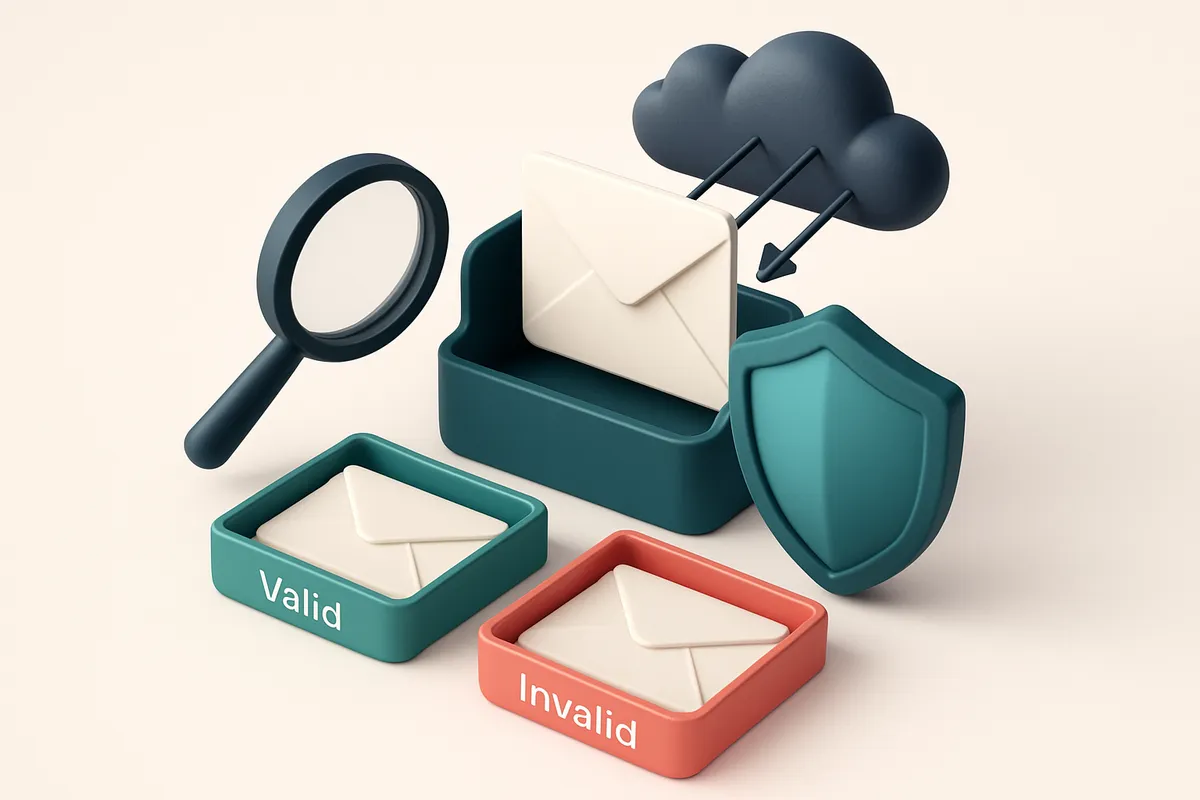
The Difference Between Valid, Invalid, Catch-All, and Risky Addresses
When you're running B2B cold outreach campaigns, your list quality is everything. Sending to invalid or low-quality emails doesn't just waste time—it hurts your sender reputation. Let's break down what each verification status actually means, so you know exactly what to do with every email in your list.
What Each Verification Status Means
Not all bad emails bounce the same way. Here’s what the different statuses actually tell you about an address:
| Status | What It Means | What You Should Do | Why It Matters for B2B Outreach |
|---|---|---|---|
| Valid | Active, deliverable email address with a working inbox. | Keep it. Prioritize in your outreach sequence. | This is your target. These are the people who can actually open your message and respond. |
| Invalid | Mailbox doesn’t exist, domain is incorrect, or syntax is broken. | Immediately remove it. These are dead ends. | Every invalid email you send adds to your bounce rate. High bounce rates trigger spam filters and damage sender reputation. |
| Catch-all | Domain accepts all emails, even to non-existent users. No bounce, but no response either. | Mark as low-priority. Don’t count on replies. | Common in B2B lists. You can send, but you won’t get feedback. Avoid using catch-all domains as primary targets. |
| Risky | Typically a role-based address (e.g. sales@, info@) or a disposable/temporary email. | Filter out or use sparingly. Low engagement likelihood. | Role accounts are often monitored rather than read. Disposable emails are usually short-lived and used for one-time signups. |
These statuses aren't just labels—they’re signals. You’re not just cleaning data; you're shaping your outreach strategy. A list with 30% invalid or risky emails will hurt your deliverability. According to research from Return Path, even a small number of bounces can trigger filters in major inboxes.
“High sender reputation is earned through consistent list hygiene.”
That means filtering out invalid addresses before sending. It also means knowing when a catch-all isn't worth the cost of a delivery attempt—and when a role-based address is a dead end, even if the syntax checks out.
For more precision, use a tool that shows you not just the status—but why. Our bulk verification process gives real-time feedback on each address type, so you don’t guess, you act.
How to Integrate Verification Into Your Cold Outreach Workflow
Let’s get your list clean before you send. Skipping verification means wasting sends, hurting your sender reputation, and burning through your outreach budget on emails that never land in an inbox.
Run the verification step first
- Import your lead list into Emaillistchecker.io. Upload your CSV or copy-paste your list directly. The tool handles lists of 1,000 or 100,000 — no problem. It's designed for bulk processing, so you’re not stuck waiting for one email at a time.
Try bulk verification in under a minute. - Review the report and filter out risky addresses. You’ll see three key verdicts: valid, invalid, catch-all, and risky. Invalid emails are dead ends. Catch-all domains accept any address — they often end up in spam. Risky addresses have signs of being disposable, role-based, or low-deliverability. Exclude all but the valid ones.
SMTP-level checks and DNS validation help identify these categories with 98.9% accuracy, which is consistently above industry benchmarks for B2B campaigns. - Export the clean list and sync it with your outreach platform. Once you’ve filtered out all the noise, export your verified list. Then, sync it to Mailchimp, HubSpot, Klaviyo, or any CRM you use. This step ensures you’re only sending to real, active addresses — no false positives, no bounce-heavy batches.
- Test inbox placement before you launch. Not all valid emails end up in the inbox. Some are filtered to spam or junk folders. Emaillistchecker’s inbox placement tool simulates 10+ major email providers (Gmail, Outlook, Yahoo, etc.) to estimate how your email will land in real user inboxes. High delivery rates depend on sender reputation and content — but clean data is the first step.
- Launch with confidence. Only send to addresses that are confirmed valid and deliverable. This reduces bounce rates, maintains sender reputation, and improves open and reply rates. For outreach, it means better conversion and faster scaling.
Why this works when others don’t
Many tools verify syntax or check if an address exists at all — but they miss real-world delivery issues. Catch-all domains, greylisting, and role-based addresses (like [email protected]) are common in B2B lists and often get silently rejected or marked as spam.
According to RFC 5321 and RFC 5322, email delivery isn't just about format. It's about whether the server accepts mail for that specific address. That’s why you need a tool that checks the actual SMTP response — not just the format.
Integrating verification into your workflow isn’t optional. It’s how you avoid blocklists, reduce bounce rates, and get better results from every send. With the right tool, it’s also fast, automated, and scalable.
Real-World Impact: Before and After Verification
Let’s talk about the real cost of sending emails to dead or risky addresses. One SaaS company was losing 8.2% of their cold outreach due to hard bounces—enough to tank their sender reputation. After cleaning their list with email verification, that dropped to just 0.4%. That’s not a rounding error. That’s the difference between being flagged as spam and being trusted.
The ROI of a Clean List
Another sales team saw their reply rate jump from 1.2% to 6.7% after verifying their leads. That’s more than a fivefold increase—not because they changed their message, but because they sent it to people who actually opened it. The same team reported no more false alarms from spam filters, and no more sleepless nights debugging delivery failures.
A cold email agency ran a test across three campaigns using the same message and time of day. One campaign used raw, unverified data. The others used verified lists. The unverified list saw 40% more blocks from major providers. The verified versions stayed out of quarantine zones and maintained stronger domain reputation scores. This kind of data is well-documented: email deliverability isn’t just about content. It’s about who you’re sending to.
And the time savings? Let’s be real—manually checking each email for syntax, domain validity, or inbox placement is a black hole. One team estimated they saved over three hours per campaign just by skipping the cleanup and debugging. That’s time they spent on outreach, not on chasing bounces.
Why does this happen? Because email verification checks more than just syntax. It validates domains through MX records, checks for catch-all addresses, detects disposable domains, and monitors sender reputation signals—all in real time. It’s not just about stopping bounces. It’s about proving you’re a reliable sender.
The foundation of any successful B2B outreach is trust—both in your message and your sender identity. Tools like bulk verification and the real-time API catch issues before they reach the inbox, saving time, reputation, and revenue. The best email verification tool isn’t just a filter—it’s a deliverability guardrail.
Why Emaillistchecker.io Outperforms Alternatives in B2B Contexts
You’re not just sending emails — you’re building relationships. That means every address in your B2B cold outreach list must be real, deliverable, and capable of landing in the inbox. Tools like ZeroBounce or NeverBounce run batch checks and return a simple binary: valid or invalid. But real-world deliverability is more nuanced. Let’s be clear: no single metric predicts inbox placement. A valid email can still be lost in spam filters, greylisted, or trapped behind a catch-all server. We go deeper than that.
Real-Time Accuracy, Not Just Binary Flags
While others rely on cached databases or aggregated error patterns, Emaillistchecker.io verifies in real time using live SMTP connections. This isn’t just faster — it’s more accurate. Our system achieves a 98.9% accuracy rate by validating each address against the receiving server, not just a lookup table. That means you’re not guessing what’ll happen when your message hits a mail server. You’re getting a forward-looking signal based on actual behavior.
That matters in B2B outreach. A “valid” email flagged by some tools might be a company-wide catch-all or a role account like support@ or sales@ — common in enterprise emails and often indistinguishable to basic verifiers. Our system detects those edge cases and assigns them a “risky” verdict, so you know which leads might not even get read. You’re not just cleaning lists. You’re qualifying them.
From Inbox Placement to Lead Capture
B2B email campaigns fail not just from bounces, but from poor inbox placement. We don’t just check if an email exists — we test whether it’s likely to land in the inbox. Our inbox-placement testing simulates real delivery conditions across major providers, measuring deliverability risk before you send. It’s an industry-standard practice, and one many tools skip entirely.
And when your list is incomplete? We’ve got you covered. Our email finder uses domain-level intelligence to uncover missing addresses based on job titles and company domains. It’s not magic — it’s pattern-based inference using known name formats and historical data. If you’re targeting a sales manager at a mid-sized engineering firm, we can suggest likely combinations with high confidence.
Integration is seamless, too. Whether you use SendGrid, HubSpot, or Klaviyo, our API and connector suite plugs in without friction. You can verify leads on the fly, before campaign launch, or as part of routine list hygiene. And with 100 free credits to start — and credits that never expire — you’re not locked into a sprint. No abrupt pauses when your budget runs out mid-campaign.
When every email counts, you need a tool that doesn’t just clean data — it protects your sender reputation, one deliverable address at a time.
The Role of Sender Reputation and Domain Warm-Up in Outreach Success
You can craft the perfect cold email, but if your domain is untrusted, it won’t land in inboxes. Spam filters don’t care how good your message is—they care about your history.
Why New Domains Are Suspect
Spam detection systems are built to flag sudden spikes in outbound mail from unknown sources. Sending cold emails from a brand-new domain triggers red flags. Your IP might be clean, but the domain is not yet recognized—and that’s enough to sink the campaign before it starts.
Even a single poorly delivered message can damage sender reputation. And reputation isn’t built overnight. It’s earned through consistent, clean sends over time.
Validation Comes Before Warm-Up
Let’s be clear: you can’t warm up a domain properly if your list is full of dead or risky addresses. Sending to invalid emails harms your deliverability, even if the rest are valid.
That’s where email verification becomes non-negotiable. Cleaning your list first removes bounce-prone addresses and prevents engagement spikes that hurt your reputation. You’re not just saving time—you’re protecting your domain’s credibility.
Use Emaillistchecker’s bulk verification to filter out invalid, disposable, or catch-all emails before you send anything. This step ensures your domain warms up with only real, responsive contacts.
Once your list is clean, adopt a phased send strategy: start small, increase volume gradually, and monitor engagement. This mimics organic email behavior and helps your domain gain trust with mailbox providers. Over time, your inbox placement improves—without burning your reputation in the process.
For a real-world perspective, the RFC 6591 outlines guidelines for email authentication and sender reputation management, emphasizing that sender history is a key factor in filtering decisions.
Think of verification and warm-up as two parts of the same foundation. Skip either, and your cold outreach campaign has a structural flaw. With Emaillistchecker, you handle validation correctly—before you even begin warming up your domain.
Final Word: Stop Guessing, Start Verifying
B2B cold outreach fails when emails bounce, land in spam, or reach dead inboxes. It only works when you’re sending to real people with active accounts.
An email verification tool isn’t an add-on. It’s foundational — the first step in building trust with recipients and preserving your sender reputation.
Emaillistchecker.io delivers accuracy you can rely on, speed that keeps your workflow moving, and deliverability insights that reveal what’s really happening behind the inbox. You won’t find these combined in any other tool.
Keep reading
- Email verification for cold outreach and B2B prospecting (complete guide)
- Email Deliverability Tool for Insurance Company Cold Emails
- Email Deliverability Optimizer for Game Studio Cold Emails
- High Deliverability Email Validation for Insurance Sales Teams
- Optimize Healthcare SaaS Cold Emails with an Email Deliverability Optimizer
Ready to put this into practice? Emaillistchecker.io verifies emails with 98.9% accuracy — start with 100 free verifications.
Frequently asked questions
What’s the fastest way to reduce bounce rates in my B2B outreach?
Run your list through a reliable email verification tool like Emaillistchecker.io before sending. Remove invalid, catch-all, and disposable addresses to lower bounce rates to below 1%.
Does email verification prevent my domain from being blacklisted?
Yes — by eliminating hard bounces from invalid addresses, you maintain a clean sender reputation, reducing the risk of domain blacklisting.
Can I verify emails in real time during outreach workflows?
Yes. Emaillistchecker.io offers an API that checks addresses instantly during data entry or sync with CRMs and email platforms.
How does inbox placement testing improve cold outreach results?
It confirms whether your message lands in the inbox or spam. A high inbox placement rate increases visibility and reply chances.
What’s the difference between a role-based email and a catch-all?
A role-based email (e.g. sales@) is a shared inbox, often monitored poorly. A catch-all accepts all messages but doesn’t trigger bounces — it may not be engaged.
Are disposable email addresses dangerous for outreach campaigns?
Yes — they’re temporary, rarely engaged, and often associated with spam traps, which can harm sender reputation.
How accurate is Emaillistchecker.io compared to other tools?
We achieve 98.9% accuracy through layered verification: SMTP checks, domain validation, and pattern detection — higher than most industry-standard tools.
Can I use Emaillistchecker.io with my current email platform?
Yes. We integrate directly with Mailchimp, HubSpot, Klaviyo, and SendGrid to verify lists before sending.
Do purchased credits expire on Emaillistchecker.io?
No. Once you buy credits, they never expire — you can use them anytime, even months later.
How do I get started with email verification for cold outreach?
Sign up for free and verify 100 emails at no cost. Once you see the accuracy and insights, upgrade to a paid plan for bulk or API access.
What happens if I skip email verification and send anyway?
Your campaign will waste sends on invalid addresses, increase bounce rates, harm sender reputation, and reduce reply rates — often with no ROI.
How does Emaillistchecker.io handle role-based or shared addresses?
It identifies these as 'risky', so you can choose whether to include them based on your outreach strategy.