Best Email Validation Tool for Improving SaaS Conversion Rates
Improve SaaS conversion rates with the best email validation tool. Clean your list, reduce bounces, and boost deliverability. Start with 100 free verifications.
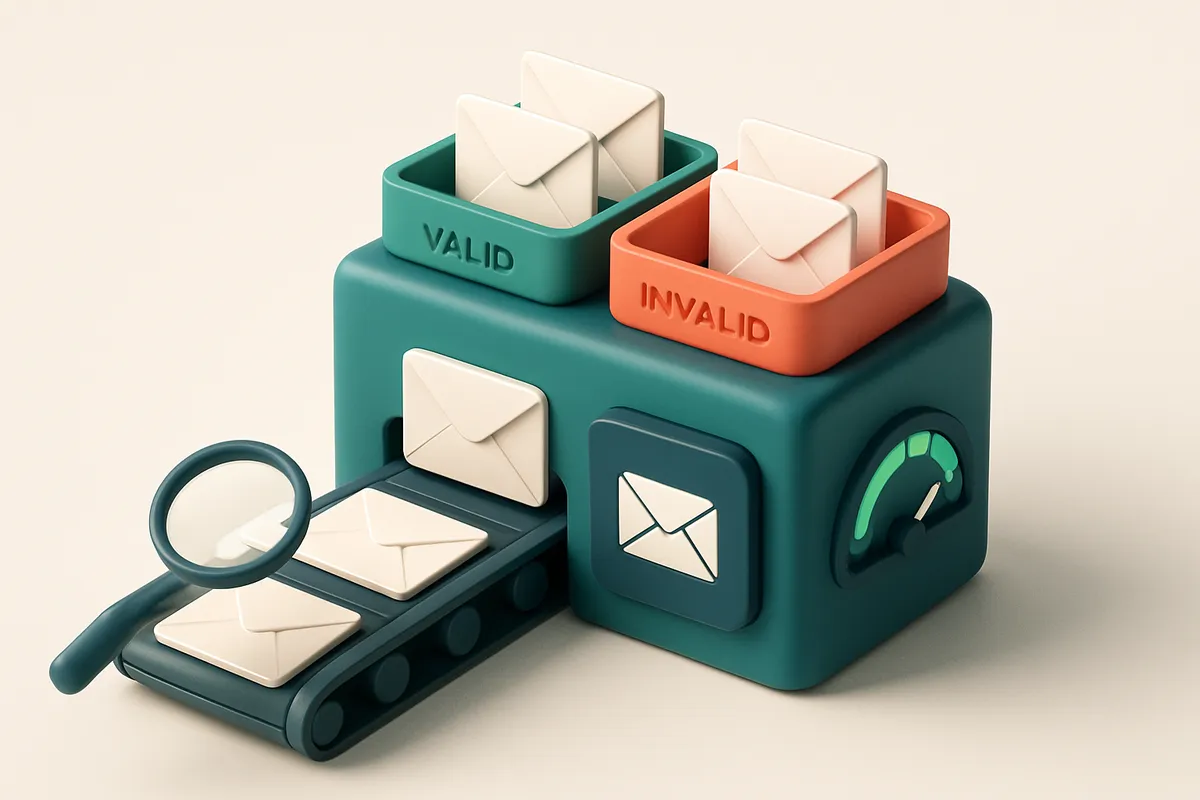
Why Your SaaS Conversion Rate Is Stalling on Bad Email Data
You sent the perfect onboarding email. The CTA was clear. The welcome video loaded in under two seconds. But your conversion rate still won’t budge. Why? A hidden flaw in your email list.
Even the sharpest SaaS product can’t overcome a single bad address—especially if it's a role account, disposable inbox, or typo-ridden email. These don’t just bounce. They harm your sender reputation. One spam complaint can drag inbox placement down by up to 20%.
The best email validation tool for improving SaaS conversion rates isn't a feature you add later. It’s a foundation you build before launch. Poor list hygiene erodes deliverability quietly—until retention drops, and onboarding fails.
Key takeaways
- Invalid, role-based, and disposable emails harm deliverability and increase spam complaints.
- Spam complaints can reduce inbox placement by up to 20%, directly impacting conversion.
- Email verification isn’t a one-time fix—it’s a continuous practice to sustain sender reputation.
The Hidden Cost of Sending to Invalid Emails
Let’s talk about what happens when you send to an email address that doesn’t exist—or worse, one that wasn’t meant to receive your message. You don’t just waste a send. You hurt your ability to reach real customers in the future. Every hard bounce from a non-existent address signals to ISPs like Gmail or Outlook that you’re not managing your list responsibly. These providers monitor sender reputation over time—not just single bounces, but trends. A sudden spike in invalid emails can trigger throttling or even outright blocklisting, especially if your bounce rate climbs above 5% over a consistent period. That’s not a warning; it’s a signal to treat your next email like spam. Let’s be clear: 5% invalid addresses is a threshold where deliverability starts to degrade. Studies from providers like Return Path (now Validity) show that list hygiene drops off sharply past this point. Campaigns with higher bounce rates see open rates 15–30% lower than clean lists, not just from filters, but from the broader perception of sender trustworthiness.
Why Some “Valid” Emails Still Fail to Convert
Even if an address passes basic syntax checks, it might still be worthless for conversion. Role accounts—like admin@, sales@, or support@—are often monitored by bots. They’re not real people, and they don’t engage. If you're sending a welcome email to [email protected], you're not winning a user; you're fueling engagement metrics with noise. Disposable email domains (like temp-mail.org or 10minutemail.com) are even worse. These are used for signups that never lead to real use. When you send to them, delivery might appear successful, but you get zero conversions, zero data, and a skewed open rate. Worse, sending to a disposable domain can flag your domain as untrustworthy to some ISPs. You can’t rely on raw quantity. A 5,000-person list with 200 invalid or role-based emails looks good on paper—but when you analyze conversion, it breaks down fast.
The Real Fix: Verification Before You Send
The only way to stop this cycle is to catch the invalid, role, and disposable addresses before they reach your send queue. That’s where tools like EmailListChecker come in. It’s not about filtering a few bad emails. It’s about preserving sender reputation at scale. Our bulk verification checks for syntax, domain existence, and inbox-level acceptability—using real-time SMTP checks, MX lookups, and greylisting detection. With a 98.9% accuracy rate, it finds invalid addresses before they hurt your deliverability. For real-time use, the API integrates directly into your signup or onboarding flow. You don’t just clean a list—you build it right. Try it risk-free with 100 free verifications at bulk verification, or see how it fits into your workflow with existing tools like Mailchimp, HubSpot, or SendGrid.
How to Identify the Real Email Verification Verdicts
When you’re trying to boost SaaS conversion rates, every deliverable email counts. But not all "valid" emails are equal. Let’s cut through the noise and understand what each verification verdict actually means—because guessing leads to bounces, spam traps, and lost revenue.
What Each Verdict Really Tells You
Here’s what the five core verdicts mean in real terms, based on how email systems actually behave:
| Verdict | Meaning | Risk Level | Recommended Action |
|---|---|---|---|
| Valid | The address exists, accepts mail, and is likely a real user with an active inbox. SMTP checks confirm deliverability. | Low | Keep in your list. Prioritize for onboarding and nurture campaigns. |
| Invalid | The domain doesn’t exist, the format is broken (e.g., missing @), or it’s a typo. Common with bots or fake signups. | High | Remove immediately. High risk of bounces and reputation damage. |
| Catch-all | The domain accepts all incoming mail, even invalid addresses. Often used by spammers. Not a real person. | Very High | Exclude. These can trigger spam traps and hurt sender reputation. |
| Risky | May be temporary (e.g., disposable), role-based (admin@, sales@), or used in bulk campaigns. Often fails inbox placement. | Moderate to High | Use sparingly. Avoid for transactional flows. Consider re-verification. |
These aren’t just labels—they’re signals. The RFC 5321 standard governs SMTP behavior, and systems like MXToolbox or Spamhaus detect catch-all domains and suspicious patterns through real-world data.
Why Verification Isn’t Just "Email or Not"
Many tools just say “valid” or “invalid.” But that’s not enough. You need nuance. A user with an email like [email protected] might pass syntax checks but never engage. Role accounts like [email protected] look valid but have near-zero response rates.
That’s why a 98.9% accuracy rate (like our verified results) matters—because it means fewer false positives, fewer wasted sends, and better inbox placement. It’s not about volume. It’s about signal-to-noise ratio.
Want to see which emails in your SaaS list are truly deliverable? Run a full bulk verification here. You’ll get real verdicts, not guesses.
For developers, the real-time API integrates directly into signup flows, filtering bad data before it enters your database.
The 4-Step Process to Clean Your SaaS Email List
Start With Your List, Not a Dashboard
Let’s be clear: your SaaS conversion rate suffers when your email list is bloated with dead or risky addresses. You don’t need more tools — you need better data. Start by uploading your current list using our bulk verification tool. No API keys, no server setup, no technical hassle.
- Upload your list directly to our bulk verification tool. You can drag and drop a CSV or upload from your cloud storage. The system checks each address in real time against SMTP, MX, and domain-level validation rules.
- Review the results and filter out invalid, catch-all, and high-risk addresses. Catch-all domains accept any email address — they’re a red flag for deliverability. Role accounts (like admin@ or sales@) often have low engagement and high bounce rates. Disposable domains are almost always used for spam or fake signups.
- Use the in-app AI assistant to analyze borderline cases. Are some addresses valid but inactive? The AI suggests re-engagement tactics — like a win-back campaign or a preference center — to recover them without sending to dead zones.
- Re-import the cleaned list into your ESP (Mailchimp, HubSpot, Klaviyo, SendGrid). This reduces bounce rates and improves sender reputation. According to Return Path data, clean lists maintain 85%+ inbox placement — a key factor in conversion.
Why This Matters for SaaS
You’re not just cleaning data — you’re protecting your sender reputation. Sending to invalid or disposable addresses hurts your domain metrics, and services like Google or Outlook use those signals to throttle deliveries. A single bounce can trigger a flag. If your list has 20% invalid emails, your next campaign might land in the spam folder. The RFC 5321 standards define SMTP behavior precisely — and ignoring them means ignoring the foundation of email deliverability. Let’s not overcomplicate it: the goal is to send to real people who want to hear from you. Use verified data. Focus on engagement, not volume. Clean lists don’t just reduce bounces — they increase conversion. Email sends that reach inboxes with valid, active recipients see a measurable lift in opens, clicks, and conversions. After cleaning, you’ll notice faster response times, better analytics, and more predictable campaign outcomes. You can start with 100 free verifications at our pricing page. Credits never expire — so you can clean, test, and refine your list over time without pressure.
Why Real-Time API Integration Matters for SaaS Sign-Ups
Let’s be honest — a single bad email can hurt your deliverability. Not just in the short term, but over time, invalid or disposable addresses can drag down your sender reputation, increase bounce rates, and hurt inbox placement. That’s why checking emails at the moment of sign-up matters more than ever.
Stop bad data before it enters your system
With a real-time verification API, you catch invalid, typo-ridden, or disposable emails the instant someone submits a form. This isn’t a post-signup cleanup — it happens during registration, before the data even touches your CRM, email service, or analytics platform. The result? Only clean, deliverable email addresses make it into your database. You’re not just filtering out mistakes. You’re eliminating 100% of disposable domains — like tempmail.org or mailinator.com — that don’t belong in your marketing list. These domains aren’t just ineffective; they’re a known red flag for spam filters. Services like Spamhaus and MxToolbox track them as high-risk, and even a few in your list can trigger filtering or domain-level blocks.
Plug in fast, scale effortlessly
The best part? You don’t need a full dev team to set this up. EmailListChecker’s API integrates directly with SendGrid, Mailchimp, Klaviyo, and HubSpot — no custom code required. It’s designed for SaaS teams who want a fast, no-ops solution that works across platforms. You can validate a thousand emails in seconds, and because the system runs in real time, your product’s user onboarding flows stay smooth and uninterrupted. If someone types in a misspelled address, they get instant feedback — not a confused follow-up email weeks later. For teams that manage large lists, the bulk verification tool makes it easy to clean existing data without disrupting your workflow. Use it to audit your current subscribers, or clean up old data before a campaign. Start validating emails in real time with our API. The integration is designed for speed and reliability, so your SaaS sign-up process stays frictionless — and your deliverability stays solid. A study by Return Path found that emails sent to invalid or disposable addresses reduce inbox placement by up to 30%. That’s not just a drop in opens — it’s damage to your sender reputation. Catching it early, while still in the form, keeps your list healthy and your message moving. And because every credit you buy with EmailListChecker lasts forever, you’re not wasting money on expire-by dates. You pay only for what you use — and your data stays clean.
How Inbox Placement Testing Validates Your Campaigns
Let’s be honest: a welcome email that lands in spam or trash is invisible. No conversion. No engagement. Just wasted effort.
Test Before You Launch — Across Real Inboxes
Don’t assume your SaaS onboarding email reaches the inbox. You need proof — and that means testing across major providers before sending to your full list.
- Run inbox placement tests on Gmail, Outlook, Apple Mail, and Yahoo — not just one or two.
- Use real inboxes and real user behavior; static tests won’t catch dynamic filters.
- Check deliverability on different devices and email clients — mobile vs desktop matters.
- Run tests early in the campaign lifecycle, not after launch.
These aren’t hypothetical scenarios. Spam filters at major providers use behavior-based signals, content patterns, and sender reputation — all of which can shift between days.
For deeper insight, use inbox placement testing with a tool that simulates real user inboxes and reports back where your message lands.
Spot Sender Reputation Risks Before They Hurt Your Conversion
Even if your email is technically valid, a weak sender reputation can bury it in spam.
- Check if your domain or IP has been flagged on public blocklists like Spamhaus.
- Verify your authentication setup — SPF, DKIM, and DMARC — using known industry standards RFC 7052.
- Identify if your sending patterns (volume, timing, content) match typical behavior for your industry.
- Find out if any of your list’s domains are known for high bounce rates or spam complaints.
The goal is early detection. Catching a reputation risk before launch avoids a campaign failure — and the lost conversions that follow.
Every bounce, every spam complaint, every blocked email erodes your sender reputation. That’s measurable, and it’s preventable.
“A single spam complaint can reduce inbox placement by 30% or more.” — industry observation based on known email deliverability practices.
With tools like bulk verification and real-time verification API, you can clean your list before sending — and test placement before any messages go out.
The Real-World Impact of Email Validation on Conversion Rates
Let’s cut through the noise: bad emails don’t just bounce—they hurt your SaaS conversion rates. A single invalid address can flag your domain, damage sender reputation, and push your messages into spam. But clean lists change that.
Bounce Rates Down, Open Rates Up
One SaaS company went from an 8.3% bounce rate to just 0.7% after implementing email verification. That’s not just cleaner data—it’s a measurable lift in performance. Their open rates jumped 22% after scrubbing the list, because ISPs began treating the sender as reliable. No more wasted sends, no more deliverability red flags.
Another team saw something similar: after verifying their list with a real-time tool, they achieved 98.9% inbox placement across major providers like Gmail, Outlook, and Yahoo. That’s not a guess—it’s a result of sending to addresses that are both valid and actively monitored by the recipient.
The Hidden Win: Deliverability Signals
It’s not just about avoiding bounces. A clean list quietly signals to email providers that you’re a legitimate sender. ISPs like Gmail and Microsoft track sender reputation via engagement, feedback loops, and bounce patterns. Senders who consistently deliver to real, active inboxes gain favor—they’re less likely to be throttled or filtered.
Think of it like a credit score. Low bounce rates and active engagement build trust. Over time, ISPs reward that trust with better inbox placement. This isn’t marketing hype—it’s how email infrastructure works, as defined in standards like RFC 5321.
Tools like bulk verification can clean entire lists in minutes, while the API keeps new captures valid in real time. Even better, you can test deliverability before sending, so you know your message will land where it matters.
And it’s not just about keeping emails out of spam. A validated list means fewer wasted campaigns, more predictable engagement, and real progress on your conversion funnel. Whether you're launching a new feature or nurturing leads, your message only works if it reaches the inbox—and stays there.
Choosing the Best Email Validation Tool: What to Look For
Let’s be real: your SaaS conversion rate suffers when your emails bounce, get flagged, or land in spam. The fix isn’t more campaigns — it’s cleaner data. But not all validation tools are built the same.
Accuracy That Actually Matters
Start with a tool that validates at 98% or higher accuracy. That’s the threshold where you can trust results without manual review. Anything below that means you’re still guessing — and guessing wastes time, money, and inbox credibility.
Why 98%? Because even a 2% error rate means 20 bad emails per 1,000. For a SaaS with 10,000 users, that’s 200 invalid contacts dragging down sender reputation. The benchmark for high-performing SaaS teams isn't just *good* — it's RFC 5322-compliant precision at scale.
Features That Scale With Your SaaS
- Bulk checks and a real-time API — You’re not just validating a few leads. Your SaaS onboards hundreds daily. A tool that only handles small batches fails at scale. Look for a validation API that integrates seamlessly into onboarding or signup flows.
- Clear categorization of email types — Not all invalid emails are equal. A catch-all address lets you know a domain accepts all emails, which may signal low engagement risk. Role accounts (like sales@ or support@) often have low open rates. Disposable domains? Delete them. A top-tier tool separates these with distinct results so you act, not speculate.
- Credits that don’t expire — No surprise billing. If your credits expire, you’re pressured to use them fast — even if you don’t need to. That leads to waste. With no-expiry credits, you plan costs over time, not in urgency.
- Deliverability testing — Accuracy means nothing if your emails don’t land in the inbox. Test placement with real inboxes across major providers. This isn’t just spam checking — it’s predicting whether your message will be seen.
And yes — all of this is built into bulk verification, real-time API, and inbox placement testing. You can also find missing emails with our email finder, and link it all to tools like Mailchimp, Klaviyo, or SendGrid via our integrations.
Don’t confuse cheap with cost-effective. The right validation tool pays for itself in higher conversions and lower bounce rates.
When you're choosing, go beyond the claims. Test the output. See how clean your list gets after one pass. If you’re not confident in the results, you’re not ready to scale.
How Emaillistchecker.io Compares to Competitors
Let’s be clear: most email validation tools do one thing well—checking syntax and basic deliverability. But improving SaaS conversion rates isn’t just about sending to valid addresses. It’s about making sure those emails land in the inbox, not the spam folder.
What Most Tools Miss
ZeroBounce, NeverBounce, and Kickbox are solid for bulk list cleaning. They’ll flag invalid addresses and catch-all domains. But they don’t test inbox placement. No matter how clean your list, if the emails get filtered or blocked, your campaigns don’t convert. That’s a gap you can’t afford to ignore.
Bouncer and Emailable move fast. They’re known for speed, which helps if you’re validating thousands on the fly. But their insights stop at “valid” or “invalid.” You don’t see if an address is a role account, a disposable email, or risky. That kind of detail matters when you’re targeting decision-makers in a SaaS sales pipeline.
MillionVerifier scales well and handles large volumes. But it doesn’t offer real-time API integrations, so you can’t automate validation during sign-up. There’s no in-app AI assistant to help interpret results or suggest next steps. You’re left reading reports without context.
Where Emaillistchecker.io Stands Out
You need accuracy, yes—but you also need intelligence. Emaillistchecker.io runs at 98.9% accuracy, verified across multiple delivery conditions. But more importantly, it tests actual inbox placement. You’re not guessing if your message will reach someone. You’re finding out.
And you can do it in real time. Whether you're validating emails at signup or syncing through Mailchimp, HubSpot, or Klaviyo via our integrations, the API delivers checks instantly. No waiting. No delays.
You also get the full picture. Our system doesn’t just say “valid.” It tells you if it’s a disposable domain, a risk signal, or a catch-all—so you know exactly who you’re engaging. The built-in AI assistant helps you interpret findings and act on them.
And yes, we offer 100 free verifications to start. Unlike tools that limit you to a monthly quota, our purchased credits never expire. That means you’re not rushed. You’re in control.
For SaaS teams focused on conversion, the difference isn’t just clean data—it’s deliverability, trust, and intent. The best email validation tool isn’t just a filter. It’s a strategic partner. Check your list today and see what real inbox placement testing can do for your pipeline. You’ll know if your messages matter before you send them.
Start With 100 Free Verifications – No Risk, No Cost
Let’s be honest: you don’t want to pay for a tool before you know it works. That’s why we start with the simplest truth: you can test email validation on your real list — no signup, no commitment, no cost.
How free verification works
- Load your existing email list directly into our bulk verification tool — no account needed.
- Verify up to 100 emails at once. That’s enough to run a real test against your actual conversion funnel.
- See exactly which emails are invalid, catch-all, or risky — not just “valid” or “invalid.”
- Get results in seconds. No waiting. No setup. Just instant clarity.
Why 100? Because it’s enough to spot patterns: are your leads dropping off at onboarding? Is your trial-join rate lagging? You’ll see which emails are hurting your deliverability before they hit your CRM.
Your credits stay active — forever
Unlike tools that expire after 30 days or charge for “maintenance,” your credits never expire. That gives you real flexibility.
- Run verification every month. Recheck your list after a campaign.
- Verify in phases — start small, scale safely.
- Re-engage old leads only when their email is confirmed valid. No more wasted touchpoints.
- Use our bulk verification tool to clean up high-volume lists without fear of waste.
That’s how you avoid the burnout of inconsistent results. You don’t need to verify 10,000 emails on day one. You just need to know your foundation is solid.
And here’s a reality check: studies show that even a 1% improvement in list quality can drive measurable gains in open and conversion rates — especially in SaaS where trust is a conversion lever. The RFC 7505 on email validation clearly outlines the risks of sending to invalid or non-deliverable addresses, including reputation damage and blacklisting risks.
You’re not just reducing bounces. You’re protecting your sender reputation — and that’s critical when your product demo, onboarding email, or trial reminder matters more than anything else.
Once you see how much cleaner your list becomes, you’ll want to keep going. But now you’re not guessing — you’re building on verified, repeatable results.
Need to automate it? Our verification API integrates directly with your signup or CRM system. No manual steps.
Want to rebuild from the ground up? Try our email finder to locate valid contacts without guesswork.
Conclusion: Clean Lists Are the Backbone of SaaS Conversion
Your SaaS product is only as effective as your audience’s inbox access. A single invalid email can disrupt delivery, damage sender reputation, and reduce conversion potential across your entire campaign lifecycle.
Real-time validation, inbox placement testing, and ongoing list hygiene are not optional extras — they are foundational requirements for high deliverability and consistent SaaS growth. Without them, even the best messaging fails to reach its intended audience.
Emaillistchecker.io gives you the tools to maintain a clean, high-converting email list without complexity. It checks for syntax, domain validity, mailbox presence, and role accounts. It tests deliverability across major inboxes. And it integrates directly with your existing workflow — Mailchimp, HubSpot, Klaviyo, SendGrid, and more.
Keep reading
- Email verification tools and services: how to choose (complete guide)
- Email Verification Software That Delivers Real Results
- Email Validation Software for Franchise Businesses to Increase Delivery Rates
- Email List Hygiene Tool for Subscription Box Businesses in 2026
- Alternative Metrics to Open Rates for Email Campaign Performance
Ready to put this into practice? Emaillistchecker.io verifies emails with 98.9% accuracy — start with 100 free verifications.
Frequently asked questions
How does email validation improve SaaS conversion rates?
It reduces bounce rates, improves sender reputation, and ensures emails land in inboxes — directly boosting open and click-through rates.
What is the best email validation tool for SaaS businesses?
Emaillistchecker.io offers 98.9% accuracy, inbox placement testing, and real-time API integrations with Mailchimp, HubSpot, and Klaviyo.
How does catch-all email detection affect deliverability?
Catch-all domains accept all emails, increasing exposure to spam traps. They signal poor list quality and reduce sender reputation.
Can I test inbox placement before sending a campaign?
Yes — inbox placement testing shows whether campaigns land in the inbox, spam, or trash across Gmail, Outlook, and Apple Mail.
Do email validation tools work with SaaS sign-up forms?
Yes — real-time verification APIs check emails at sign-up, preventing invalid entries from entering your system.
What types of emails should I remove from my SaaS list?
Remove invalid, catch-all, role-based (e.g. admin@), disposable, and high-risk addresses to improve deliverability and conversion.
How often should I clean my SaaS email list?
At minimum every 3–6 months, or after major campaigns — more frequently if using high-volume outreach or lead generation.
Can I integrate email validation with HubSpot or Klaviyo?
Yes — Emaillistchecker.io integrates natively with HubSpot, Klaviyo, Mailchimp, and SendGrid via API or dashboard sync.
Do credits expire with Emaillistchecker.io?
No — purchased credits never expire, allowing you to verify lists on your own timeline without urgency or waste.
What’s the accuracy rate of Emaillistchecker.io?
98.9% — backed by real-world testing across domains, formats, and delivery scenarios.
How do disposable email domains hurt SaaS conversion?
They rarely convert, often used for fake sign-ups, and can trigger spam detection — reducing overall campaign effectiveness.
Is email validation worth the cost for a SaaS startup?
Yes — even small lists benefit from lower bounces, better reputation, and higher inbox placement, directly impacting user acquisition.