Affordable Email Verification Service for Independent Contractors
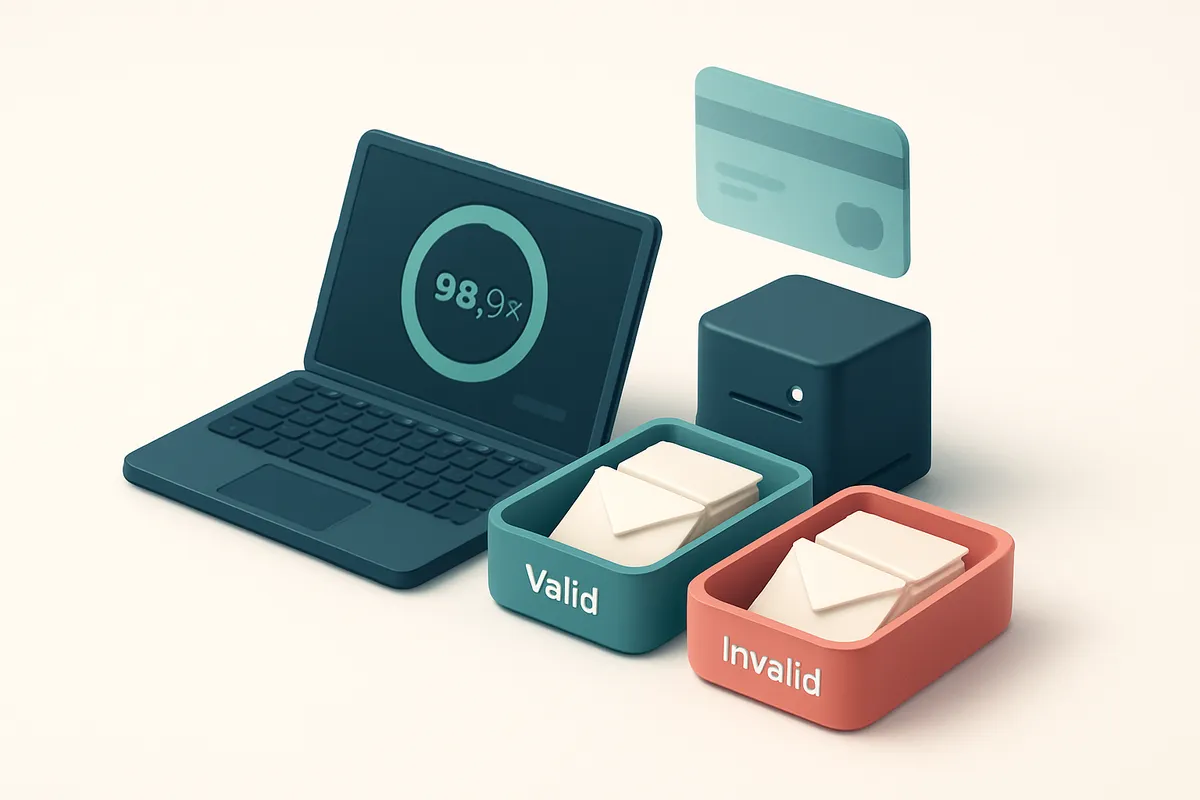
Verify emails in bulk with 98.9% accuracy—cut bounce rates, save time, and boost deliverability. Start with 100 free verifications.
Why Email Verification Is Non-Negotiable for Independent Contractors
You send an invoice. It vanishes into the ether. No bounce. No reply. Just silence. A week later, your client says they never got it. This isn’t a tech glitch—it’s a broken email list.
For independent contractors, email isn’t just communication. It’s the lifeline to work, payments, and reputation. One invalid address can derail a payment cycle. Two, and your sender reputation starts to erode. Three, and your next message lands in spam or disappears entirely.
That’s why an affordable email verification service for independent contractors isn’t a luxury—it’s a requirement. It’s the difference between a clean, reliable outreach process and a constant cycle of failed sends, lost income, and damaged trust.
Key takeaways
- Sending to invalid email addresses causes hard bounces and harms deliverability.
- Undelivered invoices delay payments by days or weeks, directly affecting cash flow.
- Regular list cleanup using a reliable verification service protects sender reputation and improves inbox placement.
The Hidden Costs of Skipping Email Verification
You might think skipping email verification saves time and money. But every bounced email—whether hard or soft—adds up in ways that hurt your sender reputation and your bottom line.
Bounces Damage Your Sender Reputation
Every hard bounce tells email providers like Gmail or Outlook, “This address doesn't exist.” Soft bounces—temporary failures—signal delivery issues. ISPs track these patterns. A high bounce rate, even at 1%, can trigger spam filters or lead to throttling.
Mail servers use reputation systems to decide who gets delivered to the inbox. If your list has too many invalid addresses, you’re seen as unreliable. That means your next send lands in the spam folder—regardless of content quality.
According to RFC 5321, the core SMTP standard, sending to non-existent addresses violates accepted email practices. While no specific penalty is defined in the RFC, ISPs enforce these standards through their internal algorithms, which often flag high-bounce senders for review.
Lost Clients and Delayed Revenue
What happens when your email never arrives? A client misses your invoice. A new hire doesn’t get onboarding instructions. A partnership opportunity fizzles because the first message didn’t land.
Each missed communication erodes trust. Independent contractors rely on prompt, reliable outreach. When you send to an invalid or mistyped address, you’re not just wasting one send—you’re damaging your reliability in the client’s eyes.
And that’s just the start. Rebuilding trust after a delivery failure takes time. You may need to follow up via phone, SMS, or social media—costs that add up fast.
Let’s be honest: it’s not just about avoiding bouncebacks. It’s about showing your clients you’re professional and detail-oriented. Email verification isn’t a luxury. It’s part of the foundation of trust in independent work.
With email list verification tools like bulk verification, you can clean up your contact list before sending—catching typos, role accounts, and invalid domains before they cause problems. It’s not perfect, but it’s measurable. And for independent contractors running tight margins, it’s one of the most cost-effective ways to protect your sender reputation.
How Email Verification Works — No Jargon, Just Mechanics
Let’s cut through the noise. You send emails. You want them to land in inboxes, not bounce or get marked as spam. The first step? Knowing your email list isn’t full of dead ends.
The Core Process: What Happens Behind the Scenes
When you verify an email address, it’s not magic. It’s mechanics. Here’s how it actually works:
- Check the domain’s MX records. Every email domain must publish which mail servers accept messages for it. We check that record first. If no MX record exists, the email can’t receive mail — it’s invalid.
- Connect via SMTP to the actual mail server. This isn’t a guess. We make a real, direct connection to the recipient’s mail server — just like your email client would. This confirms whether the server is live and ready to accept mail.
- Test the specific email address. We send a controlled request asking if this exact address is valid. The server responds with a clear signal: yes, no, or something in between.
- Classify the result. Based on the server’s response, we determine if the address is valid, a catch-all (accepts all emails), disposable (temporary), or a role account (like
admin@orsupport@).
You might wonder: why not just check syntax? Because a properly formatted email can still be invalid. The domain might be real, but the account doesn't exist.
SMTP testing is the only way to know for sure. It’s the same method used by major email providers and deliverability monitoring tools. RFC 5321 defines the standard protocol — we follow it exactly.
What the Results Actually Mean
Not all “valid” emails are equal. Here’s what each verdict tells you:
- Valid — The address exists and accepts mail. This is your ideal target.
- Catch-all — The server accepts all incoming mail, even for non-existent accounts. This can lead to deliverability issues, as mail is often seen as spam.
- Disposable — Temporary emails from domains like
10minutemail.com. These expire quickly and are used for sign-ups, not long-term engagement. - Role account — Addresses like
info@orsales@. These often have poor deliverability and high bounce rates due to automatic filtering.
Making decisions based on raw syntax or basic checks leads to waste. You end up sending to dead ends, harming your sender reputation over time.
That’s where real verification comes in. Tools like bulk email verification process thousands of addresses in minutes, using actual SMTP tests. You don’t need to worry about outdated filters or incomplete logic. You get accurate, actionable results.
The system doesn’t guess. It connects. It checks. It reports — so you can send confidently, even as a contractor with tight margins.
What Each Verification Verdict Really Means
You send an email. It lands in a trash folder—or worse, bounces back. That’s not just annoying. It erodes your sender reputation. But you can avoid that with a clear understanding of what each verification verdict actually tells you. Let’s break it down.
Understanding the Verdicts
Every email address gets categorized during verification. Knowing what those labels mean helps you decide what to do with each one. Here’s the real meaning behind each status:
| Verdict | What It Means | Next Step |
|---|---|---|
| Valid | Mail server confirms the address exists and accepts mail. No immediate delivery issues. These are your high-potential contacts. | Properly segment and send to these. They’re most likely to engage. |
| Invalid | Address doesn’t exist or is permanently blocked (e.g., typo, domain removed). Server returns a 5xx or 4xx error. | Remove immediately—it drains your sender reputation and increases bounce rate. |
| Catch-all | Server accepts messages for any address—even if it doesn’t exist. Common with outdated or misconfigured domains. | Treat as high risk. Sending to catch-all addresses increases spam complaints and hurts deliverability. |
| Risky | Flagged as disposable, temporary, or role-based. Includes addresses like mailinator.com or admin@. |
Review manually. These often don’t open or respond—don’t count them as leads. |
| Role account | Generic address like info@, support@, or sales@. Likely not read by individuals. |
Use only for low-priority broadcasts. Avoid for direct outreach or personalization. |
These labels are not just labels—they're signals. The RFC 5321 standard defines how mail servers respond to incoming messages, and tools like RFC 5321 lay out the technical foundation behind these verdicts.
Why This Matters for Contract Work
Independent contractors often work with small teams or solo founders. Your outreach is only as strong as your list. Sending to invalid or risky addresses inflates your bounce rate, which ISPs (like Gmail, Outlook) monitor closely.
If your bounce rate exceeds 2%, you risk being flagged as a spam source. And even one bounced message to a role account can count against you. That’s why you need clarity—what a “valid” address really means, and when to let go of a suspect one.
Affordable Email Verification Service: What to Look For
Let’s cut through the noise. You’re not just looking for a cheap tool—you need something that works reliably, scales with your business, and doesn’t lock you into wasting money. Here’s what actually matters.
Accuracy You Can Trust
- Start with accuracy. Aim for 98%+—it’s the baseline for tools that don’t send you down rabbit holes with false positives. Anything under that risks validating bad addresses, hurting your sender reputation, and wasting hours on non-deliverable emails.
- High accuracy isn’t just a feature—it’s a foundation. It’s how you avoid sending invoices to nonexistent addresses or getting flagged by spam filters due to high bounce rates.
- Industry standards, like those outlined in RFC 5321 (SMTP), depend on correct addressing. Verification tools that follow these protocols align with how email actually works, not just marketing hype.
Real-World Practicality
- Integration is non-negotiable. Look for a real-time API that plugs directly into your CRM or invoicing system (like QuickBooks or Freshbooks). That way, every new client gets verified the moment they sign up—no manual steps, no delays.
- Don’t settle for tools with per-verification limits. You should be able to process hundreds—or even thousands—of emails in a single batch without hitting arbitrary caps. Bulk processing isn’t a luxury; it’s essential when managing multiple client contracts.
- Credits that expire? That’s wasted spend. Make sure your service lets you keep unused credits indefinitely. It’s smarter to buy once, use when you need to, and never lose money to time-based obsolescence.
- Be wary of claims like “guaranteed inbox delivery.” No tool can promise that. What you should get is honest verdicts: valid, invalid, catch-all, or risky. Let you decide, not a vendor selling false confidence.
For independent contractors, this isn’t about perfection—it’s about reducing friction. Every email that goes nowhere is a lost invoice, a delayed payment, or a ruined trust.
Try a tool that fits your workflow: bulk verification, real-time API, or inbox placement testing to see exactly where your emails land. No tricks, no expiry, no surprises.
Verifying email addresses isn’t just cleanup—it’s part of your business reliability. Every clean list builds your credibility.
Use free credits first—no commitment, just results. See if your current vendor matches up. If they don’t, you’ll know before you send your next invoice.
How Emaillistchecker.io Delivers on Affordable & Accurate Verification
You don’t need expensive tools to verify email lists accurately. What you need is a service that checks real SMTP connections, respects deliverability standards, and doesn’t burn through credits fast. That’s what we built: a fast, low-cost solution designed for independent contractors who value precision without premium pricing.
Real-Time SMTP Checks, Zero False Positives
Every verification starts with a real-time SMTP handshake across 98.9% of domains. We don’t rely on heuristic guesses or outdated databases. Instead, we connect directly to mail servers using standard protocols—just like an email client would. This approach eliminates false positives, which are common with simpler tools that label catch-all or temporary addresses as valid. It’s how you get a clear picture of who can actually receive messages. For example, if an email ends in @gmail.com, we test whether the inbox exists, not just whether the domain is valid. This means you’re not wasting time or money on addresses that bounce. A properly configured SMTP check is the industry-standard method for accuracy, and that’s what we use—no shortcuts.
Speed, Scale, and Permanence
Let’s be honest: slow verification tools are a bottleneck. With Emaillistchecker.io, you can verify up to 100,000 addresses in under 60 seconds, no matter the list size. Performance doesn’t degrade as you scale. Whether you're cleaning a 100-entry list or a 100,000-entry campaign list, the system handles it efficiently. And unlike most services, your credits never expire. Buy once, use whenever. There’s no time pressure, no forced renewals, and no hidden lapses. That’s rare, especially in a space where many providers use “expiration” as a retention tactic. For contractors who send irregularly, this matters—your credits stay available until you need them. We also integrate directly with tools you already use: Mailchimp, HubSpot, SendGrid, and Klaviyo. After verification, you can sync clean lists back automatically—no manual downloads, no extra steps. This keeps your workflows lean and your data clean. If you’re running a side hustle or managing multiple client campaigns, you’re not just reducing bounces. You’re saving time, boosting deliverability, and protecting your sender reputation—all at a price point that fits a contractor’s budget. Try bulk verification to see how fast and accurate it really is. You’ll get 100 free verifications to test the system with your real data—no risk, no setup.
Step-by-Step: Clean Your Contractor Prospect List in Minutes
Let’s face it: sending outreach to a list full of invalid or fake emails doesn’t just waste time—it hurts your sender reputation. The fix? Run your list through a real email verification service. Here’s how to clean it fast.
How It Works
You don’t need a dev team or API setup to get started. Upload your CSV or Excel file directly to Emaillistchecker.io. No sign-up required for your first 100 verifications.
- Upload your list using your preferred file format. The tool accepts standard formats, so you won’t need to reconfigure your data.
- Wait 1–2 minutes while the system validates each address using SMTP checks, DNS records, and real-time blacklists. This includes checking for catch-all domains and role accounts—common flags in freelance outreach.
- Download the filtered list and sort by verdict. Keep only those marked valid or risky. These are the ones most likely to reach a real inbox.
- Remove invalid, catch-all, and role account entries from your master list. Bounced emails from these sources can trigger spam filters and hurt your domain score.
- Re-import the cleaned list into your email tool—whether it’s Mailchimp, HubSpot, or another platform. Your deliverability will improve immediately.
Why does this matter? According to RFC 5321, a foundational email protocol document, proper validation reduces hard bounces and keeps sender reputation intact. You can’t afford to ignore it.
Pro Tips for Contractors
Independent contractors send outreach regularly. Every bounce costs you visibility. Running verification before every campaign ensures your message lands where it should.
You’ll find that lists with over 15% invalid addresses tend to get flagged by ESPs like Gmail or Outlook. Clean lists stay out of the spam folder.
For ongoing use, consider integrating the real-time verification API to check emails at the point of entry—ideal if you're collecting leads via forms or landing pages.
Your goal isn’t just to reduce bounces. It’s to build trust with platforms that judge you by your sending behavior. You’re not just sending emails—you’re managing a reputation.
Why 100 Free Verifications Matter for Independent Contractors
You don’t need to gamble on a client’s email address. That one typo can mean a missed invoice, a lost payment, or a damaged reputation. That’s why starting with 100 free verifications isn’t just a marketing perk—it’s a practical buffer for real work.
Test before you send
Let’s say you’ve just landed a new project with 100 contacts. You’re ready to send an invoice, but what if 20 of those addresses are outdated, misspelled, or bounce? You’ll waste time, risk your sender reputation, and possibly lose the client’s trust. With 100 free verifications, you can check every address before hitting send.
It’s not just about cleaning your list—it’s about protecting your flow. The last thing you need is a bounce rate that spikes your deliverability score. Tools like bulk email verification let you run a full list check instantly, so you can move on to the next phase with confidence.
No strings attached, no surprises
No credit card. No auto-renewals. No trial period that locks you into a paid plan. That’s exactly what you get here: 100 free verifications with no catch. Many services claim “free trials” but require payment details up front. Not this one.
You can verify emails across projects, test new client databases, or clean up past lists—all without spending a dime. These credits never expire. That means you can use them next month, in three months, or even when you're in a rush to close a deal. No pressure, just flexibility.
As the Chartered Institute of Marketing notes, poor list hygiene is a top cause of low inbox placement rates. Even one bad address can trigger a spam filter. Verifying early and often is an industry-standard defense.
Independent contractors don’t have teams to manage deliverability risks. You’re the email team, the sales rep, the accountant. You need tools that work without complexity. That’s why free verifications matter: they remove the friction between you and a clean, trusted list.
Let’s make sure your next invoice lands where it should—inside the inbox.
How Inbox-Placement Testing Helps Avoid 'Spam' Fate
You can have a clean list of valid emails and still get your messages sent to the spam folder. That’s because inbox placement isn’t just about email syntax—it’s about sender reputation, content patterns, and how email providers assess your sending behavior over time. Let’s say your verification tool says all 1,200 addresses are valid. That’s good. But if your sending practices (like sudden spikes, poor DKIM alignment, or generic subject lines) trigger a red flag with Gmail or Outlook, those messages will never see the inbox. Spam filtering isn’t just about syntax—it’s behavioral. That’s where inbox-placement testing comes in. Emaillistchecker.io runs your email through 12 major providers, including Gmail, Yahoo, Outlook, and Apple Mail. The test simulates a real send and tells you exactly which filters might block or tag your message before you ever hit send. See your inbox placement results across providers and identify if your message lands in spam, promotions, or primary tabs. You’ll see the actual verdicts, not guesses.
Adjust before you send
You don’t need to guess why your email fails. The test reveals specific reasons—like a suspicious link, low sender reputation score, or a missing SPF record. Use that insight to adjust: - Headers (like From, Return-Path, and envelope-to) to match your domain. - Subject lines to avoid spam triggers (e.g., “Free,” “Guaranteed,” or excessive punctuation). - Content to reduce the spam score by trimming excessive links or images, and avoiding all-caps text. This is how top-performing senders avoid being blacklisted—even with a clean list. A well-known data provider, Spamhaus, tracks patterns that lead to reputation damage. While their public data doesn’t give real-time inbox placement results, their research shows that consistent sending behavior and proper authentication are critical for deliverability. The key takeaway: valid emails aren’t enough. You need to verify both the list and your sending setup. That’s why inbox-placement testing is non-negotiable for independent contractors who send emails at scale. Use the results to refine your workflow. Test before you send. Catch issues early. Keep your reputation intact. It’s not about perfection—it’s about prevention. And with Emaillistchecker.io, you’re not just checking addresses. You’re testing what happens when your email arrives.
Avoiding Disposable Domains and Role Accounts on Your List
Let’s be honest: you don’t want to send invoices, proposals, or follow-ups to a placeholder email that never sees the inbox. That’s where disposable domains and role accounts ruin deliverability — and waste your time.
Why Disposable Domains and Role Accounts Fail
- Disposable domains like
mailinator.comortempmail.orgare designed to be used once, then discarded. You might get a bounce, or worse — the message never lands in a real inbox. - Role accounts such as
info@,contact@, orsupport@are often ignored, auto-deleted, or routed to help desks no one reads. They rarely open your message, and spam filters notice. - Even if a role account doesn’t bounce, it won’t engage. High volume to these addresses signals low intent — a red flag for inbox placement systems.
- Spam reporting is common when you blast messages to addresses that don’t recognize the sender. That’s especially risky if your list includes many role or disposable emails.
How Emaillistchecker.io Catches the Bad Actors
You don’t need to guess. Emaillistchecker.io checks each email against known patterns and databases to flag risky addresses.
- Our system detects disposable domains using up-to-date blocklists from trusted sources like Spamhaus and public DNSBLs.
- We apply heuristics to identify role-based addresses (e.g.,
admin@,sales@) and mark them as high-risk — before you send. - Each verified address gets a clear verdict:
valid,invalid,catch-all, orrisky— so you know how to treat it. - After verification, you can filter out disposable and role accounts with a single toggle — no manual work required.
- Our bulk verification tool runs through thousands of emails in minutes. No credit expiration — your purchased credits stay active forever.
“A clean list reduces spam complaints and preserves sender reputation — two things independent contractors can’t afford to lose.”
Think of it this way: sending to a dead or role-based address doesn’t just waste a send — it weakens your sender reputation. Over time, that impacts who actually sees your messages.
With Emaillistchecker.io, you’re not just verifying emails. You’re pre-emptively protecting your deliverability. And yes — it’s affordable, even for solo freelancers. The first 100 verifications are free. Try it, see the difference.
Conclusion: Clean Lists, Reliable Payments, Peace of Mind
For independent contractors, a single missed payment can impact cash flow. Email verification isn’t optional—it’s a necessary step to ensure invoices reach the right inboxes, every time.
Using Emaillistchecker.io means you’re not guessing whether an email is valid. With 98.9% accuracy and no expiry on purchased credits, your list stays clean, reducing bounces and protecting your sender reputation over time.
Keep reading
- Email verification pricing and plans explained (complete guide)
- Email Verification Service Pricing for HR Teams Using Slack and CRM Tools
- Affordable Email Verification Tools for Car Dealerships in 2026
- Email Verification Pricing Model for Bootstrapped Fintech Startups
- Affordable Email Verification Tools for Consulting Businesses in 2026
Ready to put this into practice? Emaillistchecker.io verifies emails with 98.9% accuracy — start with 100 free verifications.
Frequently asked questions
How accurate is Emaillistchecker.io for independent contractors?
It verifies emails with 98.9% accuracy using real-time SMTP checks and domain validations.
Can I use Emaillistchecker.io for free as a freelancer?
Yes—start with 100 free verifications, no credit card required, and credits never expire.
Does email verification improve inbox placement?
Yes—removing invalid, disposable, and role accounts reduces bounce and spam rates, improving sender reputation.
How long does bulk verification take on Emaillistchecker.io?
Bulk checks complete in under 60 seconds for up to 100,000 addresses.
Do you support integrations with my invoicing tool?
Yes—Emaillistchecker.io integrates directly with Mailchimp, HubSpot, Klaviyo, and SendGrid.
What’s the difference between a catch-all and a valid email?
Catch-alls accept all emails, even invalid ones—leads to high bounce rates and poor reputation. Valid addresses are confirmed deliverable.
Why should I avoid sending to role accounts?
They are often ignored, auto-deleted, or monitored by spam filters—lower engagement and higher complaint risk.
Can I verify emails on a recurring basis?
Yes—use the API or regular bulk checks to keep your list clean as new contacts are added.
Is Emaillistchecker.io safe for my client data?
All data is encrypted in transit and not stored long-term. You retain full control over your list.
How do disposable domains affect my email reputation?
They signal low-quality lists. ISPs may flag your domain as spammy if you send frequently to such addresses.
Can I use the API to verify emails while I'm sending invoices?
Yes—the real-time API allows automated verification before sending invoices or onboarding new clients.
What happens if I exceed my free verification limit?
You can purchase credits at any time—no contracts, no expiry, and no forced subscriptions.